Rishi Prakash

Rishi Prakash is a biology teacher with 15 years of experience teaching in schools, review centres and medical coaching institutes across India, and he now teaches IB Biology and NEET Biology. He holds a B.Sc Agriculture from Dr. Panjabrao Deshmukh Krishi Vidyapeeth, Akola, and an M.Sc Bioinformatics from the University of Rajasthan. He writes and reviews every chapter on Competitors Point, building each one from NCERT and the IB Biology guide.

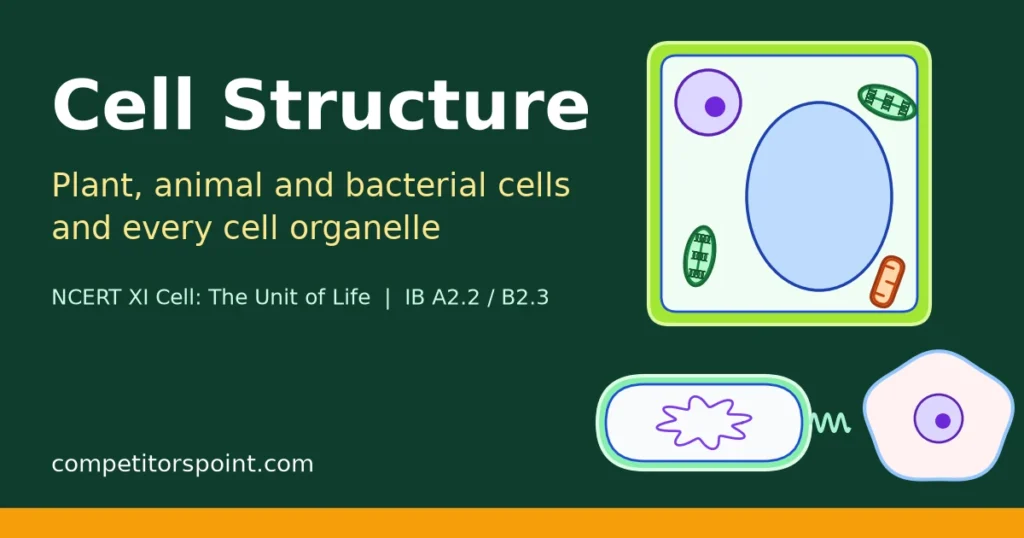
Cell structure title card showing a plant cell, a rod-shaped bacterium and an animal cell

Cell Structure: Plant, Animal and Bacterial Cells (IB A2.2, NEET)

Home › IB Biology › Cell biology › Cell structure Cell Structure: Prokaryotic, Plant and Animal Cells Cell structure is the arrangement of the parts that make up a cell. Every cell has a plasma membrane, cytoplasm, ribosomes and DNA. Prokaryotic cells, such as bacteria, have no nucleus and no membrane-bound organelles, while eukaryotic cells, […]

Cell Structure: Plant, Animal and Bacterial Cells (IB A2.2, NEET) Read More »
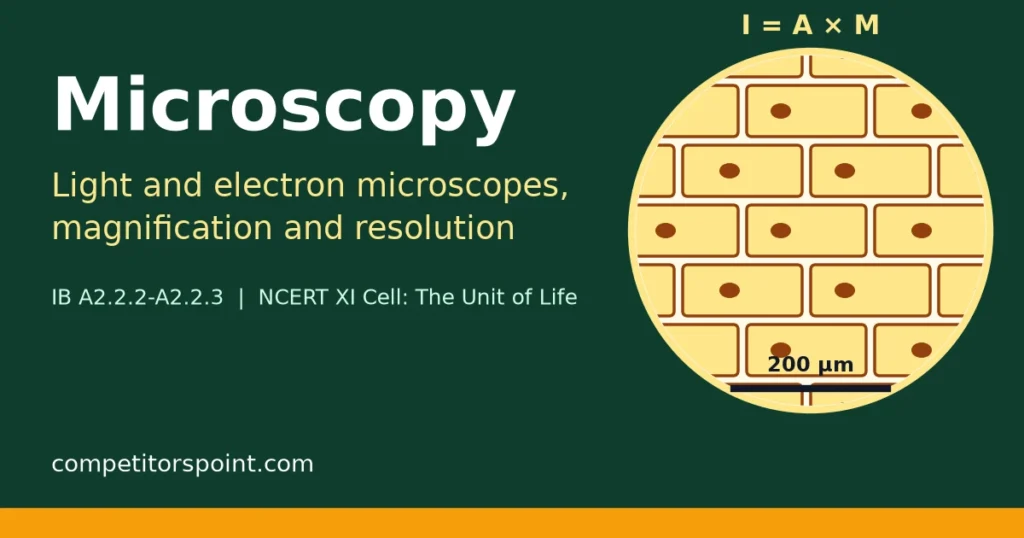
Microscopy title card showing a circular field of view of onion epidermis cells with a 200 micrometre scale bar and the formula I = A x M

Microscopy: Light vs Electron Microscopes for IB A2.2 and NEET

Home › IB Biology › Cell biology › Microscopy Microscopy: Light and Electron Microscopes Microscopy is the use of microscopes to see objects too small for the naked eye. Magnification is how many times larger the image is than the real object (image size ÷ actual size); resolution is the smallest distance at which two

Microscopy: Light vs Electron Microscopes for IB A2.2 and NEET Read More »

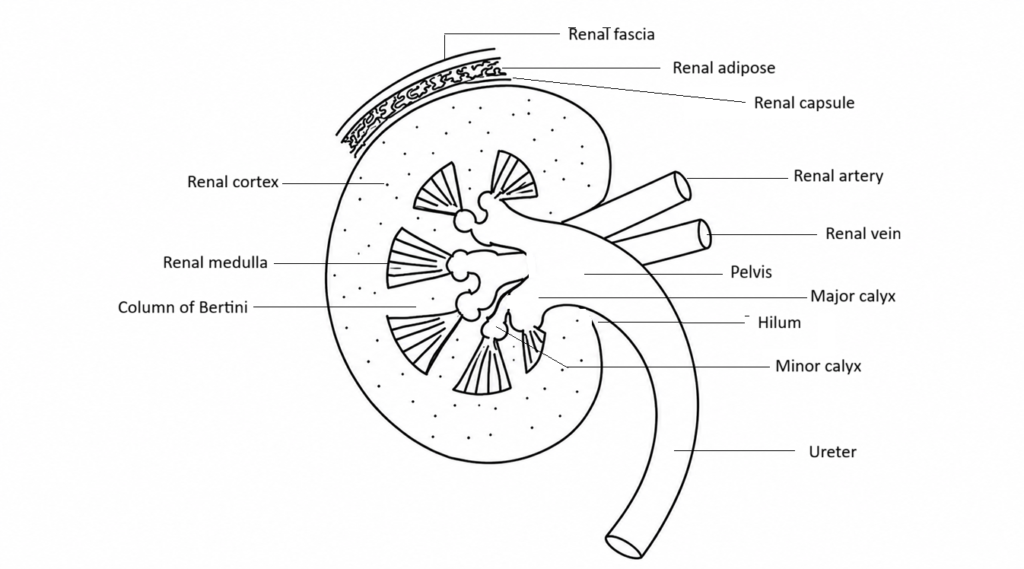
Labeled Diagram of Human Kidney (Free Download)

Labeled Diagram of Human Kidney (Free Download)

Looking for a clear, high-resolution labeled diagram of human kidney for your biology studies, presentations, or revision notes? Below, you can download a premium, copyright-free cross-section illustration of the kidney, designed to meet global academic standards like AP Biology, IB Biology, A-Levels, and NCERT Class 11 (Chapter 16). 📥 Download High-Res Kidney Diagram (Free PNG)

Labeled Diagram of Human Kidney (Free Download) Read More »

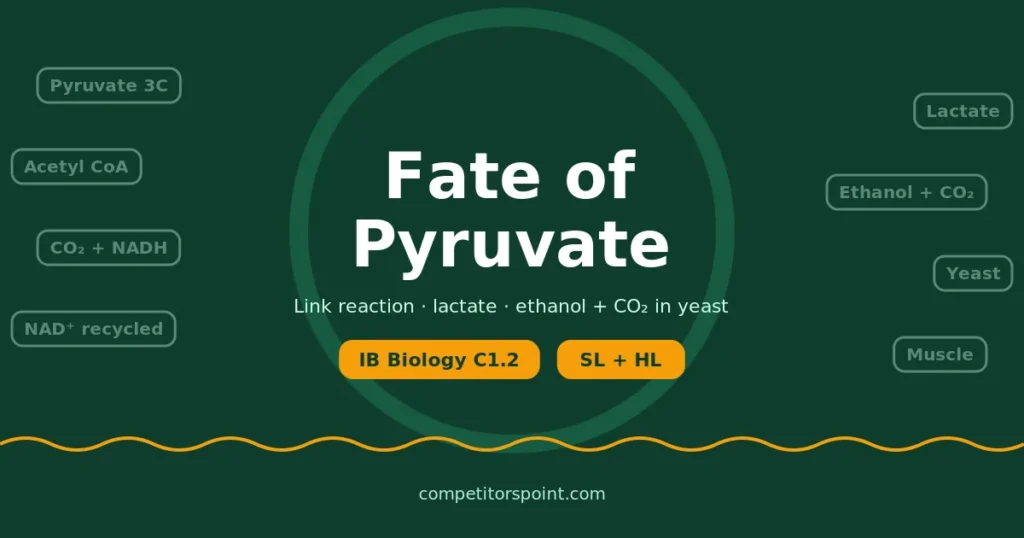
Fate of pyruvate: acetyl CoA via the link reaction, or ethanol + CO2 in yeast and lactate in muscle by fermentation

Fate of Pyruvate: Link Reaction and Fermentation (IB Biology C1.2)

Home › IB Biology › Cell respiration › Fate of Pyruvate Fate of Pyruvate After Glycolysis The fate of pyruvate after glycolysis depends on oxygen. With oxygen, pyruvate enters the mitochondrial matrix, where the link reaction turns it into acetyl CoA, CO2 and NADH for the Krebs cycle. Without oxygen, fermentation reduces it to ethanol

Fate of Pyruvate: Link Reaction and Fermentation (IB Biology C1.2) Read More »

pentose phosphate pathway

Pentose Phosphate Pathway (PPP): An Overview

The pentose phosphate pathway (PPP), also known as the direct oxidative pathway, glycolytic shunt, hexose monophosphate shunt (HMS), or Warburg-Lipmann-Dickens cycle, is an alternative route for glucose breakdown that bypasses glycolysis and the Krebs cycle. This pathway, present in both prokaryotes and eukaryotes, occurs in the cytoplasm and chloroplasts under aerobic conditions. Unlike other respiratory

Pentose Phosphate Pathway (PPP): An Overview Read More »

Scroll to Top