
Cell Differentiation and Stem Cells
Cell differentiation is the process by which an unspecialized cell becomes specialized for a particular function by expressing some of its genes and not others. Stem cells are unspecialized cells that can divide again and again and differentiate; their potency ranges from totipotent (every cell type, including the placenta) to unipotent (one cell type).
Cell differentiation and stem cells for IB B2.3 and NEET: differentiation by gene expression, totipotent to unipotent potency, stem cell niches, SA:V ratio, specialized cells, Stargardt’s disease and leukaemia treatment, and the ethics of embryonic, adult, cord blood and iPS cells.
1 Cell differentiation and stem cells: an overview
Syllabus link: IB B2.3 Cell specialization (first assessment 2025); older IB 1.1.8 to 1.1.10; NCERT XI Anatomy of Flowering Plants and Plant Growth and Development; NCERT XII Strategies for Enhancement in Food Production
NCERT = statement as given in NCERT (use in NEET/CBSE answers) IB = IB Biology (first assessment 2025) link
You began as one cell, a zygote about 0.1 mm across. You are now made of roughly 30 trillion cells of more than 200 types, and nearly every one of them carries the same DNA.
Cell differentiation and stem cells explain how that happens: stem cells divide to supply new cells, and differentiation turns those cells into neurons, red blood cells, muscle fibres and every other specialized type. This chapter covers how differentiation works through gene expression, the potency ladder (totipotent, pluripotent, multipotent and unipotent), the stem cell niche, why the surface area to volume ratio limits cell size, the adaptations of specialized cells, real medical applications and the ethics of embryonic stem cells, adult stem cells, cord blood and induced pluripotent stem cells.
It is card 4 of our Cell Biology series. Cell size and cell theory are in Introduction to cells, organelles are in cell structure, and measuring cells is in Microscopy. Every IB and NEET paper sets at least one question on cell differentiation and stem cells, so the five card subtopics below each have their own section.
A short history of stem cell biology
- 1902: Gottlieb Haberlandt proposed that single plant cells could grow into whole plants (totipotency); F. C. Steward grew carrot plants from single phloem cells in 1958.
- 1958 to 1962: John Gurdon put the nucleus of a differentiated frog gut cell into an egg with its nucleus removed and got a swimming tadpole: genes are not lost when cells differentiate.
- 1961: James Till and Ernest McCulloch showed that single bone marrow cells could rebuild all blood cell types in mice: the first proof of stem cells.
- 1968: the first successful bone marrow transplant between siblings.
- 1981 and 1998: embryonic stem cells were isolated from mouse (1981) and then human (1998, James Thomson) blastocysts.
- 2006 and 2007: Shinya Yamanaka reprogrammed mouse, then human, skin cells into induced pluripotent stem cells; Gurdon and Yamanaka shared the 2012 Nobel Prize.
Key points
- Differentiation is the development of an unspecialized cell into a specialized one by switching particular genes on and off.
- A stem cell is an unspecialized cell that can divide endlessly (self-renewal) and can differentiate into one or more cell types.
- Potency is the range of cell types a stem cell can produce: totipotent > pluripotent > multipotent > unipotent.
2 Differentiation: how one genome makes many cell types
Syllabus link: IB B2.3.1 Production of unspecialized cells following fertilization and their development into specialized cells by differentiation; D2.2 Gene expression (link); NCERT XI Plant Growth and Development (differentiation, dedifferentiation, redifferentiation)
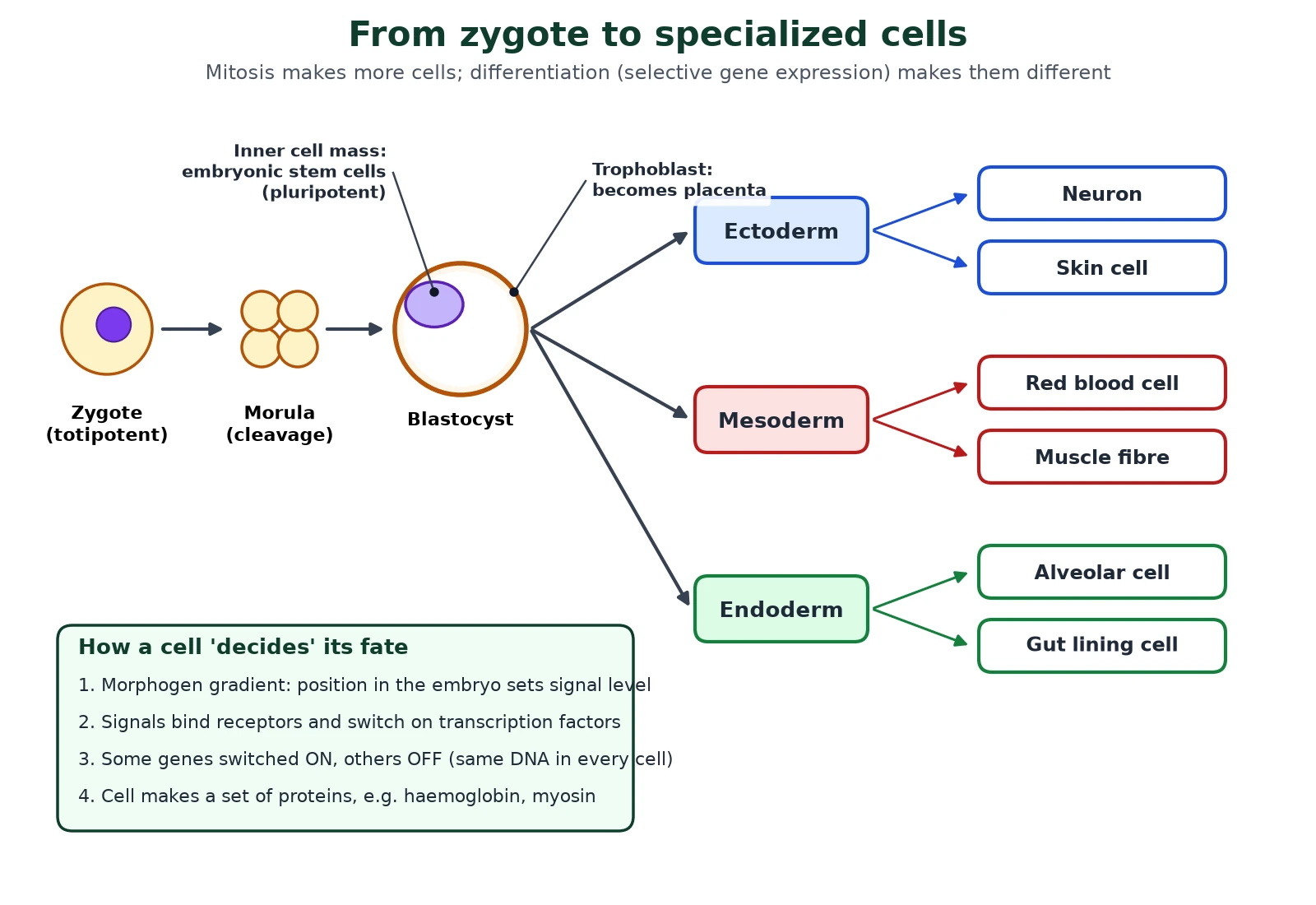
Differentiation is the process by which an unspecialized cell develops a particular structure and function. After fertilization the zygote divides by mitosis (cleavage) into a ball of identical cells, the morula, and then a hollow blastocyst. In the blastocyst the first differentiation has already happened: the outer trophoblast will form the placenta, while the inner cell mass forms the embryo itself. The inner cells then form three germ layers (ectoderm, mesoderm and endoderm), and these give rise to every tissue.
Same genes, different expression
The single most important idea in cell differentiation and stem cells is that cells differ in which genes they use, not in which genes they have.
A neuron and a liver cell from one person have the same genome. What differs is which genes are expressed: transcribed into mRNA and translated into protein. A developing red blood cell expresses the haemoglobin genes; a muscle cell expresses actin and myosin genes; both keep the insulin gene switched off. IB states this as: differentiation happens because of differences in gene expression, not differences in genes. Gurdon’s frog cloning and the cloning of Dolly the sheep from an udder cell (1996) proved that a differentiated nucleus still holds a complete set of working genes.
How does a cell know which genes to switch on?
- Position and signals. Cells release signalling molecules called morphogens, which diffuse and form a concentration gradient across the embryo. A cell’s position decides the concentration it detects.
- Receptors and transcription factors. The signal binds a receptor, and a cascade inside the cell activates particular transcription factors: proteins that bind DNA and switch target genes on or off.
- Commitment. Chromatin around unused genes is packed tightly (for example by DNA methylation), so they are silenced, and the pattern is copied to daughter cells. The cell is now committed to one fate.
- Specialization. The proteins made give the cell its structure: haemoglobin, myosin, digestive enzymes, surfactant.
Because these epigenetic changes are stable, a skin cell divides to make more skin cells, not liver cells. Differentiation is usually one-way in animals; reversing it needs artificial reprogramming (Section 4).
Differentiation in plants (NCERT link)
Plants show cell differentiation and stem cells too, but in a more flexible form.
NCERT NCERT defines three linked terms. Differentiation: cells derived from root apical and shoot apical meristems and cambium differentiate and mature to perform specific functions; for example, tracheary elements lose their protoplasm and develop strong lignocellulosic secondary walls. Dedifferentiation: living differentiated cells that have lost the capacity to divide can regain it, as when interfascicular cambium and cork cambium form from fully differentiated parenchyma cells. Redifferentiation: the cells produced by such dedifferentiated tissue lose the capacity to divide again and mature to perform specific functions.
NCERT A meristem is a region of actively dividing cells, so it is the plant equivalent of a stem cell niche. Apical meristems at root and shoot tips cause primary growth (length); intercalary meristems at the base of grass leaves and internodes regrow grazed parts; lateral meristems (vascular cambium and cork cambium) cause secondary growth (girth). NCERT also notes that plant development is open and plastic: plants follow different pathways in response to environment, as in heterophylly of cotton, coriander and larkspur.
Exam tips on cell differentiation and stem cells
- Say ‘differential gene expression’ or ‘some genes are expressed, others are not’. Never write that cells ‘lose the genes they do not need’.
- Mitosis produces genetically identical cells; differentiation is a separate step that makes them different in structure and function.
- In IB answers, link differentiation to the signals cells receive from their position (morphogen gradients).
3 Specialization: cell size, SA:V ratio and adapted cells
Syllabus link: IB B2.3.5 Cell size as an aspect of specialization; B2.3.6 Constraints on cell size; B2.3.7 Adaptations to increase surface area-to-volume ratios; HL B2.3.8 to B2.3.10 pneumocytes, striated muscle fibres, sperm and egg
A specialized cell has a structure adapted to one main function, and its size is part of that adaptation. Differentiation and specialization are two views of one process: differentiation is the change, specialization is the result. Human cells range from about 3 µm (sperm head width) to over a metre (motor neuron axons).
Cell size as an aspect of specialization
Swipe the table sideways to see every column.
| Cell | Typical size | Why that size suits the function |
|---|---|---|
| Sperm | Head about 5 µm; about 55 µm with tail | Small and streamlined, carries little cytoplasm, so it can swim fast; just a nucleus, mitochondria and a flagellum |
| Egg (secondary oocyte) | About 110 µm (one of the largest human cells) | Large store of cytoplasm, nutrients and organelles for the early embryo, which does not grow during cleavage |
| Red blood cell | About 7 to 8 µm wide, 2 µm thick | Small enough to squeeze through capillaries in single file; high SA:V for fast oxygen loading |
| White blood cells | About 10 to 20 µm | Lymphocytes are small; neutrophils and macrophages are larger to engulf pathogens |
| Motor neuron | Cell body about 100 µm; axon up to 1 m | Very long axon carries impulses from the spinal cord to distant muscles without a synapse on the way |
| Striated muscle fibre | 10 to 100 µm wide; several centimetres long | Formed by fusion of many cells, so a single fibre can contract along a whole muscle |
Constraints on cell size: the surface area to volume ratio
Size limits are part of cell differentiation and stem cells because a stem cell’s daughters must stay small enough to exchange materials.
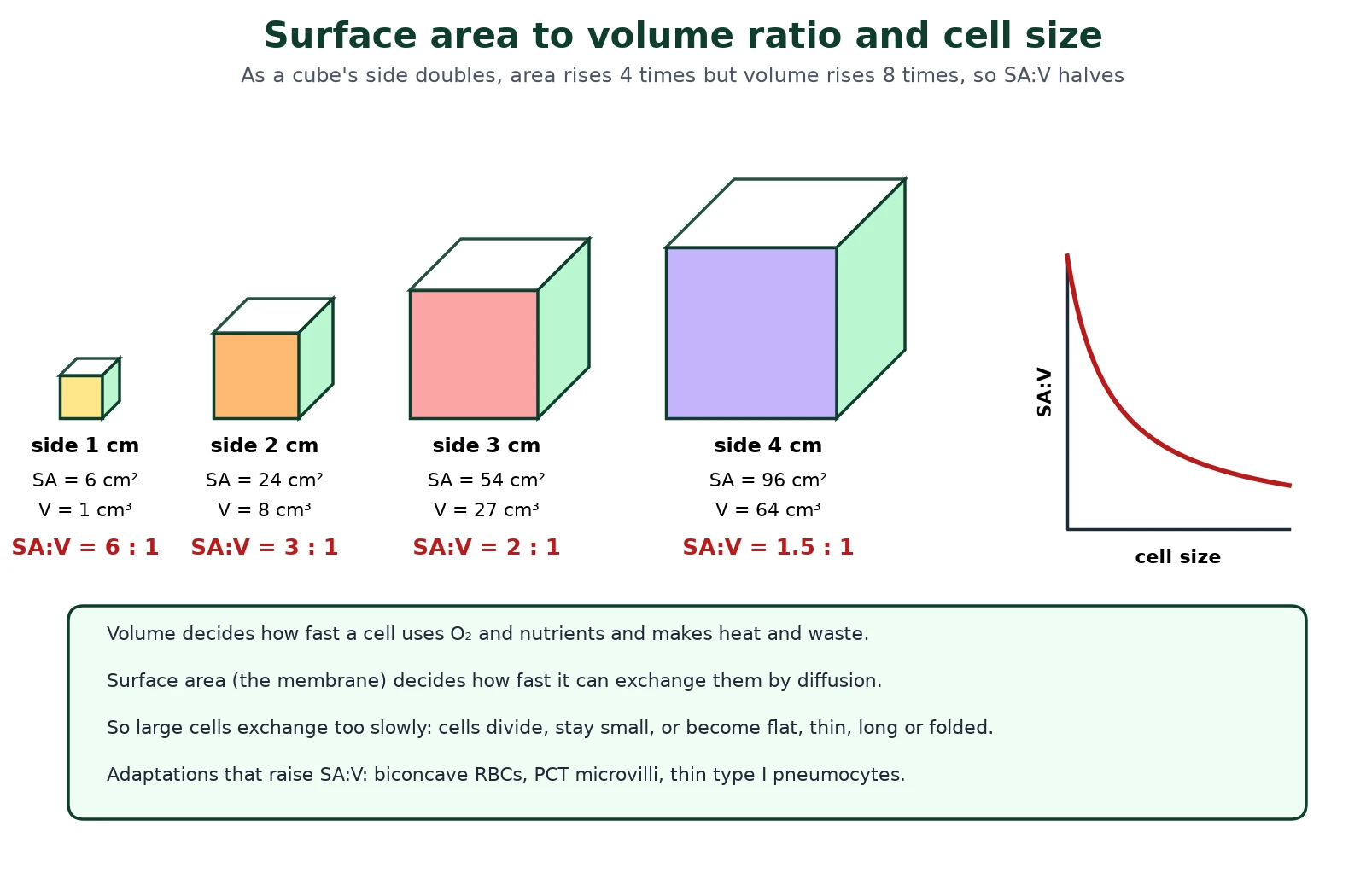
Every cell exchanges materials with its surroundings through its plasma membrane. The rate of metabolism (how fast it uses oxygen and glucose and makes waste and heat) depends on its volume, but the rate of exchange depends on its surface area. As a cell grows, volume increases faster than surface area, so the surface area to volume ratio (SA:V) falls. Above a certain size, a cell cannot take in what it needs or remove waste fast enough, and diffusion to the centre also takes too long. This is why cells divide when they reach a certain size.
Worked example: SA:V of cubes
A cube of side 1 cm has a surface area of 6 × 1² = 6 cm² and a volume of 1³ = 1 cm³, so SA:V = 6:1. Double the side to 2 cm: area = 6 × 4 = 24 cm², volume = 8 cm³, SA:V = 3:1. In general SA:V of a cube = 6 ÷ side. For a sphere it is 3 ÷ radius: a cell of radius 10 µm has SA:V = 0.3 µm-1, while a cell of radius 5 µm has 0.6 µm-1, twice as much.
The classic practical uses agar cubes stained with an indicator (such as phenolphthalein) dropped into acid or alkali: the colour change reaches the centre of small cubes quickly, but a large cube keeps an unchanged core for much longer.
Adaptations that increase the surface area to volume ratio
- Flattening: red blood cells are biconcave discs, thin in the centre, so no haemoglobin is far from the membrane. Type I pneumocytes are flattened to about 0.1 to 0.2 µm thick.
- Folding: cells of the proximal convoluted tubule in the kidney have dense microvilli (a brush border) on the side facing the filtrate and infoldings on the blood side, increasing area for reabsorption. Small intestine epithelial cells have microvilli too.
- Elongation: long, thin cells such as root hair cells and neurons keep every part close to the surface.
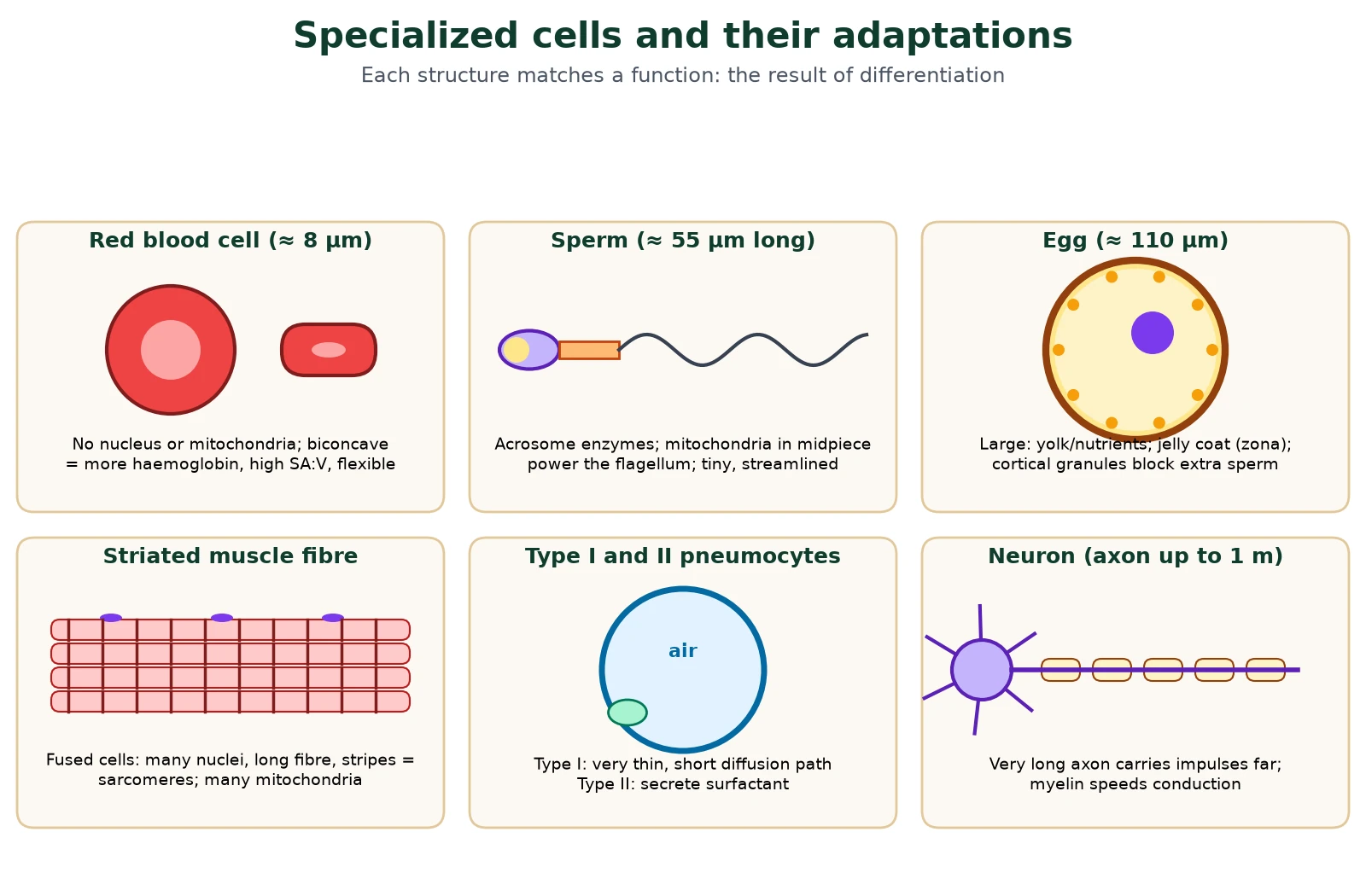
Red blood cells
Red blood cells are the textbook example of cell differentiation and stem cells working together: haematopoietic stem cells in the marrow produce about 2 million of them every second.
Mammalian red blood cells (erythrocytes) lose their nucleus and mitochondria as they mature in the bone marrow. This leaves more room for haemoglobin (about 270 million molecules per cell), lets the cell take its flexible biconcave shape, and means the cell does not use the oxygen it carries. The cost: no nucleus, so no repair or division, and each cell lasts only about 120 days. NCERT NCERT notes that RBCs of most mammals lack a nucleus and are biconcave.
Type I and type II pneumocytes (HL)
IB Alveoli are lined by two cell types. Type I pneumocytes are extremely thin and flat and cover about 95% of the alveolar surface, giving a very short diffusion distance to the capillary. Adjacent type I cells are joined by tight junctions, and they do not divide. Type II pneumocytes are rounded cells with many secretory vesicles (lamellar bodies) that secrete surfactant, which reduces surface tension in the water film so alveoli do not collapse. Type II cells can also divide and replace damaged type I cells, acting as local stem-like progenitors.
Striated muscle fibres and cardiac muscle (HL)
IB A skeletal (striated) muscle fibre forms when many myoblasts fuse, so one fibre has many nuclei (multinucleate) and can be centimetres long. This challenges the cell theory idea that cells are small units with one nucleus. Inside are myofibrils made of repeating sarcomeres (actin and myosin), which create the stripes; many mitochondria supply ATP and the sarcoplasmic reticulum stores calcium. Cardiac muscle cells are also striated but are shorter, branched, usually have one nucleus and are joined end to end by intercalated discs with gap junctions, so impulses spread fast and the heart contracts as one unit.
Sperm and egg (HL)
Swipe the table sideways to see every column.
| Feature | Sperm | Egg |
|---|---|---|
| Size | Tiny, about 55 µm long | Large, about 110 µm; volume about 10 000 times greater |
| Number made | Millions per day from puberty | About one per menstrual cycle |
| Movement | Flagellum (tail) for swimming | Not motile; moved by cilia of the oviduct |
| Energy | Many mitochondria in the midpiece | Large cytoplasmic store of nutrients |
| Reaching the other gamete | Acrosome releases enzymes to digest the zona pellucida | Zona pellucida and follicle cells protect the egg |
| Preventing polyspermy | – | Cortical granules release contents that harden the zona after one sperm enters |
| Contribution to zygote | Haploid nucleus and centrioles | Haploid nucleus, almost all cytoplasm and mitochondria |
Markscheme habits for cell differentiation and stem cells
- Always connect structure to function: ‘flattened, so a short diffusion distance’, not just ‘flattened’.
- When asked why cells are small, mention both rate of exchange (surface area) and rate of metabolism (volume).
- SA:V has units of length-1 if not written as a ratio; quote the ratio as x:1.
4 Stem cells: properties, potency and niches
Syllabus link: IB B2.3.2 Properties of stem cells; B2.3.3 Location and function of stem cell niches in adult humans; B2.3.4 Differences between totipotent, pluripotent and multipotent stem cells
A stem cell is an unspecialized cell with two properties. Self-renewal: it can divide again and again (by mitosis) to make more stem cells. Differentiation: some of its daughter cells can develop into specialized cell types. Often a stem cell divides asymmetrically: one daughter stays a stem cell, the other becomes a progenitor that divides a few more times and then differentiates. This keeps the stem cell population steady while supplying new tissue.
Totipotent, pluripotent and multipotent
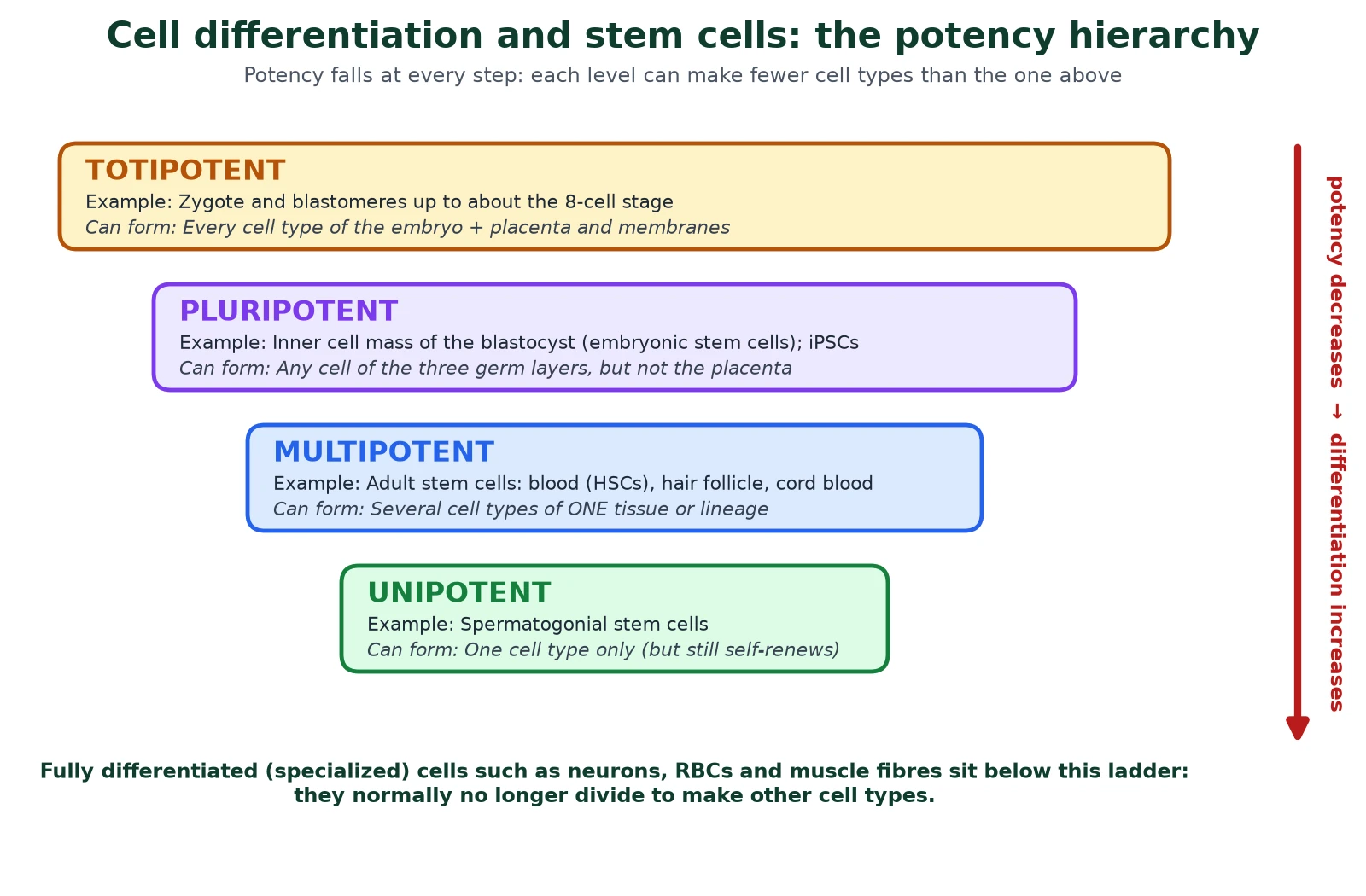
The potency of a stem cell is the range of cell types it can produce. Learning totipotent pluripotent multipotent as one ranked list is the fastest way to answer most questions on cell differentiation and stem cells.
Swipe the table sideways to see every column.
| Potency | Can produce | Examples | Where found |
|---|---|---|---|
| Totipotent | Every cell type, including the placenta and other extra-embryonic membranes; a whole organism | Zygote; blastomeres up to about the 8-cell stage | Very early embryo (first 3 to 4 days) |
| Pluripotent | Any cell of the three germ layers, but not the placenta | Embryonic stem cells; induced pluripotent stem cells | Inner cell mass of the blastocyst (days 5 to 7); made in the lab |
| Multipotent | Several related cell types of one tissue or lineage | Haematopoietic stem cells (all blood cells); mesenchymal stem cells (bone, cartilage, fat); neural stem cells | Adult tissues; umbilical cord blood |
| Unipotent | Only one cell type, but still self-renews | Spermatogonial stem cells (sperm); basal cells of the epidermis | Testes; skin |
Some books add oligopotent cells between multipotent and unipotent: for example a myeloid progenitor can make only a few blood cell types. IB asks only for totipotent, pluripotent and multipotent, but the full ladder helps.
Stem cell niches
Where stem cells live matters as much as what they are, a point IB added to cell differentiation and stem cells in the 2025 guide.
Adult stem cells live in particular places called niches. A stem cell niche is the micro-environment around stem cells (neighbouring support cells, the extracellular matrix and signalling molecules) that keeps them alive, keeps them unspecialized, and controls when they divide and when their daughters differentiate. IB names two examples.
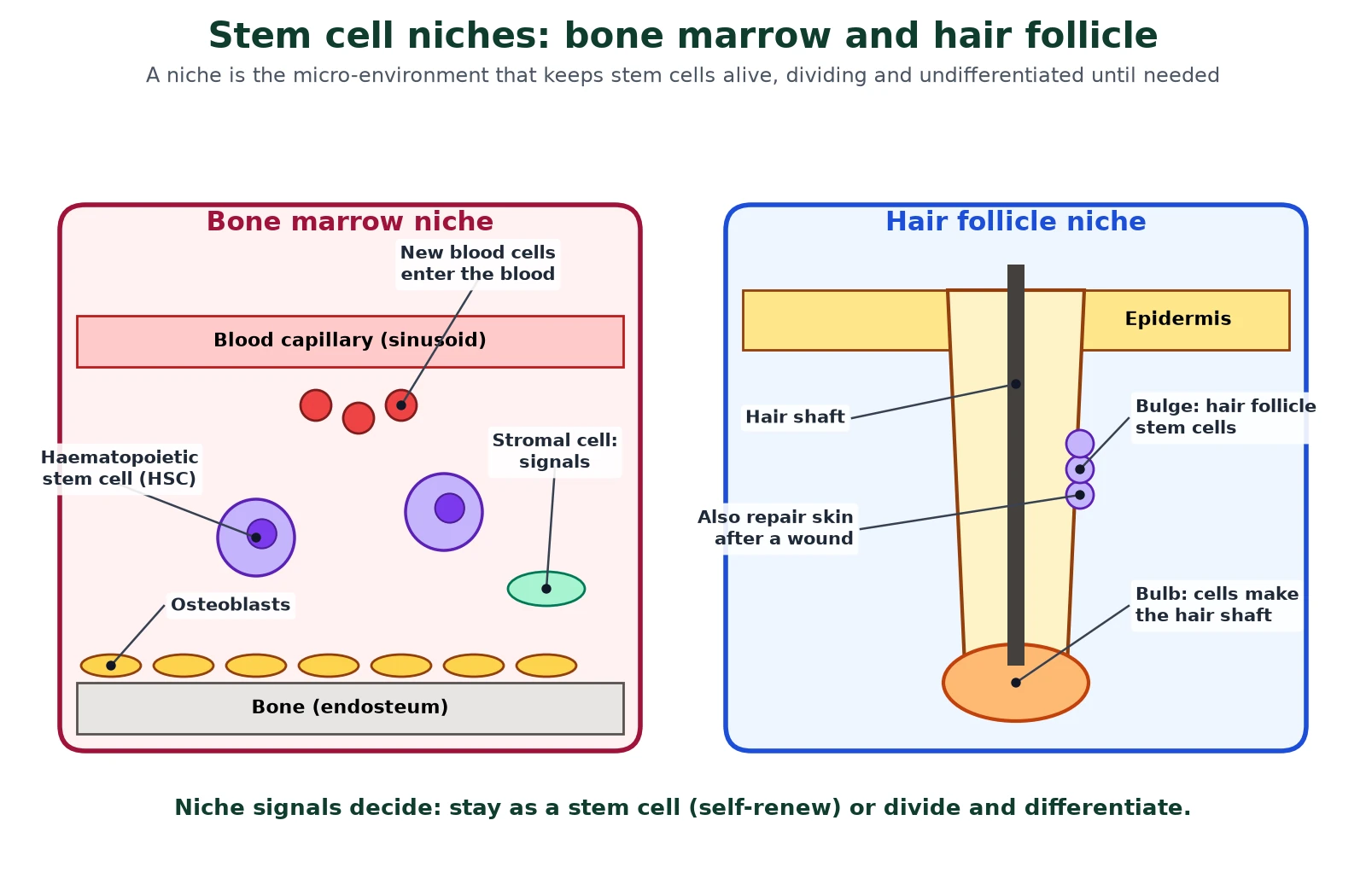
- Bone marrow: the red marrow inside the spongy bone of the pelvis, sternum, ribs, vertebrae and ends of long bones holds haematopoietic stem cells (HSCs). Osteoblasts lining the bone, stromal cells and the walls of sinusoid capillaries release signals that hold HSCs in place. HSCs produce about 200 billion red blood cells a day, plus all white blood cells and platelets.
- Hair follicle: stem cells in the bulge of each follicle become active at the start of each hair growth cycle and regenerate the lower follicle, which makes a new hair. After a wound they also migrate out and help rebuild the epidermis.
- Other niches: the base of intestinal crypts (replacing the gut lining every 3 to 5 days), the basal layer of the epidermis, and the hippocampus of the brain.
Embryonic stem cells, adult stem cells and iPSCs
Embryonic stem cells come from the inner cell mass of a 5 to 7 day blastocyst, usually a spare embryo from IVF. Adult (somatic) stem cells are the multipotent cells in niches. Umbilical cord blood stem cells are multipotent HSCs collected from the cord after birth. Induced pluripotent stem cells (iPSCs) are made by inserting genes for four transcription factors (Oct4, Sox2, Klf4 and c-Myc, the ‘Yamanaka factors’) into differentiated adult cells such as skin fibroblasts. These factors switch the gene expression pattern back to that of an embryonic stem cell, so the cell becomes pluripotent. iPSCs show again that differentiation is about gene expression, not gene loss.
Totipotency in plants (NCERT link)
NCERT NCERT (Class XII) defines totipotency as the capacity to generate a whole plant from any cell or explant, the basis of plant tissue culture. An explant (any part of a plant) is grown on a sterile nutrient medium with sucrose, minerals, vitamins and the growth regulators auxin and cytokinin. The cells dedifferentiate into an undifferentiated mass called a callus, which can then be redifferentiated into shoots and roots.
Many plants grown this way are genetically identical (somaclones), and plants grown from the meristem, which is free of virus, are used to recover healthy banana, sugarcane and potato plants. Animal somatic cells rarely do this naturally: this contrast is a favourite NEET assertion-reason question on cell differentiation and stem cells.
Exam tips
- The zygote is totipotent but is usually not called a stem cell, because it does not self-renew: it divides into blastomeres, not into more zygotes.
- Embryonic stem cells are pluripotent, not totipotent: they cannot make the placenta.
- When asked what a niche does, give two functions: maintains stem cells (survival, undifferentiated state) and regulates their division and differentiation.
5 Stem cell applications: therapy and research
Syllabus link: Older IB 1.1.U8 and 1.1.A3 Use of stem cells to treat Stargardt’s disease and one other named condition (leukaemia); IB B2.3 context
Because stem cells can replace lost cells, they can in principle treat any disease caused by the death or malfunction of one cell type. The two applications in the IB guide show both main routes: cells grown from embryonic stem cells (Stargardt’s disease) and adult stem cells from a donor (leukaemia). These applications are where cell differentiation and stem cells matter most outside the exam hall.
Stargardt’s disease (macular degeneration)
- Cause: an inherited, usually recessive, mutation in the ABCA4 gene, which codes for a membrane transport protein in photoreceptor cells. The faulty protein lets a toxic by-product of vision build up in the retinal pigment epithelium (RPE).
- Effect: RPE cells and then the photoreceptors of the macula die, so central vision is lost, typically starting between ages 6 and 20. There is no cure.
- Stem cell treatment: embryonic stem cells are grown and made to differentiate into RPE cells in the lab. About 50 000 of these cells are injected under the retina, where they attach and take over the work of the dead cells.
- Result: in the first trials (Schwartz and colleagues, reported in 2012 and 2015) the cells survived, there was no rejection or tumour formation, and several patients reported moderate improvement in vision. It remains experimental.
Leukaemia: bone marrow and HSC transplants
Leukaemia is a cancer in which bone marrow cells divide uncontrollably and produce huge numbers of abnormal white blood cells. Treatment combines chemotherapy and radiotherapy with a stem cell transplant.
- Haematopoietic stem cells are collected from the patient (before treatment) or from a matched donor: from the pelvis with a large needle, or from blood after drugs that move HSCs out of the marrow, or from stored umbilical cord blood.
- The patient receives high-dose chemotherapy (and sometimes radiation) to kill the cancer cells. This also destroys the healthy stem cells in their bone marrow.
- The HSCs are given by drip into a vein. They travel to the bone marrow niche, settle there and start dividing.
- They differentiate to produce healthy red cells, white cells and platelets. With a donor transplant the new immune system may also attack any remaining cancer cells.
The donor’s tissue type (HLA antigens) must match the patient’s closely, ideally a sibling, or the donated immune cells may attack the patient (graft-versus-host disease). Over a million HSC transplants have now been carried out worldwide; this is the best-established stem cell therapy.
Other uses and research
Research on cell differentiation and stem cells is now moving several other treatments from the lab to the clinic.
Swipe the table sideways to see every column.
| Condition or use | Stem cell approach | Status |
|---|---|---|
| Severe burns | Sheets of skin grown from the patient’s own epidermal stem cells | In clinical use |
| Corneal damage | Limbal stem cells grown into corneal epithelium (Holoclar, approved in the EU in 2015) | Approved |
| Type 1 diabetes | Pluripotent stem cells made into insulin-secreting beta cells | Clinical trials |
| Parkinson’s disease | Dopamine-producing neurons from embryonic stem cells or iPSCs | Clinical trials |
| Heart attack damage | Heart muscle cells grown from iPSCs | Research and early trials |
| Drug testing and disease models | iPSCs from patients turned into the affected cell type | Widely used in research |
Risks of cell differentiation and stem cells therapy
- Tumours: cells that keep dividing after transplant can form tumours (teratomas from pluripotent cells).
- Rejection: cells from another person carry foreign antigens unless tissue-matched or the patient’s own cells are used.
- Infection during culture, and the high cost of treatment.
6 Ethical issues: embryonic, adult, cord blood and iPSCs
Syllabus link: Older IB 1.1.NOS Ethical implications of research (embryonic stem cells); 1.1.A Comparison of stem cell sources
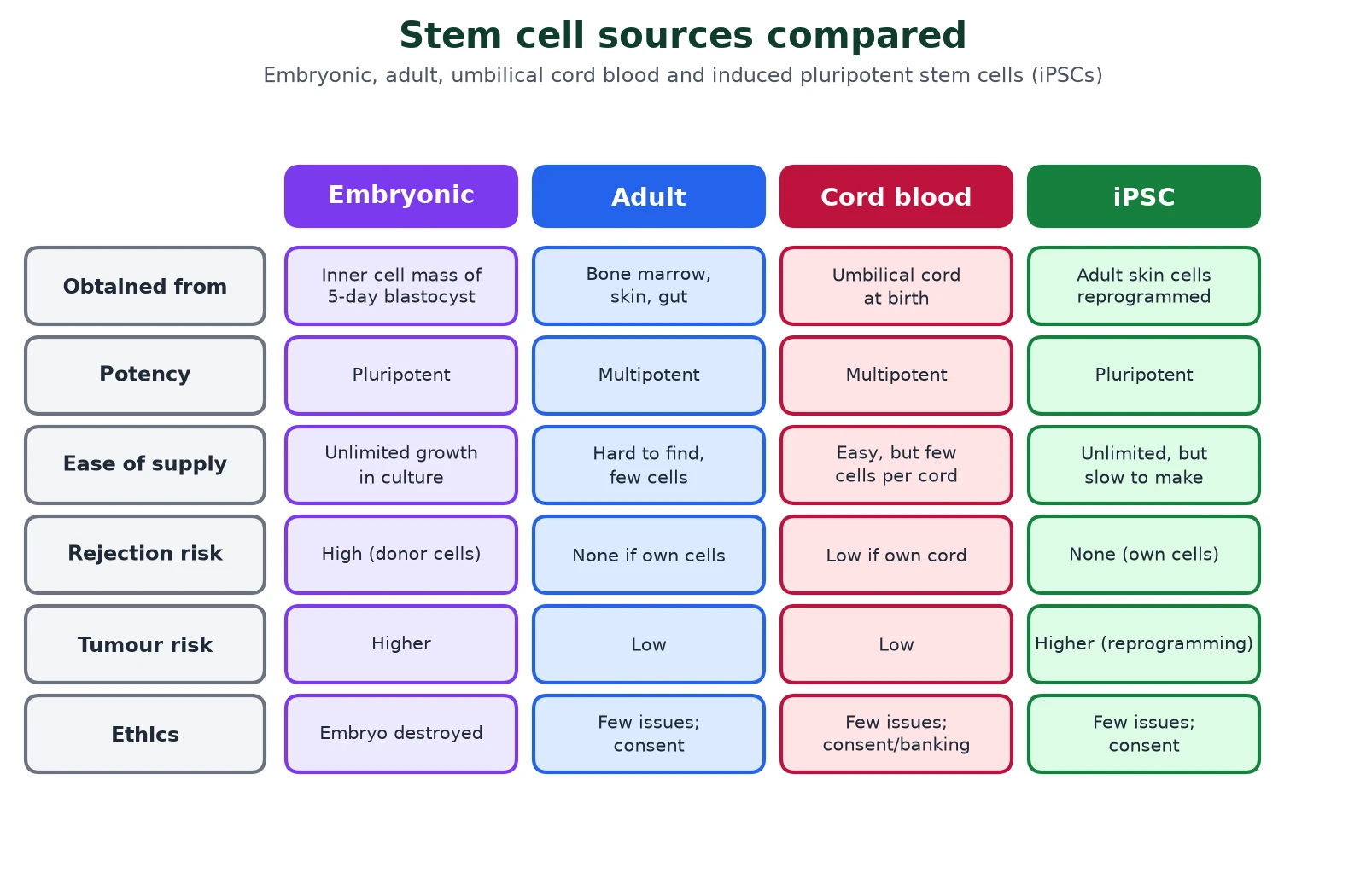
Most debate about cell differentiation and stem cells centres on where the stem cells come from. Using embryonic stem cells normally destroys an early embryo, and people disagree about the moral status of that embryo. Adult stem cells, cord blood and iPSCs avoid that problem but each has scientific limits. IB asks you to compare the sources and to argue both sides.
Comparison of stem cell sources
Swipe the table sideways to see every column.
| Feature | Embryonic stem cells | Adult stem cells | Umbilical cord blood | Induced pluripotent stem cells |
|---|---|---|---|---|
| Source | Inner cell mass of an early embryo (often spare IVF embryos) | Bone marrow, skin, fat and other adult tissues | Blood in the umbilical cord and placenta, collected at birth | Adult body cells (e.g. skin) reprogrammed with transcription factors |
| Potency | Pluripotent | Multipotent (limited to own tissue) | Multipotent | Pluripotent |
| Growth in culture | Divide almost without limit | Limited; hard to grow | Limited number of cells per cord | Divide almost without limit |
| Genetic match | Not matched: rejection risk | Can be the patient’s own cells: no rejection | Matched to the baby; can be stored | Patient’s own cells: no rejection |
| Tumour risk | Higher | Low | Low | Higher (c-Myc is an oncogene; genetic changes during reprogramming) |
| Ease of collection | Needs embryos; well established | Painful marrow extraction; cells rare | Easy and painless; stored frozen | Easy biopsy but slow, costly and inefficient to make |
| Ethical issues | Embryo destroyed; consent of embryo donors; risk of exploiting egg donors | Few; informed consent | Few; consent; cost and fairness of private banking | Few; consent; could in theory be used to make gametes or clones |
Arguments for using embryonic stem cells
The ethics of cell differentiation and stem cells is a balance between possible benefits and the moral status of the embryo.
- They are pluripotent, so they could treat many conditions that adult stem cells cannot.
- Spare IVF embryos would otherwise be discarded; using them could save lives.
- An embryo of 5 days has no nervous system and cannot feel pain.
- Research on them has taught us how differentiation works, which made iPSCs possible.
Arguments against
- Many people hold that a human life, with full moral status, begins at fertilization, so destroying an embryo is morally wrong.
- Making embryos specifically for research (or by therapeutic cloning) treats potential humans as a means to an end.
- Women who donate eggs face health risks and could be exploited for payment.
- Alternatives such as adult stem cells and iPSCs exist, so embryo use may not be necessary.
Cord blood and adult stem cells
Collecting cord blood harms neither mother nor baby, and the cells can be frozen for decades. The ethical questions are smaller but real: informed consent, and whether paying a private bank to store a child’s own cells is worth it. The chance of a child ever using their own stored cord blood is very low, and for inherited diseases those cells carry the same mutation. Public banks, which donate cord blood to any matched patient, are what the American Academy of Pediatrics recommends. Adult stem cells raise few ethical issues, but donors must consent to a painful procedure.
Do iPSCs end the debate?
Largely, but not completely. iPSCs need no embryos, and a patient’s own cells avoid rejection. But reprogramming is slow, expensive and can introduce mutations, so iPSCs carry a higher cancer risk; and because they are pluripotent they could in theory be turned into gametes, raising new questions. Embryonic stem cells are still the ‘gold standard’ to which iPSCs are compared.
The law differs between countries
Laws on cell differentiation and stem cells research reflect these different ethical views.
In the UK, the HFEA licenses embryo research up to 14 days. Germany allows work only on embryonic stem cell lines imported before a cut-off date. In India, ICMR guidelines permit research on spare IVF embryos with approval but ban reproductive cloning. Knowing that the rules vary is useful in IB ‘nature of science’ answers.
Summary of cell differentiation and stem cells
- Cell differentiation and stem cells start with a totipotent zygote; potency falls as cells commit to a fate.
- Differentiation happens by differential gene expression, triggered by position and signals.
- Stem cells self-renew and differentiate; adult stem cells sit in niches such as bone marrow and hair follicles.
- SA:V limits cell size, so specialized cells are flattened, folded or elongated.
- Stem cell therapy already treats leukaemia and is in trials for Stargardt’s disease; the ethics of cell differentiation and stem cells depends mainly on the source of the cells.
Markscheme habits
- In an ‘evaluate’ or ‘discuss’ question, give arguments on both sides and then a conclusion.
- Name the source precisely: ‘inner cell mass of a blastocyst’, not just ‘an embryo’.
- For iPSCs, state both the advantage (no embryo, no rejection) and the risk (tumours, inefficiency).
7 Key terms
Learn these key terms for cell differentiation and stem cells; most one-mark questions test a definition.
Swipe the table sideways to see every column.
| Term | Meaning |
|---|---|
| Differentiation | Development of an unspecialized cell into a specialized cell by switching on and off particular genes. |
| Specialization | Having a structure adapted for one main function. |
| Stem cell | Unspecialized cell that can self-renew by mitosis and differentiate into one or more specialized types. |
| Self-renewal | Division to produce more stem cells, keeping the population steady. |
| Potency | Range of cell types a stem cell can form. |
| Totipotent | Can form every cell type, including the placenta; a whole organism (zygote). |
| Pluripotent | Can form any cell of the three germ layers but not extra-embryonic tissue (ESCs, iPSCs). |
| Multipotent | Can form several cell types of one lineage (HSCs). |
| Unipotent | Can form only one cell type (spermatogonial stem cells). |
| Stem cell niche | Micro-environment that maintains stem cells and controls their division and differentiation. |
| Morphogen | Signal molecule whose concentration gradient tells cells their position. |
| Transcription factor | Protein that binds DNA and switches genes on or off. |
| iPSC | Induced pluripotent stem cell: an adult cell reprogrammed to pluripotency. |
| SA:V ratio | Surface area divided by volume; falls as cells get larger. |
| Meristem | Plant tissue of actively dividing cells at root and shoot tips and in cambium. |
| Callus | Undifferentiated mass of plant cells formed from an explant in tissue culture. |
8 Common doubts about cell differentiation and stem cells
These are the questions students keep asking in forums and homework sites. Each answer is ours; the source link shows where the doubt comes from.
What exactly is the difference between totipotent, pluripotent and multipotent?
Ask what the cell can make. Totipotent: everything, including the placenta, so a whole organism. Pluripotent: every cell of the body, but not the placenta. Multipotent: only a family of related cells, such as all the blood cells. Memory hook: toti = total, pluri = plural (many), multi = several within one tissue. (Doubt seen on reddit.com)
If every cell has the same DNA, how do cells become different?
They use different parts of it. Signals from neighbouring cells and morphogen gradients switch on different transcription factors, which turn particular genes on and silence others. A red blood cell precursor expresses haemoglobin genes; a neuron does not, though it has them. (Doubt seen on reddit.com)
Is the zygote a stem cell?
It is totipotent and unspecialized, but strictly it is not a stem cell, because it cannot self-renew: when it divides it makes blastomeres, not more zygotes. Most textbooks still list it as the example of totipotency, which is fine in exams. (Doubt seen on quora.com)
Why does a bigger cell have a smaller SA:V ratio?
Surface area grows with the square of the length and volume with the cube. Double the side of a cube and area rises 4 times while volume rises 8 times, so the ratio halves. A large cell has more cytoplasm to supply but relatively less membrane to supply it through. (Doubt seen on reddit.com)
Why do red blood cells have no nucleus if every cell needs one?
They have one while they develop in the bone marrow, then push it out (enucleation). Losing it makes room for more haemoglobin and allows the flexible biconcave shape. The cost is that they cannot divide or repair themselves, so they live only about 120 days. (Doubt seen on biology.stackexchange.com)
Why are plant cells called totipotent when animal cells are not?
Many differentiated plant cells can dedifferentiate, with the right auxin and cytokinin, into a callus and regrow a whole plant. Most differentiated animal cells have stable gene silencing and cannot do this naturally. Animal cells can only be pushed back artificially, by nuclear transfer (Dolly) or by making iPSCs. (Doubt seen on quora.com)
Why would embryonic stem cells be rejected but adult stem cells not?
Rejection depends on whose cells they are, not on the type. Embryonic stem cells come from another individual, so they carry foreign antigens. Adult stem cells or iPSCs taken from the patient are ‘self’. Adult stem cells from a donor can still be rejected, which is why bone marrow donors are matched. (Doubt seen on thestudentroom.co.uk)
Are all stem cell treatments taken from embryos?
No: this is a common misconception. Nearly all stem cell treatments in use today (bone marrow transplants, skin grafts for burns, corneal repair) use adult or cord blood stem cells. Embryonic stem cells and iPSCs are mostly used in research and trials. (Doubt seen on thenational.academy)
Is private cord blood banking worth it?
For most families, no: the chance a child will use their own cord blood is very small, and for genetic diseases the stored cells carry the same mutation. Medical bodies recommend donating to public banks, where cells can help any matched patient. Private storage makes sense mainly when a sibling already has a disease treatable by a transplant. (Doubt seen on reddit.com)
9 FAQ
Short answers to the questions we are asked most about cell differentiation and stem cells.
What is the difference between cell differentiation and stem cells?
Differentiation is a process: an unspecialized cell becoming specialized. A stem cell is a type of cell: one that can keep dividing and whose daughters can differentiate. Stem cells are the source; differentiation is what happens to their daughters.
Can a differentiated cell go back to being a stem cell?
Not naturally in most animal tissues, but it can be forced: adding four transcription factors makes induced pluripotent stem cells, and nuclear transfer into an egg reprogrammes a nucleus. In plants, dedifferentiation happens naturally (cork cambium) and in tissue culture.
Which stem cells are used to treat leukaemia?
Haematopoietic stem cells, which are multipotent. They come from bone marrow, from blood after mobilising drugs, or from umbilical cord blood.
Are embryonic stem cells totipotent?
No. They come from the inner cell mass of the blastocyst and are pluripotent. Only the zygote and early blastomeres are totipotent.
Is cell differentiation and stem cells in the NEET syllabus?
The animal stem cell content is mostly IB and CBSE enrichment, but NEET tests the plant side: meristems, differentiation, dedifferentiation and redifferentiation (Class XI) and totipotency in tissue culture (Class XII).
10 Quick check
Tap each question to reveal the answer and check your grasp of cell differentiation and stem cells before trying the full question set.
Test yourself on cell differentiation and stem cells
1. What type of potency does a cell of the inner cell mass have?
Pluripotent: it can form any cell of the embryo, but not the placenta.
2. Name two stem cell niches in adult humans.
Bone marrow and the bulge of hair follicles.
3. A cube has sides of 3 cm. What is its SA:V ratio?
SA = 54 cm², V = 27 cm³, so 2:1.
4. Why do differentiated cells of one person have different proteins despite identical DNA?
Different genes are expressed (switched on) in each cell type.
5. Which cells are grown from embryonic stem cells to treat Stargardt’s disease?
Retinal pigment epithelium cells, injected under the retina.
6. Give one advantage and one risk of iPSCs.
Advantage: no embryo destroyed and no rejection if from the patient. Risk: tumour formation.
7. Why are type I pneumocytes very thin?
To give a short diffusion distance for gas exchange between the alveolus and the blood.
8. What is the role of cortical granules in an egg?
They release contents that harden the zona pellucida to stop more sperm entering (prevent polyspermy).
Ready to practise? Download the Cell Differentiation and Stem Cells IB and NEET question set with markscheme (25 MCQs + 6 structured questions, 65 marks, free for signed-up members).
⬇ Download practice questions (PDF)© competitorspoint.com · Biology notes. Diagrams are original to competitorspoint.com.