
Renin-Angiotensin-Aldosterone System (RAAS)
The renin-angiotensin-aldosterone system is vital for regulating blood pressure and blood volume, and GFR (Glomerular Filtration Rate) in the human body. The RAAS system involves hormones, proteins, and enzymes. Multiple body organs are associated with the RAAS system, such as the kidneys, hypothalamus, adrenal glands, and liver.
What is the renin-angiotensin-aldosterone system?
The renin-angiotensin-aldosterone system is triggered when blood pressure and GFR decrease in the body. The system involves hormones, proteins, and enzymes that help regulate blood pressure, blood volume regulation, and GFR. The RAAS system is involved in blood pressure regulation and GFR by the following mechanism:
- Activates the JG cells to release renin
- Renin converts angiotensin I to angiotensin II (vasoconstrictor)
- Angiotensin II activates the adrenal cortex to release Aldosterone
- Aldosterone causes Na reabsorption and water from the distal part of the tubule, leading to an increase in blood pressure and GFR
What does the renin-angiotensin-aldosterone system do?
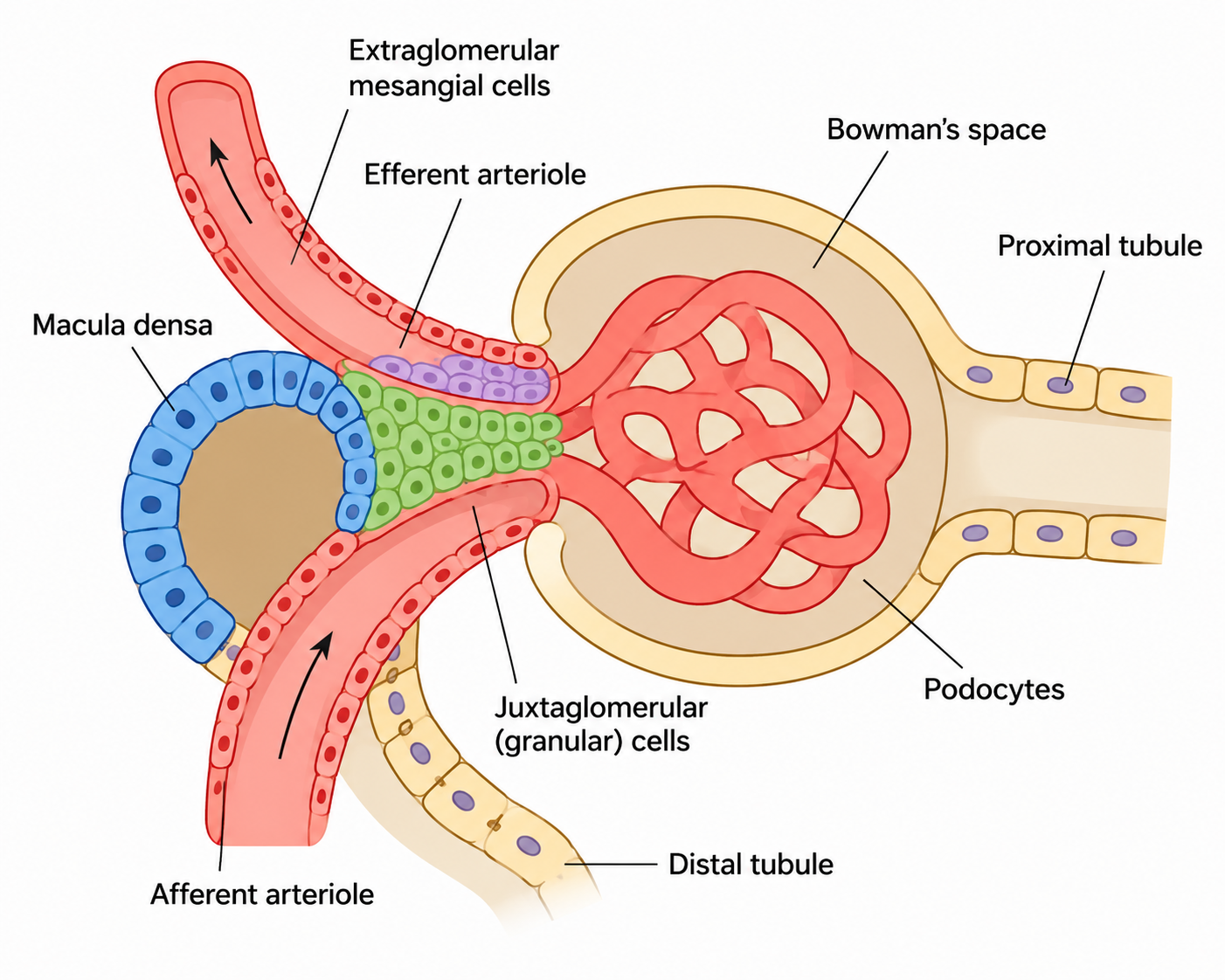
To understand the renin-angiotensin-aldosterone system, and what triggers the RAAS, let’s use an analogy. Suppose a person met with an accident and is bleeding profusely. Due to heavy bleeding, the body’s blood volume and blood pressure decrease significantly. This results in decreased blood flow to the kidney. This eventually results in low GFR. The low blood pressure and low GFR trigger JG cells (specialized cells present on the wall of the afferent arteriole) to release a hormone called RENIN into the blood.
The normal Glomerular Filtrate Rate is 120 ml/min; 65% of Na ions are absorbed in the PCT, and 25% of Na ions are absorbed in the ascending loop of Henle. This means only 10 percent of Na ions reach the DCT. In case of low blood pressure, the GFR rate will decrease, and the filtrate will move through the renal tubule slowly. As a result, the renal tubular cells get enough time to absorb an extra amount of Na. And by the time the fluid reaches the DCT, it will have less than 10% Na ions.
There are specialized cells present on the wall of the DCT called macula densa. These cells get activated when low Na ions reach the DCT. When the macula densa gets activated, it releases prostaglandins to activate the JG cells to release more RENIN into the bloodstream. When there are fewer Na ions in the DCT, the macula densa gets activated; it releases prostaglandins to activate the JG cells to release more RENIN.
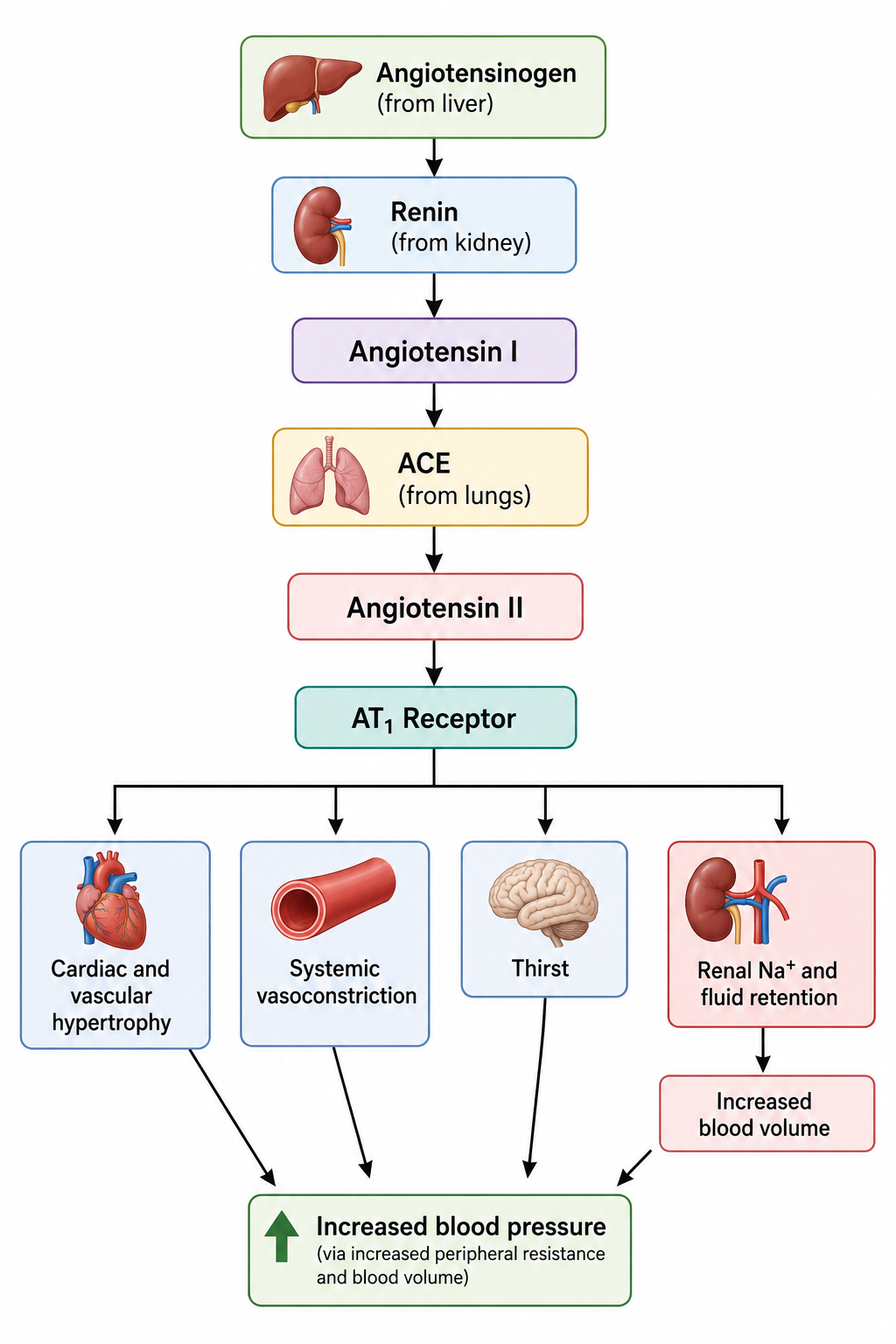
When RENIN reaches the bloodstream, it triggers ANGIOTENSINOGEN (an inactive form released by the liver and present all the time in the bloodstream). RENIN converts ANGIOTENSINOGEN into ANGIOTENSIN I. The latter, when it passes through the pulmonary circulation, is converted into ANGIOTENSIN II by an enzyme called ANGIOTENSIN CONVERTING ENZYME (ACE). ANGIOTENSIN II acts as a vasoconstrictor. It causes constriction of the blood vessels so that more blood volume is sent to the heart. As a result, the cardiac output increases, which eventually increases systolic blood pressure.
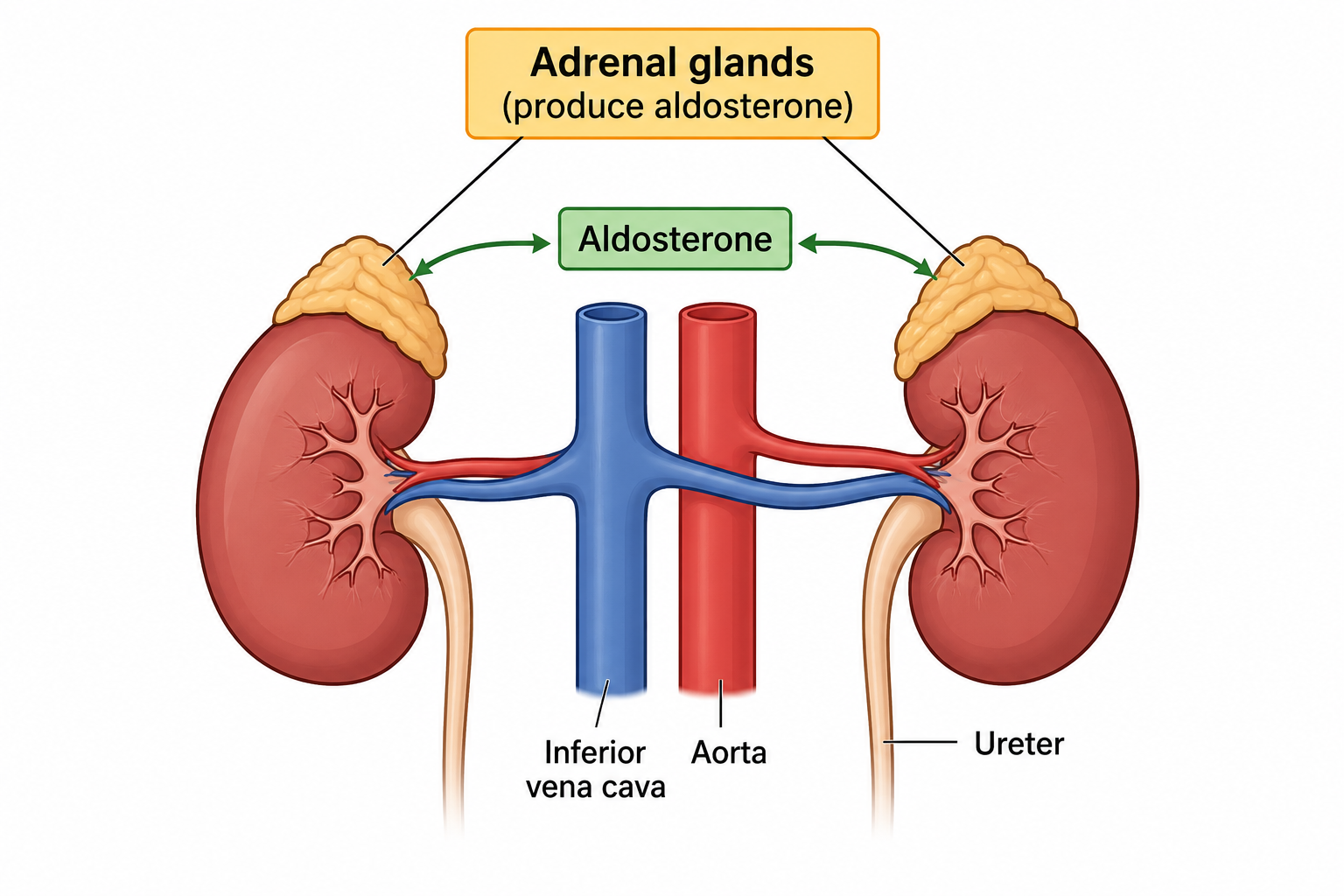
ANGIOTENSIN II also activates the receptors present on the adrenal cortex (ZONA GLOMERULOSA). The adrenal cortex releases a hormone called ALDOSTERONE that causes reabsorption of Na ions and water from the distal parts of the tubule. Na ion reabsorption increases the osmolarity of the blood, and thus a high volume of blood reaches the heart to have more cardiac output.
Heart Failure and RAAS
The renin-angiotensin-aldosterone system is triggered when the cardiac output decreases, and thus the heart fails to meet the blood flow demands of major organs, including the kidneys. However, when RAAS gets activated, it releases more Angiotensin II to maintain blood flow. Sometimes, the level of Angiotensin II increases so much that it causes dilation of the heart (enlarged heart). Health professionals use medications to control the level of Angiotensin II to prevent heart failure. Some medications include ACE inhibitors, angiotensin receptor blockers, and beta-blockers, to name only a few.