cellular respiration

Cell respiration and ATP for IB Biology C1.2 SL: ATP–ADP cycle, aerobic vs anaerobic respiration and respirometers

Cell Respiration and ATP: Aerobic, Anaerobic and Respirometers (IB C1.2 SL)

Home › Biology › Photosynthesis and respiration › Cell Respiration and ATP Cell Respiration and ATP Cell respiration is the controlled release of energy from organic compounds, such as glucose and fatty acids, to make ATP. ATP then carries that energy to every process that needs it. This page covers the SL core of IB […]

Cell Respiration and ATP: Aerobic, Anaerobic and Respirometers (IB C1.2 SL) Read More »
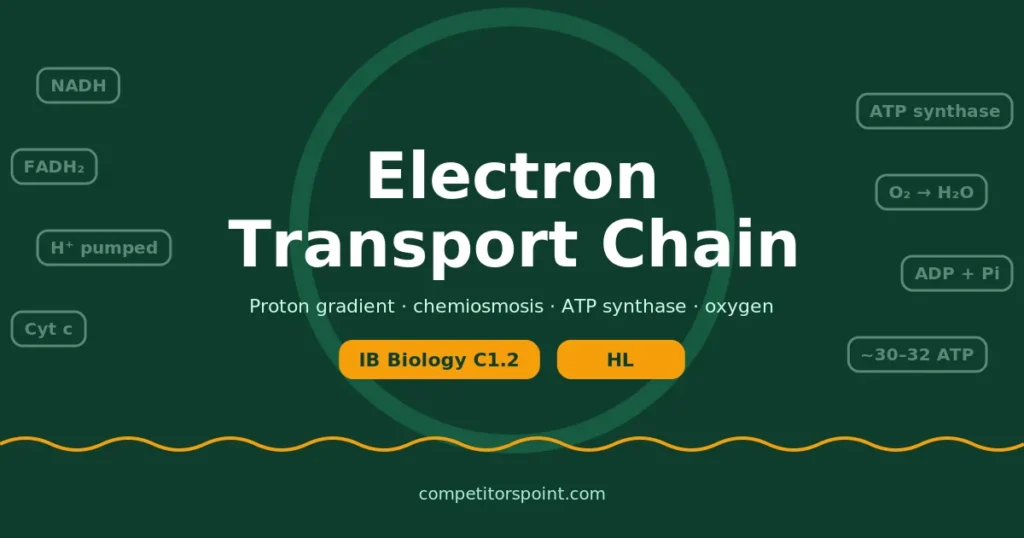
Electron transport chain: NADH passes electrons through complexes I, III and IV to oxygen while ATP synthase makes ATP

Electron Transport Chain and Oxidative Phosphorylation (IB Biology C1.2)

Home › Biology › Cell respiration › Electron Transport Chain Electron Transport Chain and Oxidative Phosphorylation The electron transport chain (ETC, or electron transport system, ETS) is the final stage of aerobic respiration: a series of protein complexes in the inner mitochondrial membrane that pass electrons from NADH and FADH2 to oxygen. The energy released

Electron Transport Chain and Oxidative Phosphorylation (IB Biology C1.2) Read More »

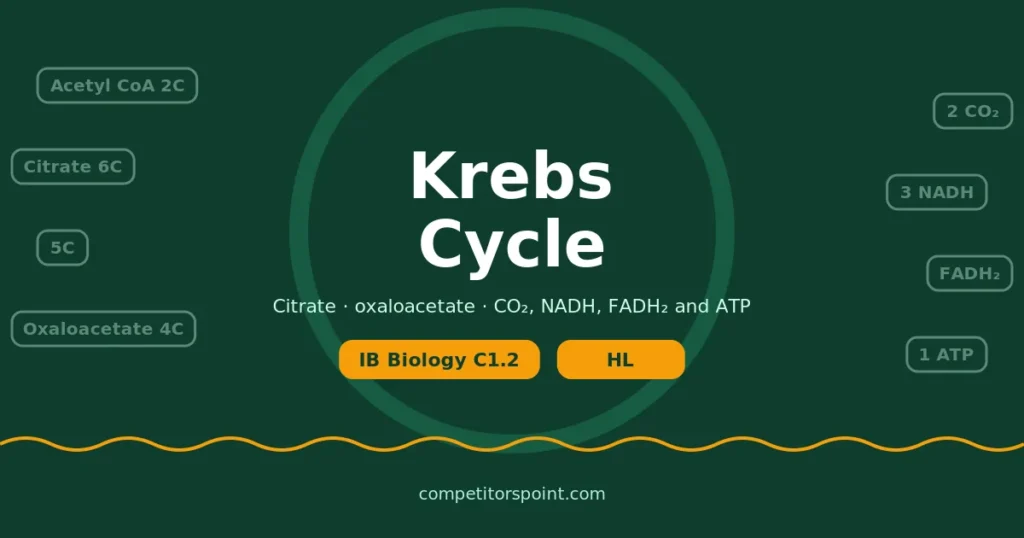
Krebs cycle: acetyl CoA joins oxaloacetate to make citrate, giving 2 CO2, 3 NADH, FADH2 and ATP per turn, IB Biology C1.2

Krebs Cycle (Citric Acid Cycle): 8 Steps, Enzymes and Yield (IB Biology C1.2)

Home › Biology › Cell respiration › Krebs Cycle Krebs Cycle (Citric Acid Cycle) The Krebs cycle (citric acid or TCA cycle) is the third stage of aerobic respiration, in which the acetyl group of acetyl CoA is fully oxidised in the mitochondrial matrix through eight enzyme-controlled steps. Each turn releases 2 CO2 and makes

Krebs Cycle (Citric Acid Cycle): 8 Steps, Enzymes and Yield (IB Biology C1.2) Read More »

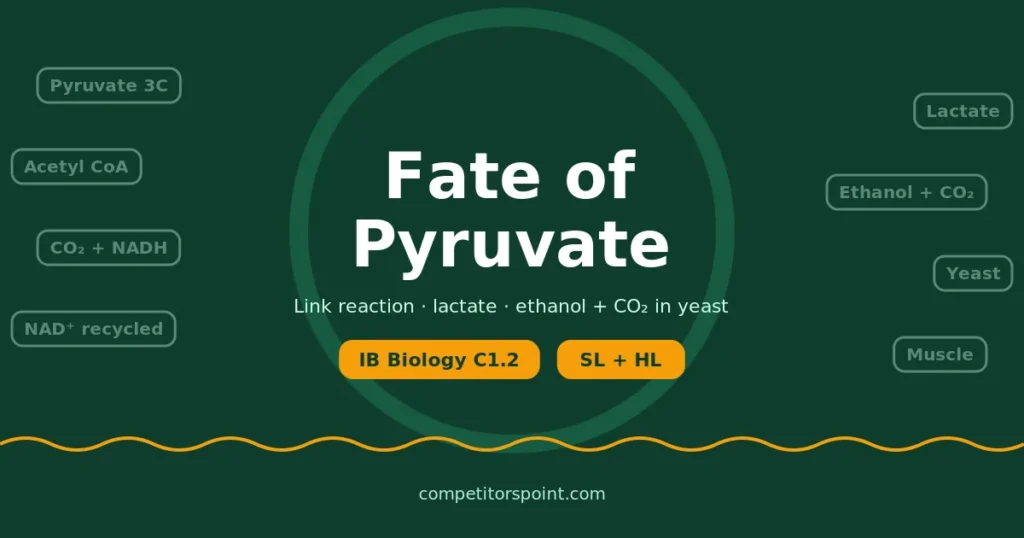
Fate of pyruvate: acetyl CoA via the link reaction, or ethanol + CO2 in yeast and lactate in muscle by fermentation

Fate of Pyruvate: Link Reaction and Fermentation (IB Biology C1.2)

Home › Biology › Cell respiration › Fate of Pyruvate Fate of Pyruvate After Glycolysis The fate of pyruvate after glycolysis depends on oxygen. With oxygen, pyruvate enters the mitochondrial matrix, where the link reaction turns it into acetyl CoA, CO2 and NADH for the Krebs cycle. Without oxygen, fermentation reduces it to ethanol and

Fate of Pyruvate: Link Reaction and Fermentation (IB Biology C1.2) Read More »

pentose phosphate pathway

Pentose Phosphate Pathway (PPP): An Overview

The pentose phosphate pathway (PPP), also known as the direct oxidative pathway, glycolytic shunt, hexose monophosphate shunt (HMS), or Warburg-Lipmann-Dickens cycle, is an alternative route for glucose breakdown that bypasses glycolysis and the Krebs cycle. This pathway, present in both prokaryotes and eukaryotes, occurs in the cytoplasm and chloroplasts under aerobic conditions. Unlike other respiratory

Pentose Phosphate Pathway (PPP): An Overview Read More »

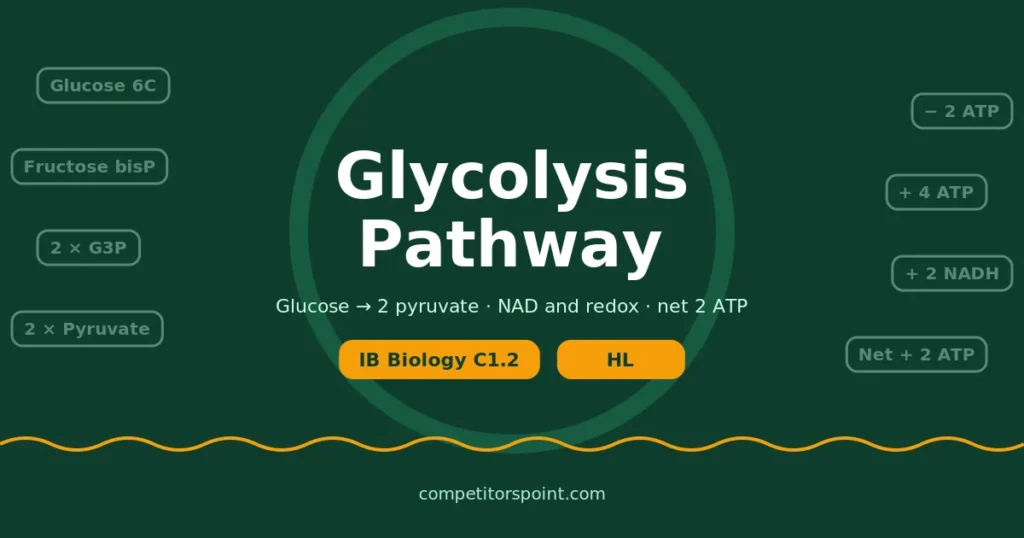
Glycolysis pathway: glucose split into two pyruvate with NAD reduced, 2 ATP used and 4 ATP made, for IB Biology C1.2

Glycolysis Pathway: 10 Steps, Enzymes and Net ATP Yield (IB Biology C1.2)

Home › Biology › Cell respiration › Glycolysis Glycolysis Pathway Glycolysis is the first stage of cell respiration, in which one glucose molecule (6C) is broken down in the cytoplasm into two molecules of pyruvate (3C) through ten enzyme-controlled steps. It uses 2 ATP, makes 4 ATP by substrate-level phosphorylation and 2 NADH, giving a

Glycolysis Pathway: 10 Steps, Enzymes and Net ATP Yield (IB Biology C1.2) Read More »

Scroll to Top