IB Theme A: Unity and Diversity

IB Biology (first exams 2025) notes for Theme A, by syllabus code.

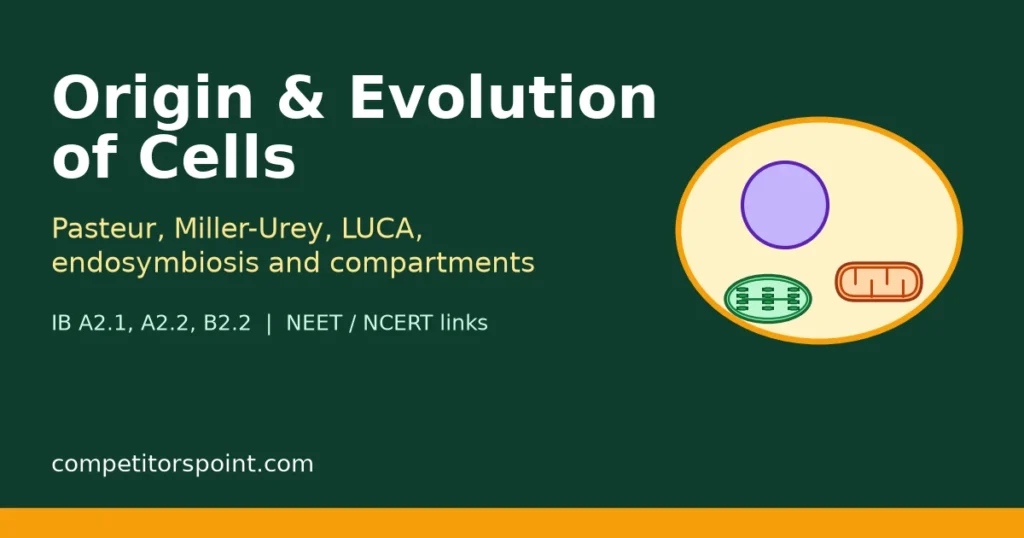
Evolution of cells title card showing a eukaryotic cell with a nucleus, mitochondrion and chloroplast for a chapter on Pasteur, Miller-Urey, LUCA and endosymbiosis

Origin and Evolution of Cells: LUCA to Eukaryotes (IB A2.1, NEET)

Home › IB Biology › Cell biology › Origin and evolution of cells Origin and Evolution of Cells The origin of cells is how the first living cells arose from non-living chemicals, about 3.5 to 4 billion years ago. Organic molecules probably formed self-replicating RNA inside membrane vesicles. The last universal common ancestor (LUCA) gave […]

Origin and Evolution of Cells: LUCA to Eukaryotes (IB A2.1, NEET) Read More »
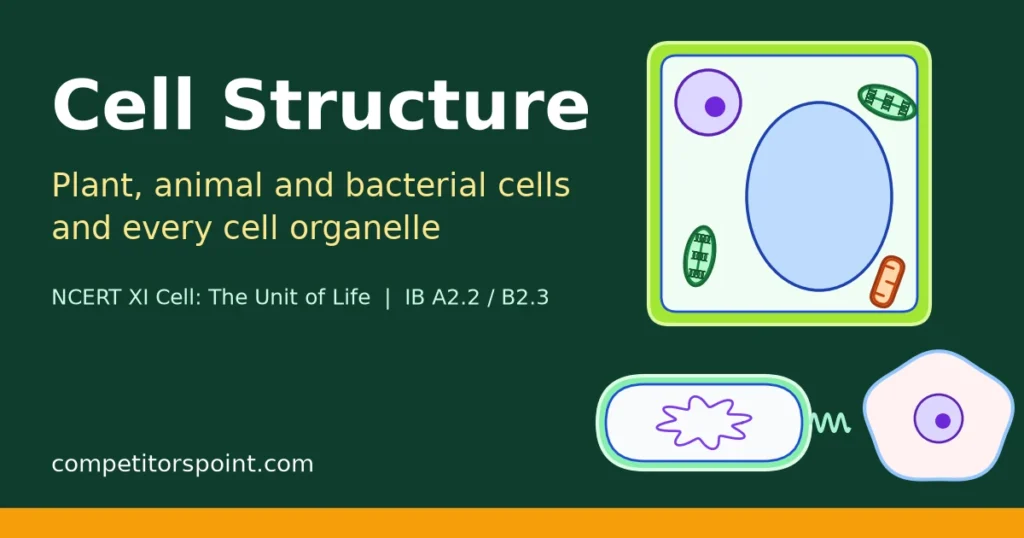
Cell structure title card showing a plant cell, a rod-shaped bacterium and an animal cell

Cell Structure: Plant, Animal and Bacterial Cells (IB A2.2, NEET)

Home › IB Biology › Cell biology › Cell structure Cell Structure: Prokaryotic, Plant and Animal Cells Cell structure is the arrangement of the parts that make up a cell. Every cell has a plasma membrane, cytoplasm, ribosomes and DNA. Prokaryotic cells, such as bacteria, have no nucleus and no membrane-bound organelles, while eukaryotic cells,

Cell Structure: Plant, Animal and Bacterial Cells (IB A2.2, NEET) Read More »

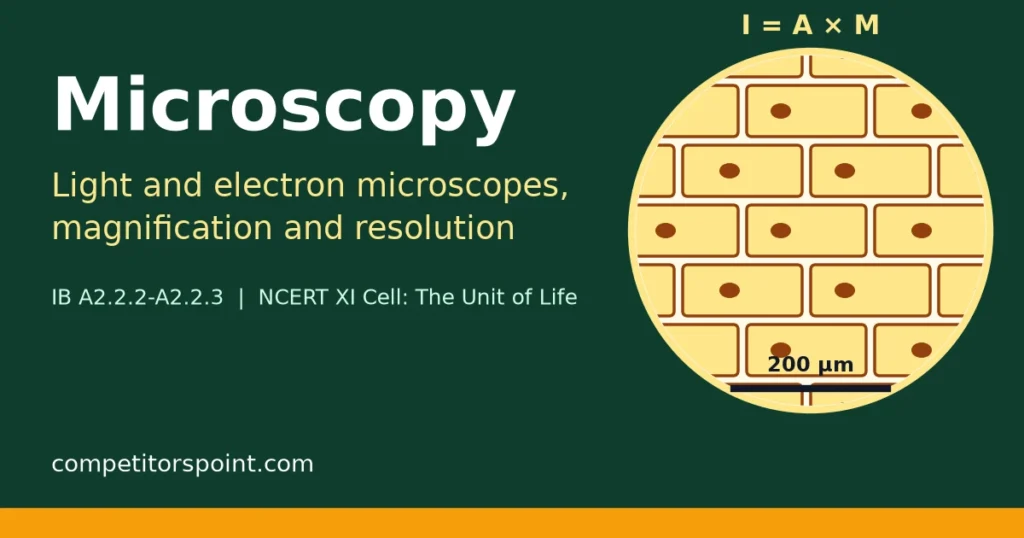
Microscopy title card showing a circular field of view of onion epidermis cells with a 200 micrometre scale bar and the formula I = A x M

Microscopy: Light vs Electron Microscopes for IB A2.2 and NEET

Home › IB Biology › Cell biology › Microscopy Microscopy: Light and Electron Microscopes Microscopy is the use of microscopes to see objects too small for the naked eye. Magnification is how many times larger the image is than the real object (image size ÷ actual size); resolution is the smallest distance at which two

Microscopy: Light vs Electron Microscopes for IB A2.2 and NEET Read More »

Scroll to Top