
NEET Biology • NCERT Class XII • Chapter 9
Steps of gene cloning for Class 12 and NEET, one diagram at a time
NTA NEET (UG) syllabusThe steps of gene cloning are: isolate the DNA and cut out the gene you want, join it to a vector to make recombinant DNA, put it into a competent host cell, select the cells that carry the gene, and let them multiply into a clone that gives many copies of the gene or its protein. These Class 12 notes explain each step simply, the way a teacher would in class: what happens, which enzyme or tool does it, and why it works. It also shows how human insulin was made this way, then gives you a summary table, common traps, 15 MCQs and FAQs.
- 15 diagrams
- 5 steps
- Insulin example
- Common traps
- 15 MCQs
What is gene cloning?
Break the term into its two words. A gene is a stretch of DNA that usually carries the instructions for one protein. A clone is an identical copy. So gene cloning is the technique of making many identical copies of one chosen gene. NCERT puts it in one line: cloning is making multiple identical copies of any template DNA.
Why is this hard? When you extract DNA from a cell, you get all of its genes together, millions of base pairs long. The gene you care about is a tiny part of it, and you have only a few copies. Gene cloning solves both problems: it pulls that one gene out of the rest and then makes it multiply until you have enough to study or use.
Two ways to clone a gene
There are two routes, and NEET expects you to know the difference.
- Cell-based cloning: the gene is joined to a carrier DNA called a vector, and the vector is put into a living host cell, usually the bacterium E. coli. Every time the host divides, the vector and the gene are copied along with it. This is the method this page explains step by step.
- Cell-free cloning: the gene is copied in a test tube by the polymerase chain reaction (PCR), using primers and a heat-stable DNA polymerase. No vector or host is needed. NCERT notes that PCR can amplify a segment of DNA about a billion times.
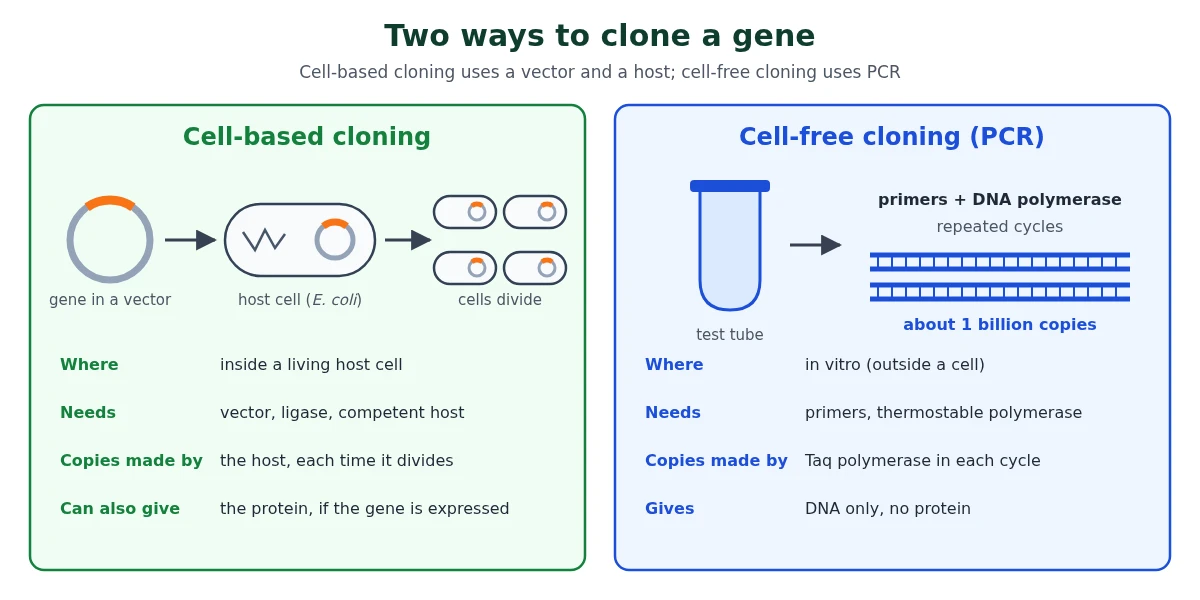
The two are often used together: a gene is first amplified by PCR and then cloned into a vector. If you want the protein and not just the DNA, you need the cell-based route, because only a living cell can express the gene. PCR is covered in detail in our PCR guide.
What you need before you start
NCERT calls these the key tools of recombinant DNA technology. Each one has one job in the steps of gene cloning.
| Requirement | Its job in gene cloning | Example |
|---|---|---|
| DNA with the gene of interest | The gene you want to copy (also called the insert) | Human insulin gene |
| Restriction enzyme | Cuts DNA at a specific recognition sequence, leaving sticky ends | EcoR I, BamH I |
| DNA ligase | Joins the cut ends of the gene and the vector | Makes recombinant DNA |
| Vector | Carries the gene into the host and replicates there | Plasmid pBR322, bacteriophage |
| Competent host | Takes up the recombinant DNA and copies it as it divides | {EC} treated with calcium |
| Selection medium | Lets only the right cells grow | Agar with ampicillin or tetracycline |
Why clone a gene?
The problem: alien DNA cannot copy itself
Imagine you push a piece of foreign (alien) DNA into a bacterium. On its own it usually cannot multiply, so it is lost as the cells divide. It can be copied only if it becomes part of a DNA molecule that has a special sequence called the origin of replication (ori), where replication starts. A chromosome has one, and so does a plasmid. So the trick of gene cloning is simple: link the alien DNA to an ori. Then it replicates with that DNA and passes to every daughter cell.
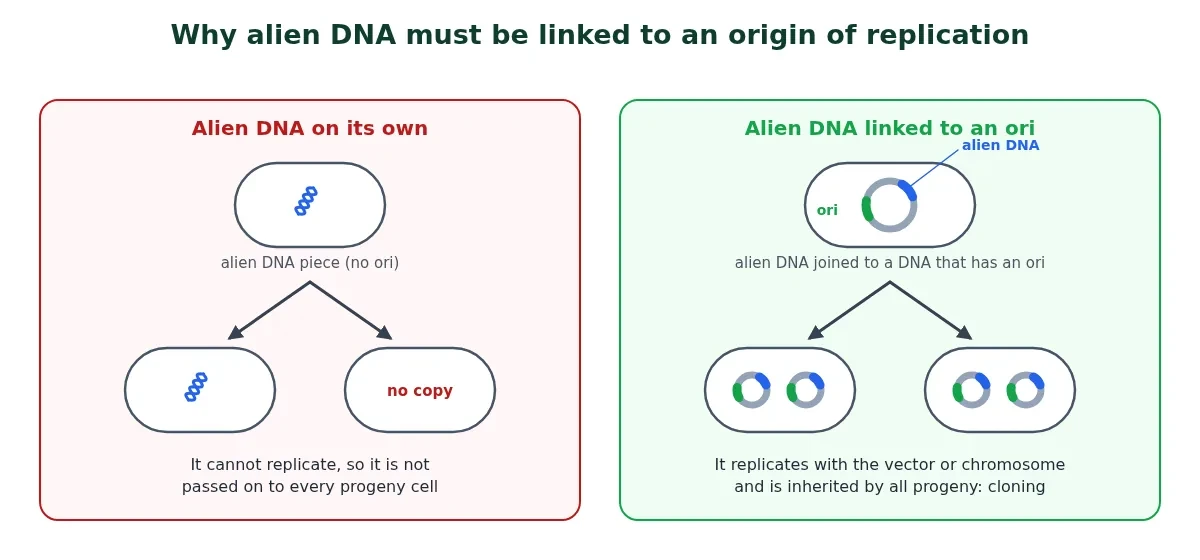
This is why the vector matters so much. The vector supplies the ori, so the gene riding on it gets copied inside the host.
The first gene ever cloned
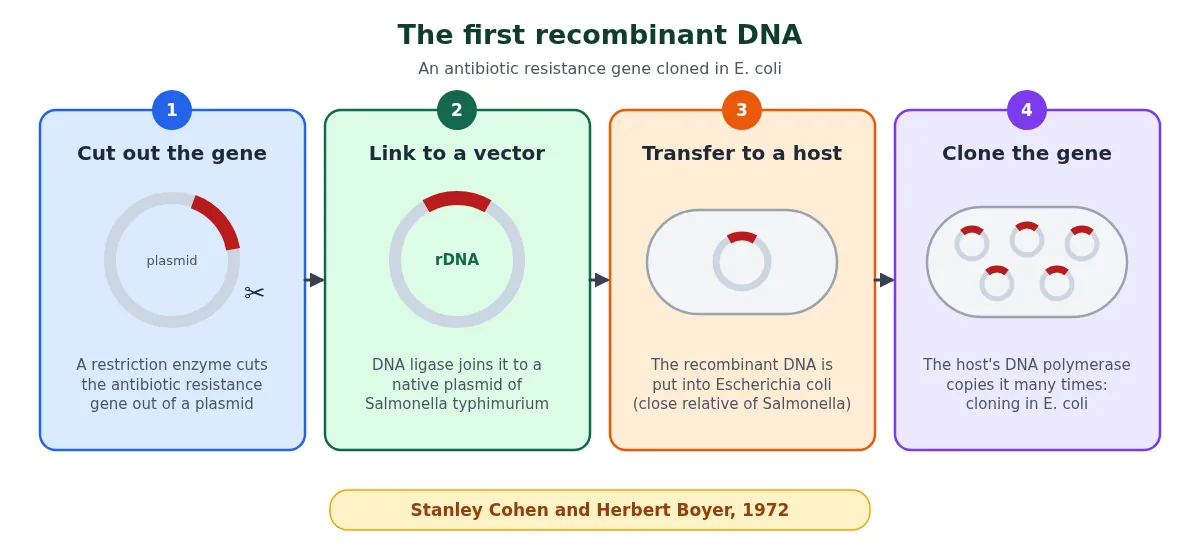
In 1972, Stanley Cohen and Herbert Boyer cut an antibiotic resistance gene out of a plasmid using a restriction enzyme. They joined it to a native plasmid of Salmonella typhimurium with DNA ligase and transferred this recombinant DNA into Escherichia coli. There the host’s DNA polymerase copied it many times. NCERT calls this the cloning of the antibiotic resistance gene in E. coli. Every step of gene cloning you will learn below was already present in this experiment: cut, join, transfer, multiply.
What cloning lets us do
- Make useful proteins in bulk. Once a human gene is cloned in bacteria, the bacteria can be grown in large volumes to make its protein, such as human insulin.
- Move only the gene you want. Traditional hybridisation in plant and animal breeding often carries undesirable genes along with the desirable ones. Genetic engineering, which includes making recombinant DNA, gene cloning and gene transfer, lets us introduce just one gene or a chosen set of genes.
- Study a gene. With many copies of one gene, scientists can work out its sequence and what it does.
NCERT sums up genetic modification of any organism in three basic steps: (i) identify DNA with desirable genes, (ii) introduce that DNA into the host, and (iii) maintain the DNA in the host and transfer it to the progeny. The five steps of gene cloning below are simply these three ideas done in the lab.
Steps of gene cloning at a glance
Here is the whole process in one picture. Learn this order first; the details of each step come next.
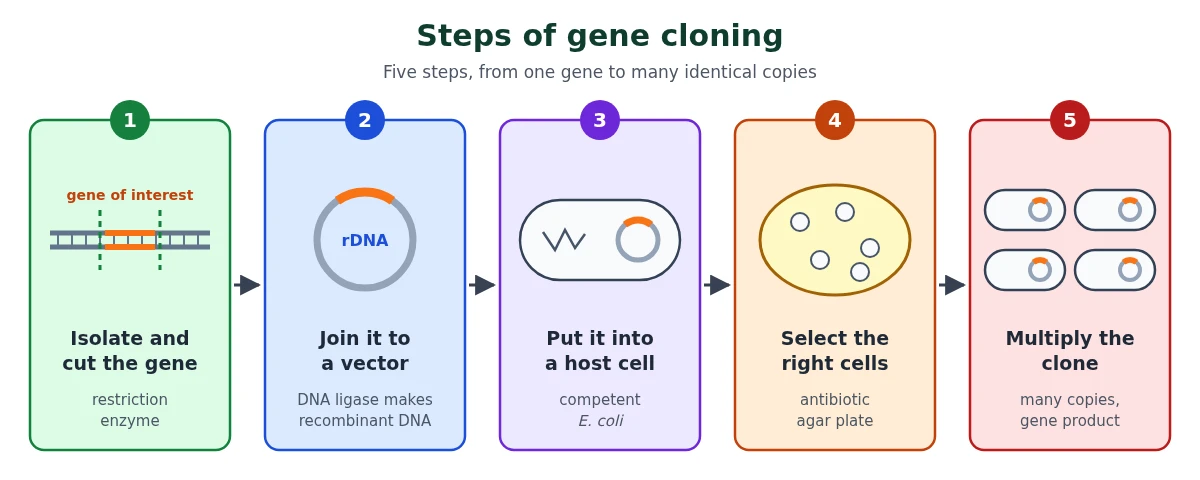
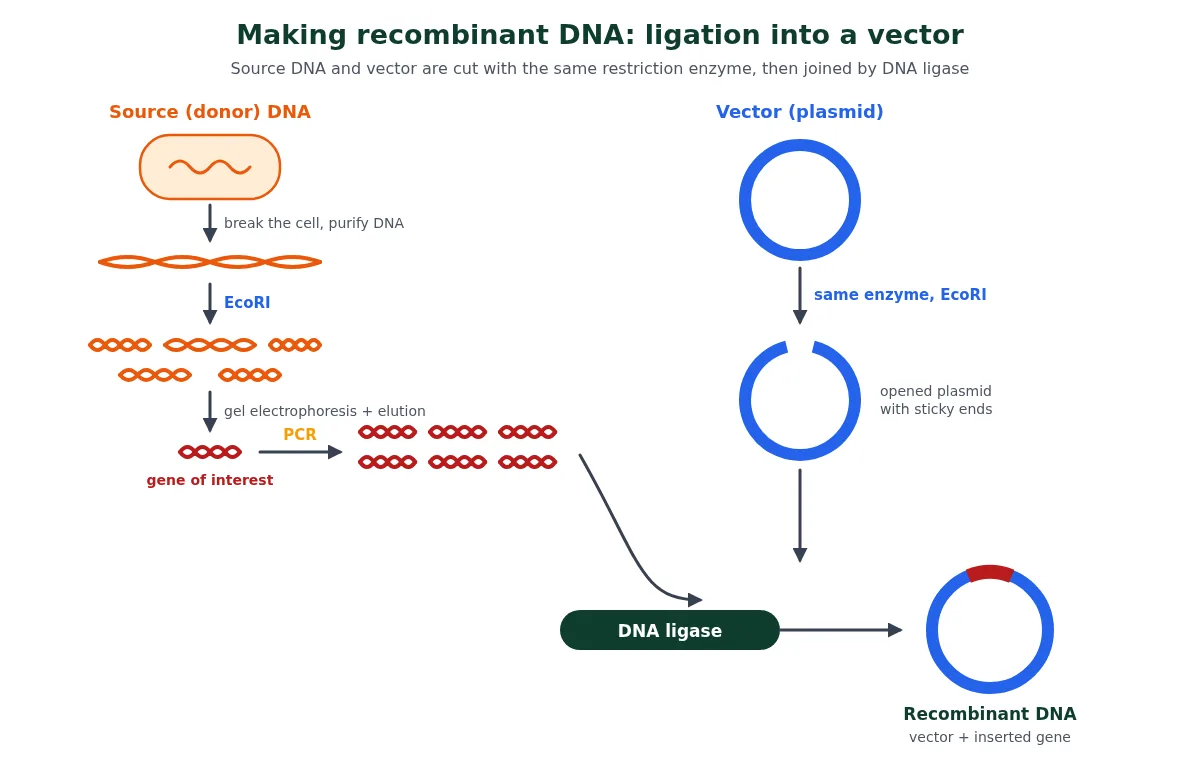
- Isolate the DNA and cut out the gene of interest with a restriction enzyme, then pick out the right fragment.
- Join the gene to a vector cut with the same enzyme, using DNA ligase. The result is recombinant DNA (rDNA).
- Transfer the rDNA into a competent host, usually E. coli.
- Select the right cells: first the cells that took up the vector (transformants), then those whose vector carries the gene (recombinants).
- Multiply the clone to get many copies of the gene and, if it is expressed, its protein.
Some books list six or seven steps instead of five. They are the same steps split differently. NCERT, for example, lists the processes of recombinant DNA technology as isolation of DNA, cutting it, isolating the desired fragment, ligating it into a vector, transferring it into the host, culturing the host on a large scale and extracting the product.
| Step on this page | NCERT process of rDNA technology |
|---|---|
| 1. Isolate and cut the gene | Isolation of DNA; fragmentation by restriction enzymes; isolation of the desired fragment (and PCR if needed) |
| 2. Join to a vector | Ligation of the DNA fragment into a vector |
| 3. Transfer into the host | Insertion of recombinant DNA into the host cell |
| 4. Select the cells | Selection of transformants and recombinants (selectable markers) |
| 5. Multiply the clone | Culturing the host on a large scale; extracting and purifying the product |
The full chapter, with all seven processes, PCR and bioreactors, is in our Biotechnology Principles and Processes NEET notes.
Step 1: Isolate the DNA and cut out the gene of interest
1a. Get pure DNA out of the cells
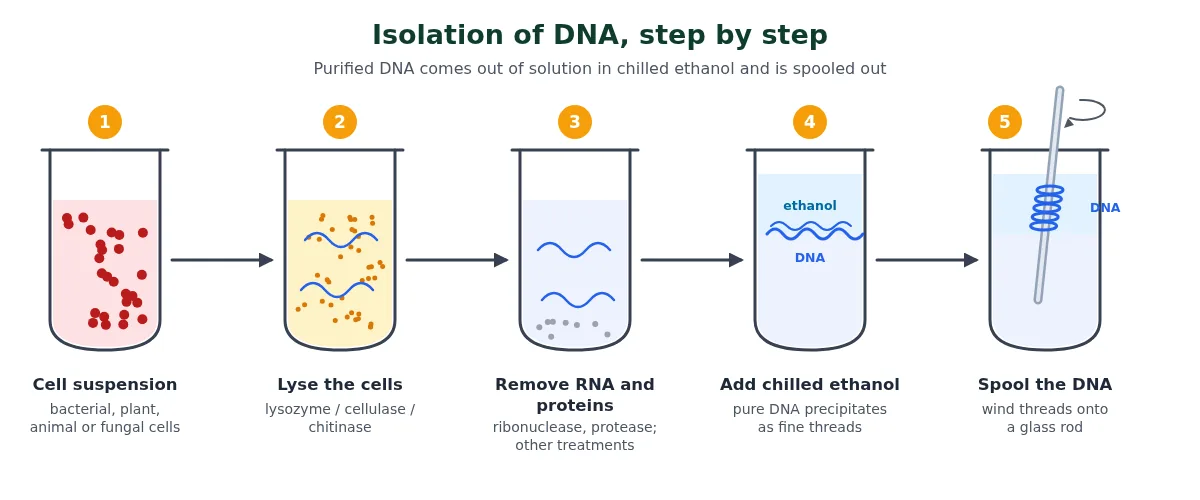
A restriction enzyme can cut DNA properly only if the DNA is pure, free of other big molecules. But DNA sits inside membranes, mixed with RNA, proteins, polysaccharides and lipids. So we break the cells open and then remove everything except DNA.
| What we need to remove | How |
|---|---|
| Bacterial cell wall | Enzyme lysozyme |
| Plant cell wall | Enzyme cellulase |
| Fungal cell wall | Enzyme chitinase |
| RNA | Enzyme ribonuclease |
| Proteins (including histones wrapped around DNA) | Enzyme protease |
| Other molecules | Other suitable treatments |
Finally, chilled ethanol is added. The purified DNA precipitates and can be seen as a collection of fine threads in the suspension, which can be wound out on a glass rod (spooling).
1b. Cut the DNA with a restriction enzyme
The pure DNA is incubated with a restriction endonuclease under the best conditions for that enzyme. Each restriction enzyme recognises a specific palindromic sequence and cuts both strands there. Many of them cut a little away from the centre of the sequence, leaving short single-stranded overhangs called sticky ends. For example, EcoR I recognises GAATTC and cuts between G and A on both strands.
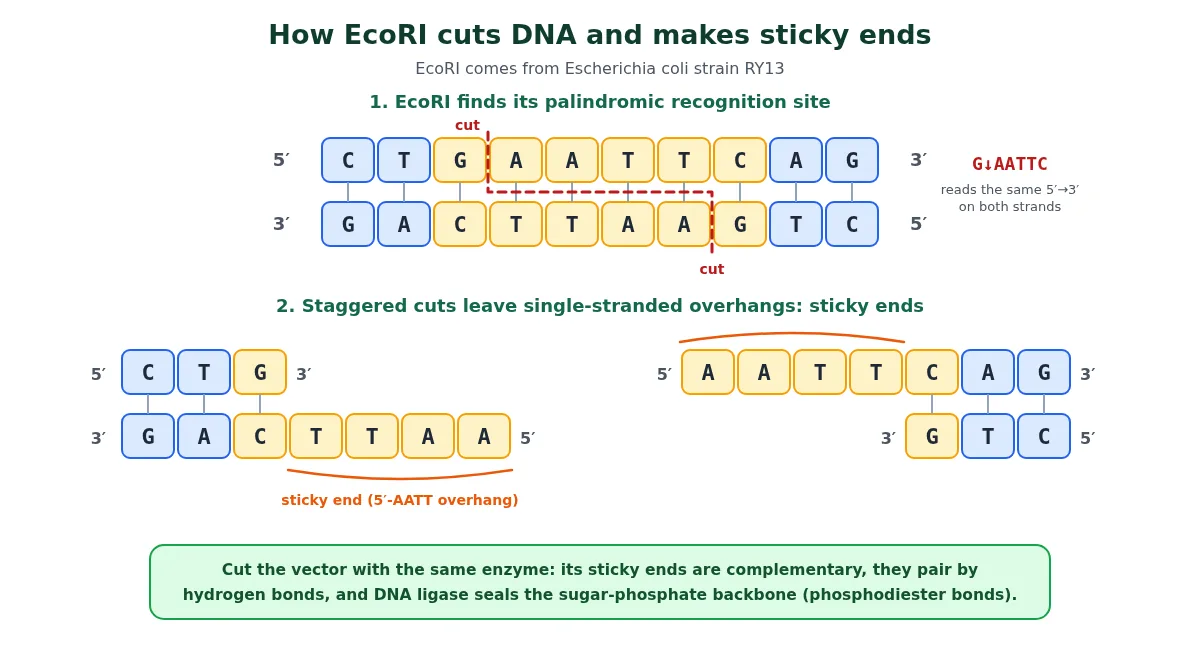
Sticky ends are the reason cloning works: they form hydrogen bonds with any matching sticky end, so a gene and a vector cut by the same enzyme can stick together. How restriction enzymes are named and how palindromes read are covered in our restriction enzymes section.
1c. Pick out the right fragment
Cutting gives a mixture of fragments, and only one of them carries your gene. The fragments are separated by agarose gel electrophoresis. DNA is negatively charged, so it moves towards the anode, and smaller fragments move farther through the gel. The DNA is stained with ethidium bromide and seen under UV light as orange bands. The band with the gene of interest is cut out of the gel and the DNA is extracted from it. This is called elution.
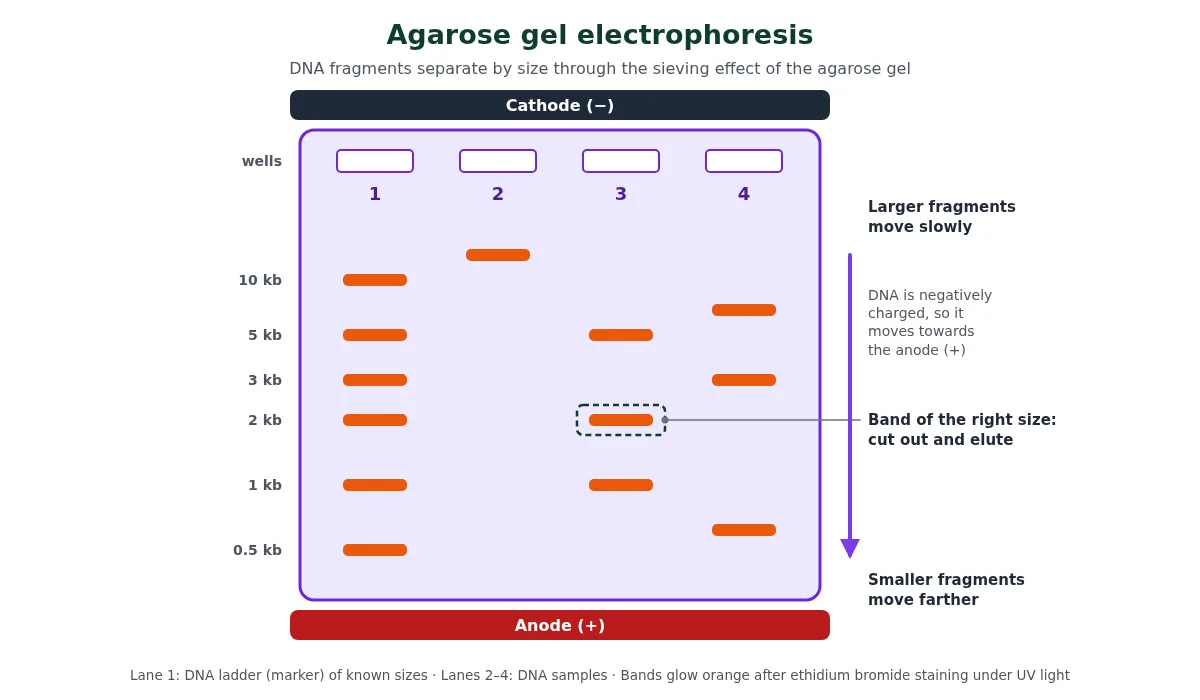
Gel electrophoresis is also used to check how far a restriction digestion has gone. For more detail, see the gel electrophoresis section of the chapter notes.
Optional: amplify the gene first
If you have very little of the gene, you can copy it by PCR before joining it to a vector. NCERT notes that the amplified fragment can then be ligated with a vector for further cloning.
Step 2: Join the gene to a vector to make recombinant DNA
2a. Cut the vector with the same enzyme
The vector, usually a plasmid, is cut with the same restriction enzyme that was used on the source DNA. This opens the circle at one point and gives it the same sticky ends as the gene. NCERT stresses this point: unless you cut the vector and the source DNA with the same restriction enzyme, the recombinant vector cannot be made.
2b. Mix them and add DNA ligase
The cut gene and the opened vector are mixed. Their sticky ends pair up by hydrogen bonds, and DNA ligase is added to seal the joins in the sugar-phosphate backbone. The result is recombinant DNA: one molecule made of DNA from two different sources.
What makes a good cloning vector?
Plasmids (small circular DNA in bacteria) and bacteriophages (viruses of bacteria) can replicate inside bacterial cells independently of the chromosome, so both are used as vectors. Modern vectors are engineered so that it is easy to link foreign DNA and to tell recombinants from non-recombinants. A cloning vector needs these features:
- Origin of replication (ori). Replication starts here, and any DNA linked to it can be copied in the host. The ori also controls the copy number, the number of copies per cell. If you want many copies of your gene, clone it in a vector whose ori supports a high copy number.
- Selectable marker. A gene that helps you remove the cells that did not take up the vector and lets only the transformed cells grow. Genes for resistance to ampicillin, chloramphenicol, tetracycline or kanamycin are useful markers for E. coli, because normal E. coli is not resistant to any of them.
- Cloning sites. Very few, preferably only one, recognition site for each commonly used restriction enzyme. If the vector had several sites for the same enzyme, it would be cut into several pieces, which complicates cloning.
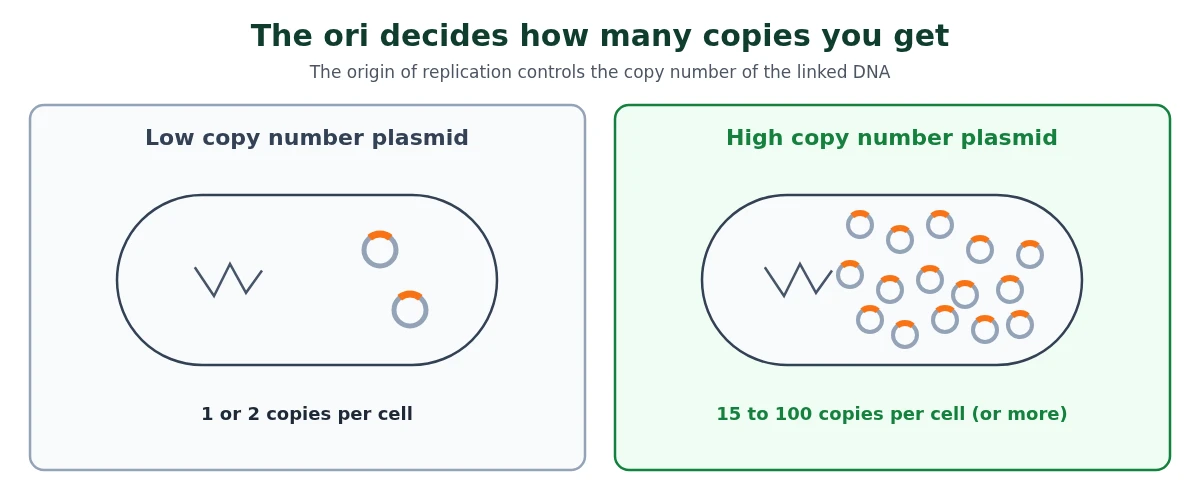
Copy numbers vary a lot. Some plasmids have only one or two copies per cell, others 15 to 100 or even more, and bacteriophages have very high copy numbers. Linking your gene to the vector lets you multiply it as many times as the vector’s copy number.
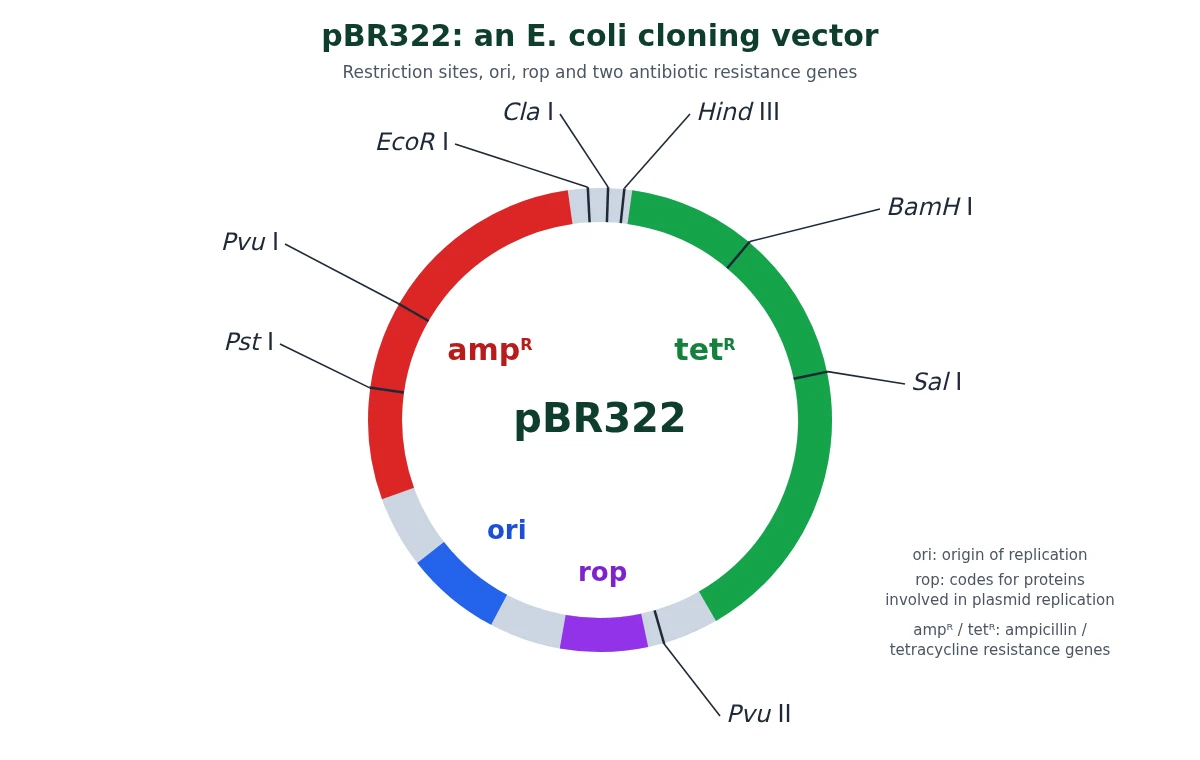
The standard textbook example is the E. coli vector pBR322. It has an ori, a rop gene that codes for proteins involved in plasmid replication, two selectable markers (resistance to ampicillin, ampR, and to tetracycline, tetR) and single sites for enzymes such as BamH I, Sal I, Pst I, EcoR I, Hind III, Cla I and Pvu II.
For plants and animals, disarmed pathogens are used as vectors: the Ti plasmid of Agrobacterium tumefaciens, which no longer causes tumours, and disarmed retroviruses. The full vector story is in the cloning vectors section of the chapter notes, and plasmids are explained simply in what are plasmids?
Step 3: Transfer the recombinant DNA into a host cell
Recombinant DNA in a tube is useless until a living cell takes it up and copies it. But DNA is a hydrophilic molecule, so it cannot pass through cell membranes on its own. Bacteria must first be made competent, that is, able to take up DNA.
Making E. coli competent
- Treat the cells with a specific concentration of a divalent cation, such as calcium. This increases the efficiency with which DNA enters through pores in the cell wall.
- Incubate the cells with the recombinant DNA on ice.
- Place them briefly at 42 °C. This is the heat shock.
- Put them back on ice. The bacteria have now taken up the recombinant DNA.
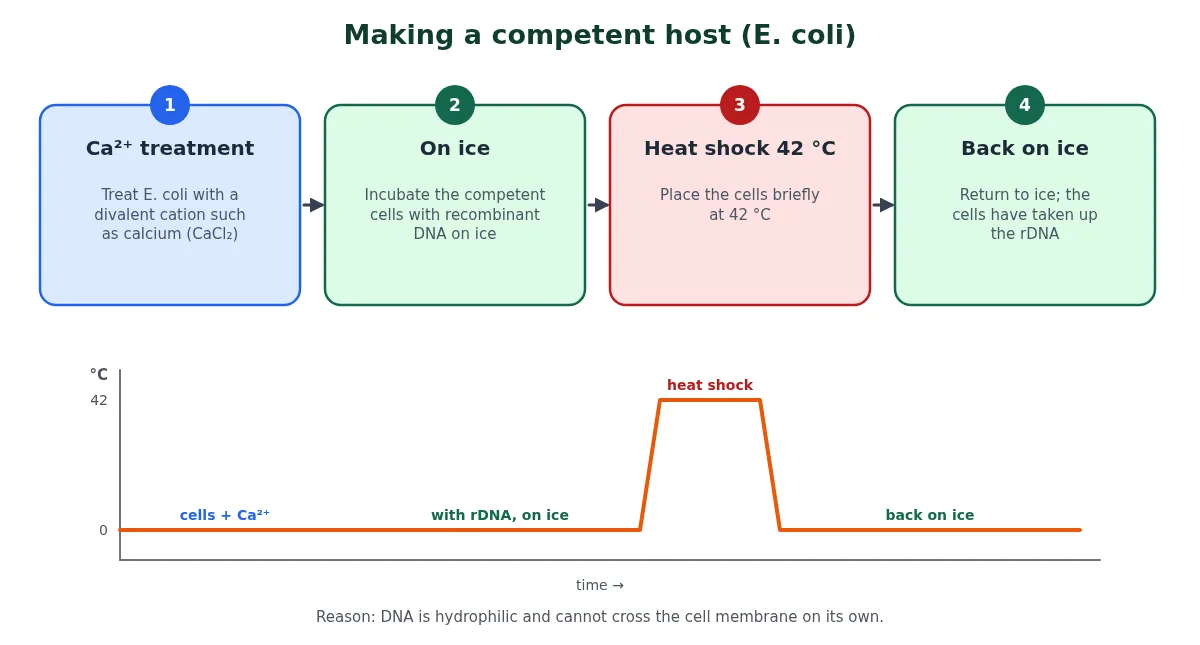
Introducing a piece of DNA into a bacterium this way is called transformation, and a cell that has taken up the vector is a transformant.
Other ways to get DNA into a host
Plant and animal cells need different methods.
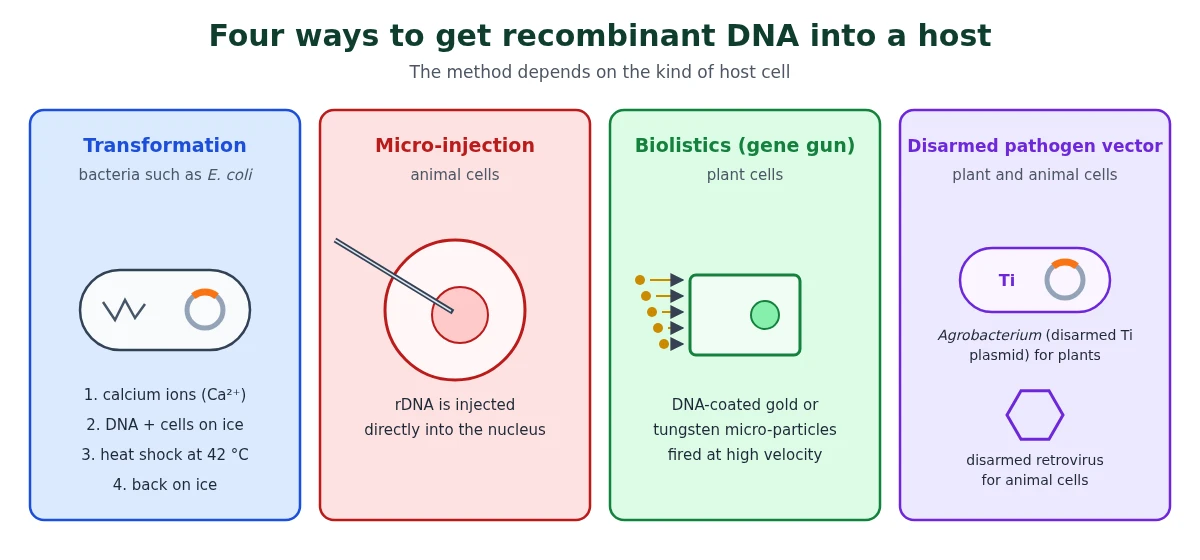
| Method | How it works | Host |
|---|---|---|
| Transformation | Calcium treatment, ice, heat shock at 42 °C, ice | Bacteria such as {EC} |
| Micro-injection | Recombinant DNA is injected directly into the nucleus | Animal cells |
| Biolistics (gene gun) | Cells are bombarded with high-velocity micro-particles of gold or tungsten coated with DNA | Plant cells |
| Disarmed pathogen vector | The vector infects the cell and transfers the recombinant DNA | Plants (Agrobacterium) and animals (retroviruses) |
More on this step in how recombinant DNA enters host cells and in the competent host section of the chapter notes.
Step 4: Select the cells that carry the gene
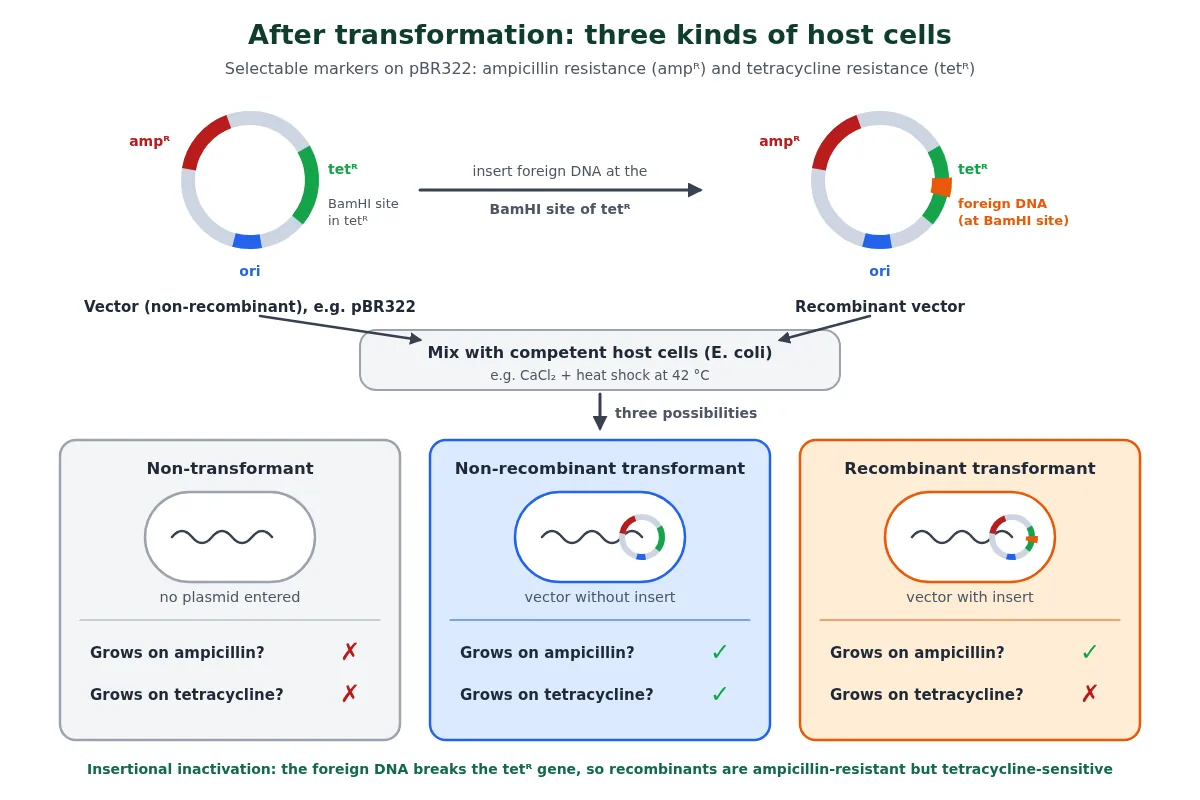
Transformation is not efficient. After step 3 the tube holds three kinds of cells, and they all look the same:
- Non-transformants: no plasmid entered.
- Non-recombinant transformants: a plasmid entered, but it closed back without the gene.
- Recombinant transformants: the plasmid with the gene entered. These are the cells you want.
Selection works in two rounds: first keep the transformants, then pick the recombinants among them.
Round 1: keep the transformants (selectable marker)
Spread the cells on an agar plate containing ampicillin. Only cells carrying the ampR gene of the vector survive, so only transformants grow; untransformed cells die. Here the ampicillin resistance gene is the selectable marker. Notice what this plate does not do: it cannot tell recombinant from non-recombinant cells, because both carry ampR.
Round 2: find the recombinants (insertional inactivation)
In pBR322 the foreign DNA can be ligated at the BamH I site, which lies inside the tetracycline resistance gene. The insert breaks that gene, so recombinant plasmids lose tetracycline resistance. This is called insertional inactivation.
So the colonies from the ampicillin plate are transferred to a plate containing tetracycline:
| Cell type | Grows on ampicillin? | Grows on tetracycline? |
|---|---|---|
| Non-transformant | No | No |
| Non-recombinant transformant | Yes | Yes |
| Recombinant transformant | Yes | No |
The recombinants are the colonies that grew on ampicillin but are missing on tetracycline. One resistance gene selects the transformants; the other, inactivated by the insert, identifies the recombinants.
An easier way: blue-white screening
Plating on two antibiotics is cumbersome. So vectors were developed where the gene is inserted inside the coding sequence of the enzyme β-galactosidase. The insert inactivates this gene (insertional inactivation again). The cells are grown with a chromogenic substrate, a substance that gives colour when β-galactosidase acts on it:
- Plasmid without an insert: the enzyme works, and the colony is blue.
- Plasmid with an insert: no enzyme, so the colony gives no colour (white). These are the recombinants.
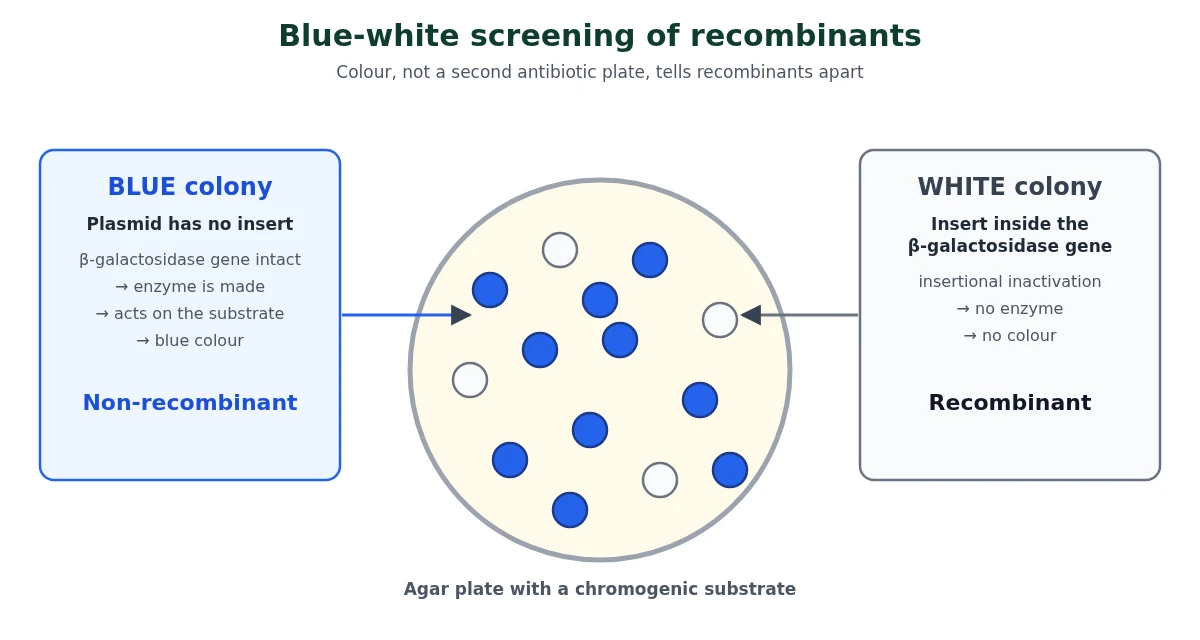
Only one plate is needed, and you can see the recombinants at a glance.
Step 5: Multiply the clone and get the gene product
A recombinant cell is picked and allowed to divide. All its descendants are identical and carry the same recombinant DNA, so together they form a clone. Each cell holds as many copies of the gene as the vector’s copy number. At this point the gene has been cloned.
From gene to protein
In almost all recombinant technologies the real aim is a protein. For that, the cloned gene must be expressed, which happens under the right conditions. A protein made by expressing a gene in a different (heterologous) host is called a recombinant protein.
- Small scale: the cells are grown in the laboratory and the protein is extracted and purified by separation techniques.
- Continuous culture: used medium is drained out from one side while fresh medium is added from the other. This keeps the cells in their most active log (exponential) phase and gives more biomass and a higher yield of the protein.
- Large scale: small cultures cannot make enough, so cells are grown in bioreactors holding 100 to 1000 litres, which give optimum temperature, pH, substrate, salts, vitamins and oxygen.
After this, the product goes through downstream processing (separation and purification), is formulated with preservatives, goes through clinical trials if it is a drug, and is tested for quality. These stages belong to production rather than cloning, so they are covered in the bioreactors and downstream processing sections of the chapter notes.
Example: how gene cloning gave us human insulin
NCERT Chapter 10 gives the best real example of these steps. People with diabetes need insulin regularly. Earlier it was extracted from the pancreas of slaughtered cattle and pigs, but this animal insulin caused allergy or other reactions in some patients, because it is a foreign protein.
Insulin is made of two short polypeptide chains, chain A and chain B, linked by disulphide bridges. In the body it is first made as a pro-hormone with an extra stretch, the C peptide, which is removed when it matures. Getting insulin assembled into its mature form was the main challenge.
In 1983, the American company Eli Lilly solved it like this:
- They prepared two DNA sequences corresponding to chains A and B of human insulin (step 1).
- They introduced them into plasmids of E. coli (steps 2 and 3).
- The bacteria produced the two chains separately (steps 4 and 5).
- Chains A and B were extracted and combined by creating disulphide bonds to form human insulin.
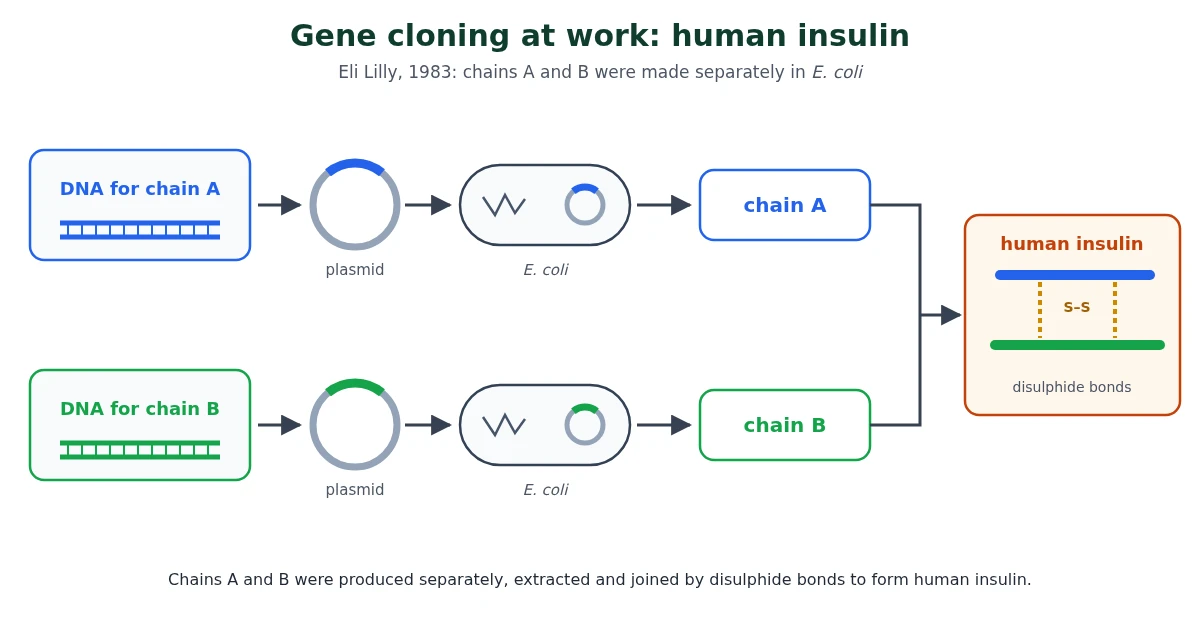
Because it is the human protein, made in bacteria grown in bulk, this insulin is available in large amounts. This is exactly why we clone genes.
Steps of gene cloning: summary table
| Step | What happens | Key enzyme or tool | Result |
|---|---|---|---|
| 1. Isolate and cut | Break cells, purify DNA, cut it, separate fragments | Lysozyme / cellulase / chitinase, RNase, protease, chilled ethanol; restriction enzyme; gel electrophoresis | Gene of interest with sticky ends |
| 2. Join to a vector | Cut vector with the same enzyme, mix, seal | Same restriction enzyme; DNA ligase; vector such as pBR322 | Recombinant DNA |
| 3. Transfer into host | Make cells competent and let them take up the rDNA | Calcium ions, ice, heat shock at 42 °C; micro-injection; gene gun; disarmed pathogens | Transformants |
| 4. Select | Keep transformants, then identify recombinants | Antibiotic plates (selectable marker); insertional inactivation; blue-white screening | Recombinant cells |
| 5. Multiply | Grow the recombinant cell, express the gene | Culture, continuous culture, bioreactor; downstream processing | Clone, many copies, recombinant protein |
Key terms in one place
| Term | Meaning |
|---|---|
| Clone | Identical copies of a DNA, a cell or an organism; in gene cloning, many identical copies of one gene |
| Gene of interest (insert) | The gene you want to copy |
| Vector | Carrier DNA (plasmid or bacteriophage) that takes the gene into the host and replicates there |
| Recombinant DNA | DNA made by joining DNA from two different sources |
| Origin of replication (ori) | Sequence where replication starts; also controls copy number |
| Copy number | Number of copies of a plasmid (and the linked gene) per cell |
| Selectable marker | Gene, often for antibiotic resistance, that lets only transformants grow |
| Transformation | Introducing a piece of DNA into a host bacterium |
| Transformant | Cell that has taken up the vector |
| Recombinant | Transformant whose vector carries the inserted gene |
| Insertional inactivation | Loss of a gene’s function because DNA was inserted inside it |
| Competent cell | Cell treated (for example with calcium) so that it can take up DNA |
| Recombinant protein | Protein made by expressing a gene in a heterologous host |
Common traps in gene cloning questions
These are the points where students lose marks most often in NEET and board exams.
- Cloning means copying. NCERT defines it as making multiple identical copies of any template DNA. It is not the same as gene transfer, although the steps overlap.
- Alien DNA multiplies only when linked to an origin of replication. The ori also decides the copy number; it is not a selectable marker.
- The gene and the vector must be cut with the same restriction enzyme, so their sticky ends match. Joining is done by DNA ligase, not by the restriction enzyme.
- A vector should have one (or very few) recognition site for each enzyme used. Many sites would cut it into several pieces.
- The ampicillin plate selects transformants, not recombinants. Both recombinant and non-recombinant transformants grow on it.
- With an insert at the BamH I site of pBR322, recombinants grow on ampicillin but not on tetracycline. Non-recombinants grow on both.
- In blue-white screening, white (colourless) colonies are the recombinants. Blue colonies have a plasmid without an insert.
- rop codes for proteins involved in plasmid replication. It is not an antibiotic resistance gene.
- Competence uses a divalent cation such as calcium, and the heat shock is at 42 °C, between two ice steps.
- Micro-injection puts DNA into the nucleus of animal cells; the gene gun (biolistics) uses gold or tungsten particles and suits plants.
- Lysozyme is for bacteria, cellulase for plants, chitinase for fungi. Chilled ethanol precipitates DNA; it does not break cells.
- In Eli Lilly’s method (1983), chains A and B were made separately in {EC} and joined later by disulphide bonds. The C peptide is not part of mature insulin.
15 gene cloning MCQs with answers
Original practice questions based on NCERT: 10 single-answer, 3 assertion-reason, 1 match-the-column and 1 sequence question. Try each one before you show the answer. For 90 more on the whole chapter, go to the full chapter MCQ set.
Q1. Gene cloning is best described as:
- (a) joining DNA from two different organisms
- (b) making multiple identical copies of a template DNA
- (c) cutting DNA at a specific sequence
- (d) separating DNA fragments by size
Answer: (b) Cloning means making many identical copies. Joining DNA from two sources makes recombinant DNA, which is one step on the way.
Q2. An alien piece of DNA can multiply in a host cell only if it is linked to:
- (a) a selectable marker
- (b) a restriction site
- (c) an origin of replication
- (d) a promoter for β-galactosidase
Answer: (c) Replication starts at the ori, so DNA linked to an ori is copied and passed to the progeny.
Q3. Which feature of a cloning vector controls the copy number of the linked DNA?
- (a) ori
- (b) rop
- (c) ampR
- (d) BamH I site
Answer: (a) The origin of replication also controls the copy number. To get many copies of a gene, use a vector whose ori supports a high copy number.
Q4. The source DNA and the vector are cut with the same restriction enzyme because:
- (a) one enzyme is cheaper than two
- (b) it produces the same kind of sticky ends on both
- (c) it removes the ori from the vector
- (d) it makes the vector competent
Answer: (b) Matching sticky ends pair up by hydrogen bonds, and DNA ligase then seals them into recombinant DNA.
Q5. Which enzyme would you use to break open fungal cells to isolate their DNA?
- (a) Lysozyme
- (b) Cellulase
- (c) Chitinase
- (d) Protease
Answer: (c) Fungal cell walls contain chitin. Lysozyme is for bacteria, cellulase for plants, and protease removes proteins after the cells are opened.
Q6. Purified DNA precipitates out as fine threads after the addition of:
- (a) chilled ethanol
- (b) ethidium bromide
- (c) calcium chloride
- (d) agarose
Answer: (a) Chilled ethanol precipitates DNA, which can then be spooled. Ethidium bromide stains DNA in a gel.
Q7. Bacterial cells are made competent to take up recombinant DNA by treating them with:
- (a) a monovalent cation such as sodium
- (b) a divalent cation such as calcium
- (c) lysozyme
- (d) an antibiotic
Answer: (b) Calcium ions increase the efficiency with which DNA enters through pores in the cell wall. A heat shock at 42 °C between two ice steps follows.
Q8. In biolistics, plant cells are bombarded with:
- (a) disarmed retroviruses
- (b) high-velocity micro-particles of gold or tungsten coated with DNA
- (c) a fine glass needle into the nucleus
- (d) the Ti plasmid
Answer: (b) This is the gene gun method, suited to plants. A needle into the nucleus is micro-injection, used for animal cells.
Q9. E. coli cells are transformed with pBR322 and spread on an ampicillin plate. Which cells grow?
- (a) Only recombinant transformants
- (b) Only non-recombinant transformants
- (c) Both recombinant and non-recombinant transformants
- (d) Non-transformants only
Answer: (c) Both kinds of transformants carry the intact ampR gene. The ampicillin plate removes only non-transformants.
Q10. A protein made by expressing a gene in a heterologous host is called a:
- (a) recombinant protein
- (b) native protein
- (c) chimeric protein
- (d) pro-hormone
Answer: (a) When any protein-encoding gene is expressed in a different host, the protein is a recombinant protein, such as human insulin made in E. coli.
Q11. Assertion (A): Recombinant pBR322 with an insert at the BamH I site gives colonies that grow on ampicillin but not on tetracycline.
Reason (R): The BamH I site lies within the tetracycline resistance gene, which is inactivated by the insert.
- (a) Both A and R are true, and R is the correct explanation of A
- (b) Both A and R are true, but R is not the correct explanation of A
- (c) A is true, but R is false
- (d) A is false, but R is true
Answer: (a) Insertional inactivation of tetR explains exactly why the recombinants lose tetracycline resistance but keep ampicillin resistance.
Q12. Assertion (A): DNA cannot enter a bacterial cell on its own.
Reason (R): DNA is a hydrophilic molecule and cannot pass through cell membranes.
- (a) Both A and R are true, and R is the correct explanation of A
- (b) Both A and R are true, but R is not the correct explanation of A
- (c) A is true, but R is false
- (d) A is false, but R is true
Answer: (a) Because DNA is hydrophilic, cells must be made competent (calcium, ice, heat shock) before they take it up.
Q13. Assertion (A): In blue-white screening, blue colonies are the recombinants.
Reason (R): An insert within the β-galactosidase gene inactivates the enzyme.
- (a) Both A and R are true, and R is the correct explanation of A
- (b) Both A and R are true, but R is not the correct explanation of A
- (c) A is true, but R is false
- (d) A is false, but R is true
Answer: (d) The reason is true, so recombinants cannot make the enzyme and give no colour. The blue colonies are the non-recombinants, so the assertion is false.
Q14. Match column I with column II.
P. Restriction enzyme Q. DNA ligase R. Origin of replication S. Selectable marker
i. Joins cut DNA ends ii. Lets only transformants grow iii. Cuts at a specific sequence iv. Starts replication and controls copy number
- (a) P-iii, Q-i, R-iv, S-ii
- (b) P-i, Q-iii, R-ii, S-iv
- (c) P-iii, Q-iv, R-i, S-ii
- (d) P-ii, Q-i, R-iv, S-iii
Answer: (a) Restriction enzymes cut, ligase joins, the ori starts replication and sets copy number, and the selectable marker lets only transformants grow.
Q15. Arrange the steps of gene cloning in the correct order.
1. Transfer of recombinant DNA into a competent host
2. Cutting the source DNA and the vector with the same restriction enzyme
3. Selection of recombinants
4. Isolation of DNA
5. Ligation of the gene into the vector
- (a) 4, 2, 5, 1, 3
- (b) 4, 5, 2, 1, 3
- (c) 2, 4, 5, 3, 1
- (d) 4, 2, 1, 5, 3
Answer: (a) Isolate DNA, cut it and the vector, ligate, transfer into the host, then select the recombinants.
Gene cloning FAQs
What are the steps of gene cloning?
There are five main steps: (1) isolate the DNA and cut out the gene of interest with a restriction enzyme; (2) join the gene to a vector cut with the same enzyme, using DNA ligase, to make recombinant DNA; (3) transfer the recombinant DNA into a competent host such as E. coli; (4) select the transformants on an antibiotic plate and identify the recombinants by insertional inactivation or blue-white screening; and (5) let the recombinant cell multiply into a clone and express the gene to get the protein.
What is the difference between gene cloning and PCR?
Both make many copies of a gene. Cell-based gene cloning joins the gene to a vector and lets a living host copy it each time the host divides, and the host can also make the protein. PCR copies the DNA in a test tube using primers and a heat-stable DNA polymerase, with no vector or host, and gives only DNA, about a billion copies.
Why is a vector needed in gene cloning?
A piece of foreign DNA cannot copy itself in a host. A vector, such as a plasmid, has an origin of replication, so the gene joined to it is replicated in the host and passed to the daughter cells. The vector also carries a selectable marker to find the transformed cells and a cloning site where the gene is inserted.
What is a selectable marker in gene cloning?
A selectable marker is a gene on the vector that lets you identify and eliminate non-transformants and allow only transformants to grow. Genes for resistance to antibiotics such as ampicillin, tetracycline, chloramphenicol or kanamycin are used with E. coli, because normal E. coli cells are not resistant to them.
Why is E. coli commonly used as the host in gene cloning?
E. coli is the host in the standard textbook examples. It can be made competent with calcium ions and a heat shock, well-studied vectors such as pBR322 are available for it, and normal E. coli cells are not resistant to antibiotics like ampicillin, so antibiotic resistance genes work as selectable markers. It also multiplies quickly, so a clone grows fast.
Keep going
Full chapter notes
All tools and processes of rDNA technology, PCR, bioreactors and 20 MCQs.
Biotechnology Principles and Processes NEET notes