
Biology › Body fluids and circulation › White blood cells
White Blood Cells and Their Functions
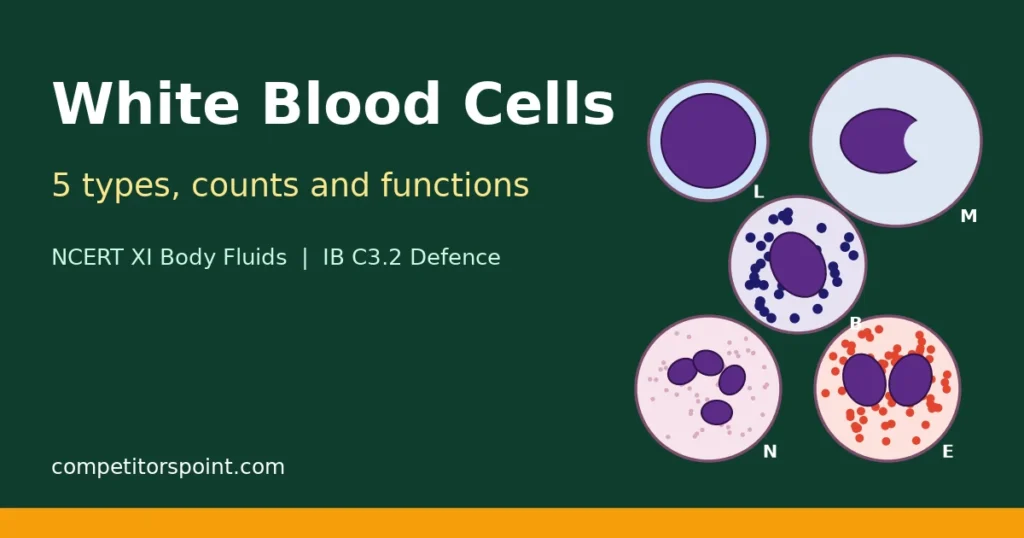
White blood cells are the defenders of the blood. Learn the five types of white blood cells, the normal WBC count, how to tell each cell by its nucleus, and how leucocytes destroy pathogens by phagocytosis, inflammation and antibodies, with NCERT values, IB C3.2 links, a comparison table and a quick-check quiz.
1 What are white blood cells?
Syllabus link: NCERT XI Body Fluids and Circulation (formed elements of blood); IB C3.2 Defence against disease
NCERT = value or statement as given in NCERT Class XI (use in NEET/CBSE answers) IB = IB Biology C3.2 link
What are the 5 types of white blood cells and their functions? This chapter discusses in detail the 5 types of white blood cells and what their functions are in the body in terms of the immune system. It covers their structure, how many there are, how long they live and how they defend us, with NCERT values for NEET and CBSE and links to IB Biology C3.2.
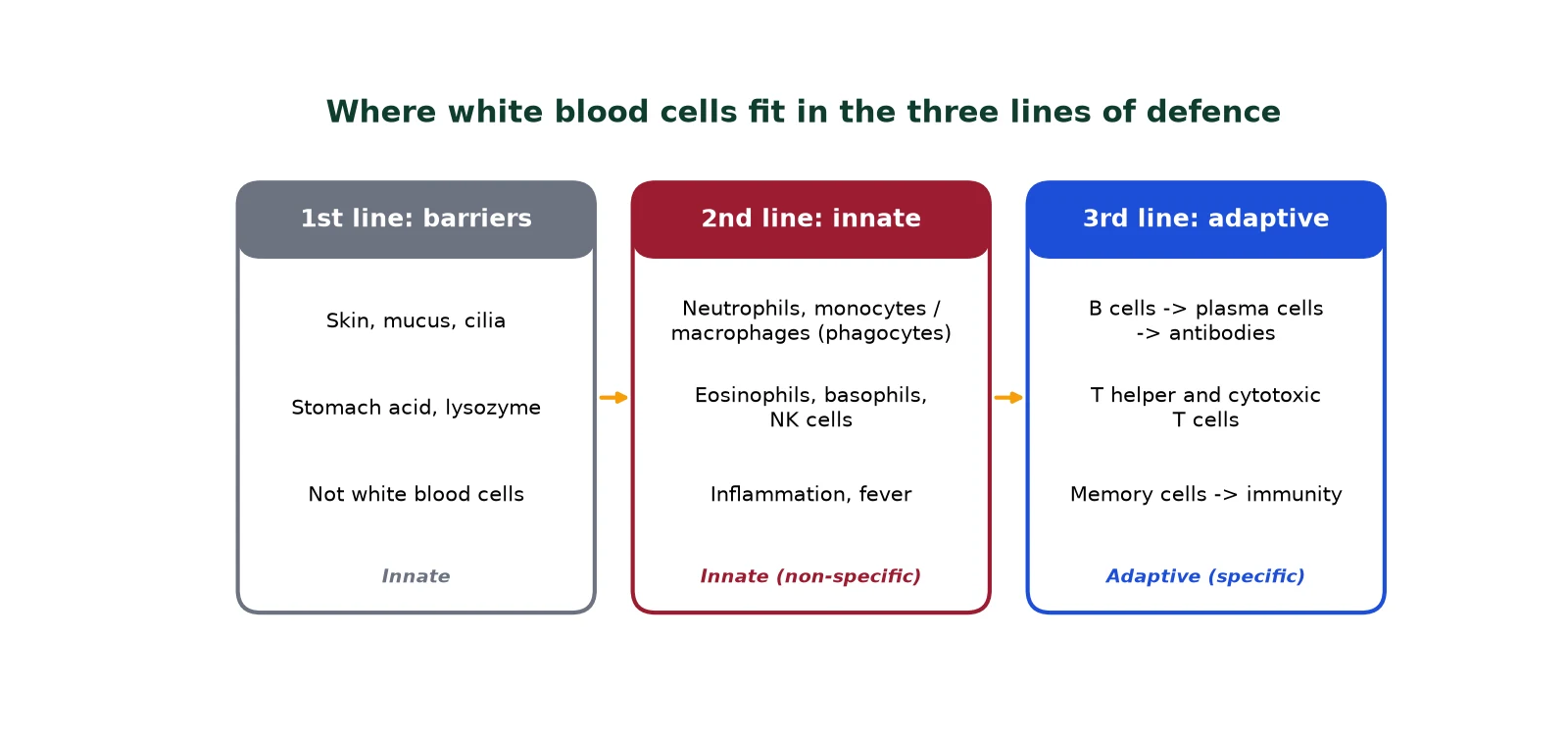
When it comes to the immune system, white blood cells (WBCs), or leucocytes (leukocytes), act as the second line of defence, and lymphocytes also form the third line. What does this mean? When pathogens breach the first line of defence, also known as physical and chemical barriers (skin, mucus, stomach acid), and enter the tissues or bloodstream, white blood cells, along with other internal defence mechanisms, attack the pathogens and prevent them from spreading further into the body.
White blood cells (WBCs) are colourless because they lack haemoglobin. They are nucleated and are comparatively fewer in number than red blood cells (RBCs). Unlike RBCs, leucocytes can leave the blood and work in the tissues. They are made in the red bone marrow, and lymphocytes also multiply in lymphoid organs. Read more on white blood cells on Wikipedia.
Key points
- White blood cells are nucleated, colourless cells without haemoglobin.
- They are made in red bone marrow from haematopoietic stem cells.
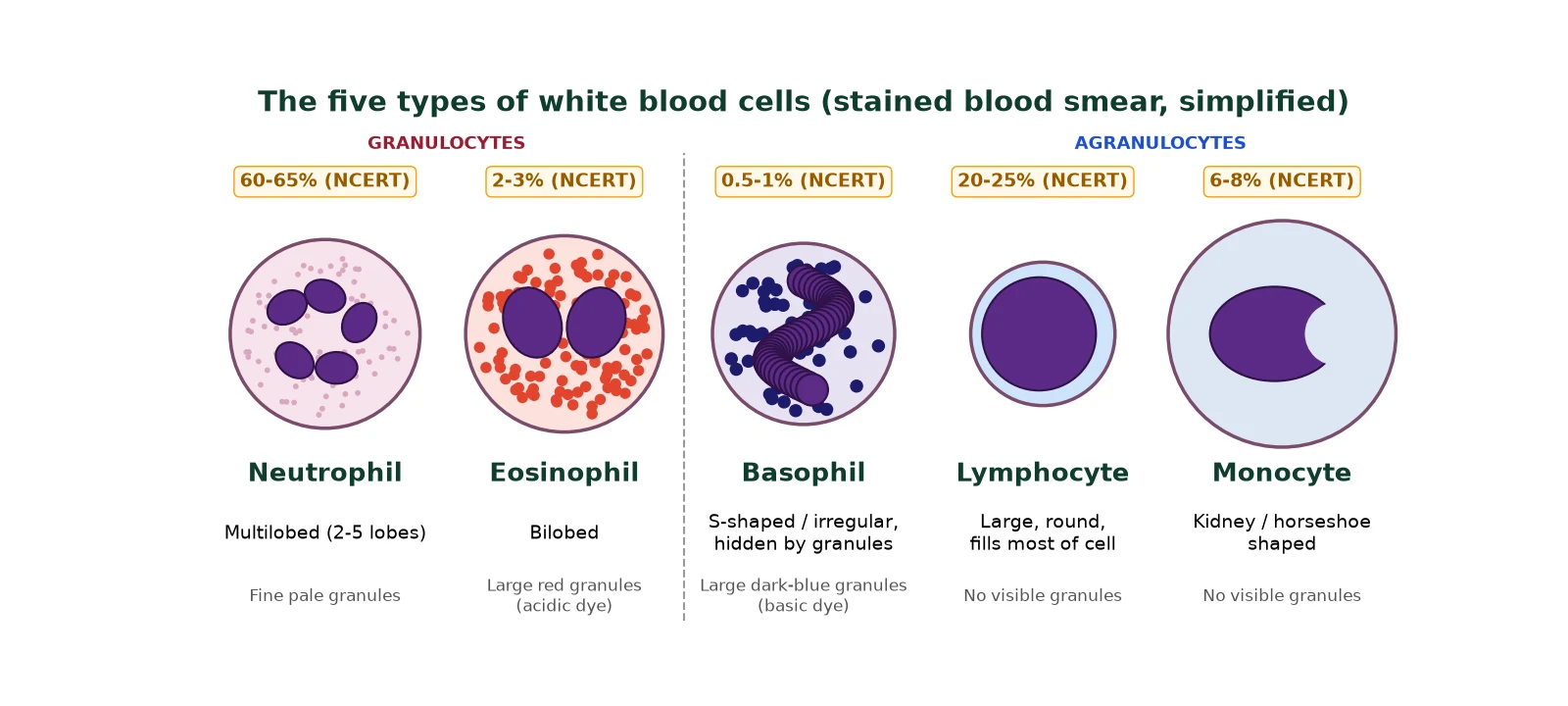
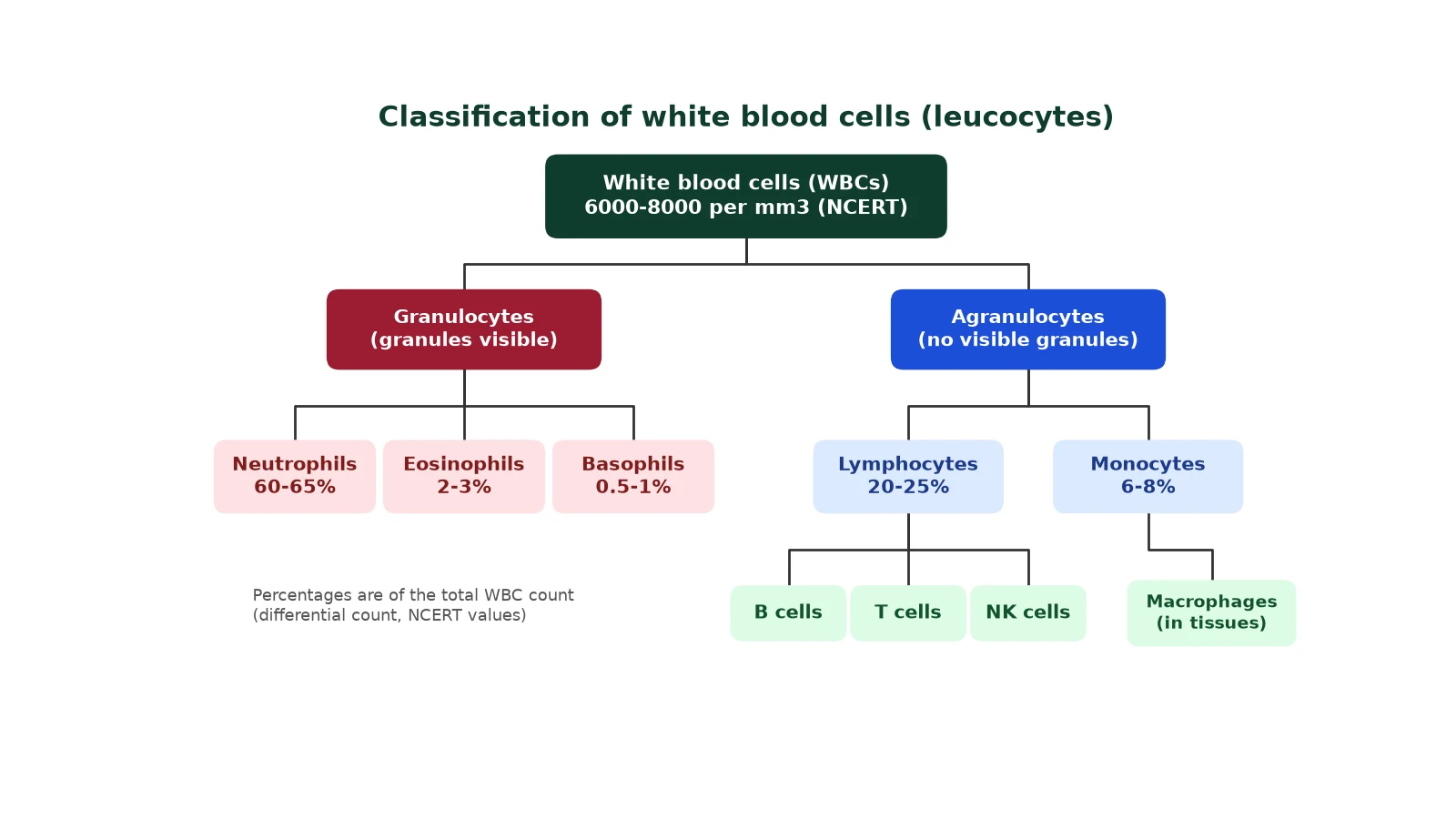
- Two groups: granulocytes (neutrophils, eosinophils, basophils) and agranulocytes (lymphocytes, monocytes).
- They defend the body by phagocytosis, inflammation and antibodies.
2 Normal WBC count
Syllabus link: NCERT XI Body Fluids and Circulation
The WBC count (total leucocyte count, TLC) is the number of WBCs in a cubic millimetre (mm3, the same as one microlitre) of blood.
NCERT NCERT value
NCERT gives the average count as 6000-8000 WBCs per mm3 of blood. Use this value in NEET and CBSE answers. They are generally short-lived. However, their number increases in response to infections.
Current clinical reference range: laboratories today usually report a normal adult WBC count of about 4000-11,000 per mm3 (4.0-11.0 × 10⁹ per litre). The exact limits vary a little between laboratories, ages and populations. The NCERT figure is a typical average that sits inside this range; it is not the full normal range.
For comparison, NCERT gives RBCs as 5-5.5 million per mm3 and platelets as 1.5-3.5 lakh per mm3, so there are roughly 700 RBCs for every WBC.
Diapedesis and amoeboid movement
An increase in the WBC count is called leukocytosis. When WBCs squeeze out of the capillaries, between the endothelial cells, to fight infection, it is called diapedesis. Among all WBCs, diapedesis is shown most strikingly by neutrophils, as they are the most numerous and the most actively amoeboid, so they are first to reach an infection. (Note: neutrophils are not the smallest WBCs; small lymphocytes are smaller. Monocytes and lymphocytes also cross capillary walls.)
If you are asked why RBCs, though smaller in size, cannot show diapedesis, the answer is simple: RBCs are not capable of amoeboid movement, as they cannot change their shape and crawl like amoebas, and they have no nucleus or cytoskeleton to drive pseudopodia.
3 Types of white blood cells: granulocytes and agranulocytes
Syllabus link: NCERT XI Body Fluids and Circulation
WBCs are mainly of two types: granulocytes and agranulocytes. The types of white blood cells are named from how they look after staining with a mixture of an acidic dye (eosin, red) and a basic dye (such as methylene blue).

Granulocytes
WBCs in which cytoplasmic granules are present are called granulocytes. These cells have enzyme-rich specific granules. Many of these granules are modified lysosomes (they are made by the Golgi apparatus and hold digestive enzymes and other chemicals). Granulocytes make up about 63-69% of total WBCs by the NCERT values (often rounded to about 68%). Example: basophils, acidophils (eosinophils) and neutrophils. They have a lobed nucleus, so they are also called polymorphonuclear cells.
These WBCs have been classified based on their staining properties. Neutrophils stain only faintly with both acidic and basic dyes, so their granules look neutral (pale lilac). Acidophils are stained with acidic dyes and basophils are stained with basic dyes.
Agranulocytes
Agranulocytes are WBCs in which no specific cytoplasmic granules are visible. In other words, they lack enzyme-rich specific granules. Agranulocytes make up about 26-33% of the total WBCs by NCERT values (often rounded to about 32%). Example: monocytes and lymphocytes. Their nucleus is not lobed, so they are mononuclear cells.
4 Five types of white blood cells: structure and function
Syllabus link: NCERT XI Body Fluids and Circulation; IB C3.2.2-C3.2.4
Neutrophils
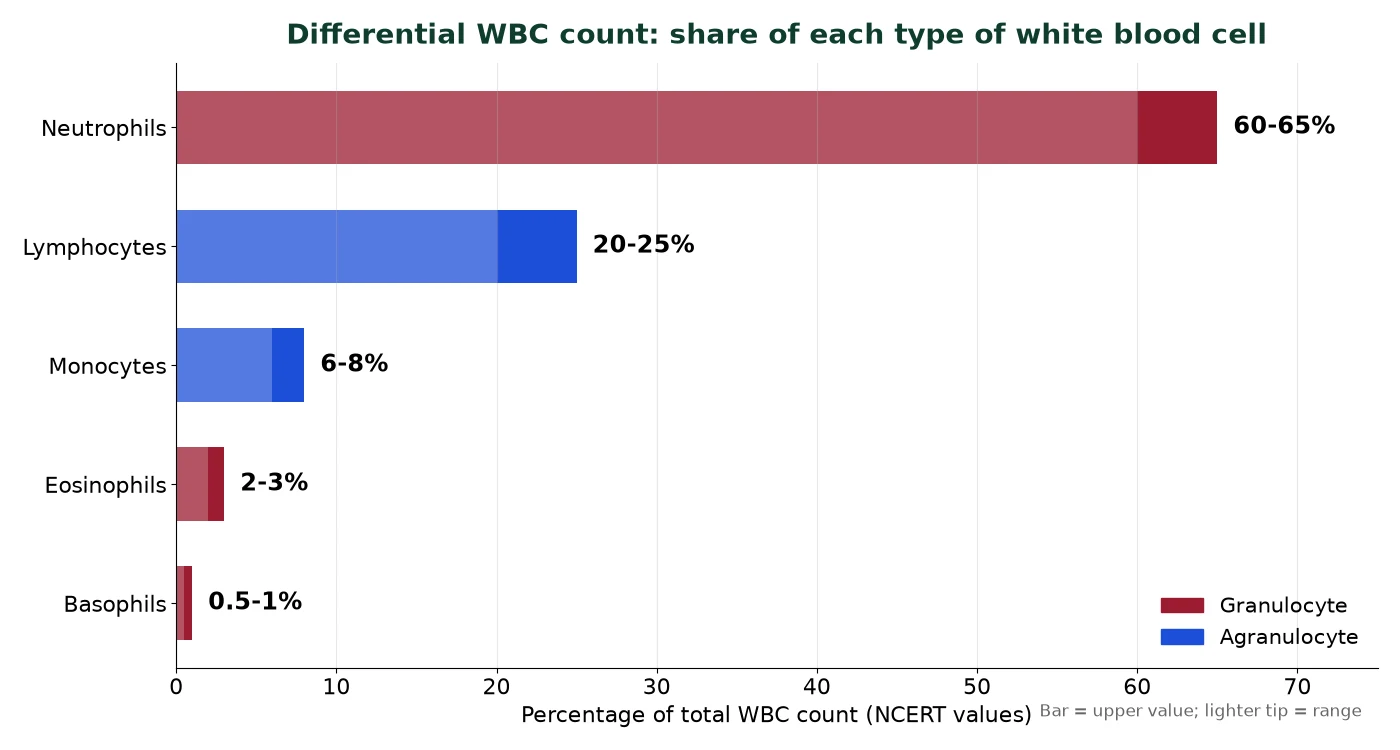
Neutrophils are the most abundant cells of the total WBCs. NCERT Neutrophils make up 60-65% of the total WBCs. They are about 10-12 µm across and live only about 6-10 hours in the blood and a day or two in the tissues, so the bone marrow makes billions every day.
Neutrophils have a multilobed nucleus that can take different forms. For instance, if an individual’s blood sample is viewed under the microscope, many differently shaped neutrophils can be seen: some cells will have 2 nuclear lobes, others 3, 4 or 5 (3-4 is commonest). More than 5 lobes is abnormal (hypersegmentation, seen for example in vitamin B12 or folate deficiency). Due to this variable nucleus, they are also called polymorphonuclear leucocytes (PMNLs).

They are called primary phagocytic cells, and also the microphages or ‘micro policemen’ of the blood. Neutrophils and monocytes both are phagocytic in nature. Due to their large number and fast movement, neutrophils are the first to arrive and attack pathogens, which is why they are called primary phagocytes. Dead neutrophils, bacteria and tissue fluid together form pus.
Eosinophils (acidophils)
- The nucleus of eosinophils is bilobed.
- They are stained with acidic dyes (eosin), giving large red-orange granules.
- NCERT They make up 2-3% of the total WBCs.
- These resist infections and are also associated with allergic reactions (NCERT). Their number rises in allergies, asthma and worm infections (eosinophilia).
- Eosinophils are most effective against large parasites that are too big to engulf, such as blood flukes (Schistosoma) and hookworms; they release toxic granule proteins onto the parasite surface.
- Correction: eosinophils do not secrete histamine. They release histaminase and other enzymes that break down histamine, so they help to damp down allergic inflammation.
- They live about 8-12 hours in the blood and several days in the tissues.

Basophils
- Basophils are the least numerous of all WBCs. NCERT They make up 0.5-1% of the total WBCs.
- They are stained with basic dyes, giving large dark blue-purple granules.
- The nucleus of basophils is bilobed or S-shaped and irregular, and is often hidden by the granules.
- Basophils secrete histamine (vasodilator), serotonin (vasoconstrictor) and heparin (anticoagulant), and are involved in inflammatory reactions (NCERT).
- They are closely related to the mast cells of tissues and take part in allergic (hypersensitivity) reactions. They live from hours to a few days.

Monocytes and macrophages
- Monocytes are the largest of all WBCs (about 12-20 µm).
- NCERT They make up 6-8% of the total WBCs.
- Monocytes are recognised by their horseshoe-shaped or kidney-shaped nucleus.
- Monocytes circulate for about 1-3 days, then leave the blood by diapedesis and change into macrophages. Correction: a monocyte is not itself a macrophage; it is the precursor that becomes one in the tissues, where it grows larger and gains more lysosomes.
- Macrophages are the most efficient phagocytes. Neutrophils are also phagocytic, but macrophages are bigger, live for months and can engulf many more microbes and dead cells.
- Macrophages also function as antigen presenting cells (APCs): they display pieces of a digested pathogen to helper T cells, linking innate and adaptive immunity.
Macrophages are of two types: fixed macrophages and wandering (free) macrophages. Fixed macrophages stay in one tissue while wandering macrophages move from one place to another. Examples of fixed macrophages are: dust cells (alveolar macrophages, lungs), Kupffer cells (liver), microglial cells (brain), histiocytes (connective tissue) and osteoclasts (bone). Correction: lacis cells of the kidney are extraglomerular mesangial cells of the juxtaglomerular apparatus, not macrophages, so they were removed from this list.

Lymphocytes: B, T and NK cells
Lymphocytes are the main cells of the specific (adaptive) immune system. NCERT They make up 20-25% of the total WBCs and are the second most numerous WBCs. A small lymphocyte has a large round nucleus that fills most of the cell, with a thin rim of blue cytoplasm. Some lymphocytes live only days, but memory cells can live for years.
Lymphocytes are of two main types: B-lymphocytes and T-lymphocytes. A third, smaller group is the natural killer (NK) cells.
- In B-lymphocytes, B stands for Bursa of Fabricius, a lymphoid organ near the cloaca of young birds, where these cells were first discovered. The bursa of Fabricius is not found in humans. In humans, it is easy to remember B as bone marrow, where B cells mature. Activated B cells become plasma cells, which secrete antibodies (humoral immunity).
- In T-lymphocytes, T stands for thymus, where they mature. T cells give cell-mediated immunity: helper T cells activate B cells and other cells, and cytotoxic T cells kill infected or cancer cells.
- NK cells are innate lymphocytes. Without needing a specific antigen, they kill virus-infected cells and some tumour cells by releasing perforin and other proteins.

5 Comparison table of the types of white blood cells
Syllabus link: NCERT XI Body Fluids and Circulation
This table summarises the types of white blood cells in one place. Percentages are NCERT values; sizes and lifespans are typical textbook figures and vary between sources.
Swipe the table sideways on a phone.
| Type | Group | % of count (NCERT) | Nucleus | Granules | Size (µm) | Lifespan | Main function |
|---|---|---|---|---|---|---|---|
| Neutrophil | Granulocyte | 60-65% | 2-5 lobes (multilobed) | Fine, pale (neutral) | 10-12 | Hours in blood; 1-2 days | Phagocytosis of bacteria; first to arrive |
| Eosinophil | Granulocyte | 2-3% | Bilobed | Large, red (acidic dye) | 10-14 | 8-12 h in blood; days in tissue | Kill large parasites; allergy; histaminase |
| Basophil | Granulocyte | 0.5-1% | S-shaped / bilobed, hidden | Large, dark blue (basic dye) | 10-14 | Hours to a few days | Histamine, serotonin, heparin; inflammation |
| Lymphocyte | Agranulocyte | 20-25% | Large, round | None visible | 7-15 | Days to years (memory) | Antibodies (B), cell-mediated immunity (T), NK killing |
| Monocyte | Agranulocyte | 6-8% | Kidney / horseshoe | None visible | 12-20 | 1-3 days in blood; months as macrophage | Phagocytosis; antigen presentation |
Exam tips
- Most numerous: neutrophils. Least numerous: basophils. Largest: monocytes.
- Phagocytes named by NCERT: neutrophils and monocytes.
- Antibodies are made by plasma cells (from B cells), not by T cells or phagocytes.
6 Development of white blood cells
Syllabus link: NCERT XI Body Fluids and Circulation; IB C3.2
In adults, red bone marrow (the primary lymphoid organ for B cells) is found in flat bones such as the sternum, ribs, vertebrae and pelvis, and in the ends (epiphyses) of long bones such as the femur and humerus. Within the bone marrow, a special kind of cell is present, called haematopoietic stem cells (HSCs). These haematopoietic stem cells differentiate into lymphoid stem cells and myeloid stem cells.

- Lymphoid stem cells give rise to pre-B cells, pre-T cells and NK cells.
- Pre-B cells mature into B cells inside the bone marrow itself. Mature (naive) B cells then travel to the secondary lymphoid tissues (spleen, lymph nodes, tonsils, Peyer’s patches and other MALT). Only after meeting their antigen do they divide and differentiate into plasma cells and memory B cells.
- Pre-T cells travel to the thymus (a primary lymphoid organ), where they mature into helper T cells (TH, CD4), cytotoxic T cells (TC, CD8; also called killer T cells), regulatory (suppressor) T cells and later memory T cells. Correction: TC and ‘TK‘ are the same cell type, not two separate types.
- Myeloid stem cells are responsible for the formation of different kinds of cells, including RBCs (red blood cells), platelets, neutrophils, eosinophils, basophils and monocytes.
Note
Lymphoid stem cells are only responsible for the formation of lymphocytes (B, T and NK cells), not all kinds of white blood cells. All granulocytes and monocytes come from the myeloid line.
7 Functions of white blood cells: phagocytosis, inflammation and antibodies
Syllabus link: NCERT XI Body Fluids and Circulation; IB C3.2.3-C3.2.6
The functions of white blood cells fall into three big jobs: eating pathogens (phagocytosis), raising the alarm (inflammation) and making specific weapons (antibodies and killer cells).
Phagocytosis
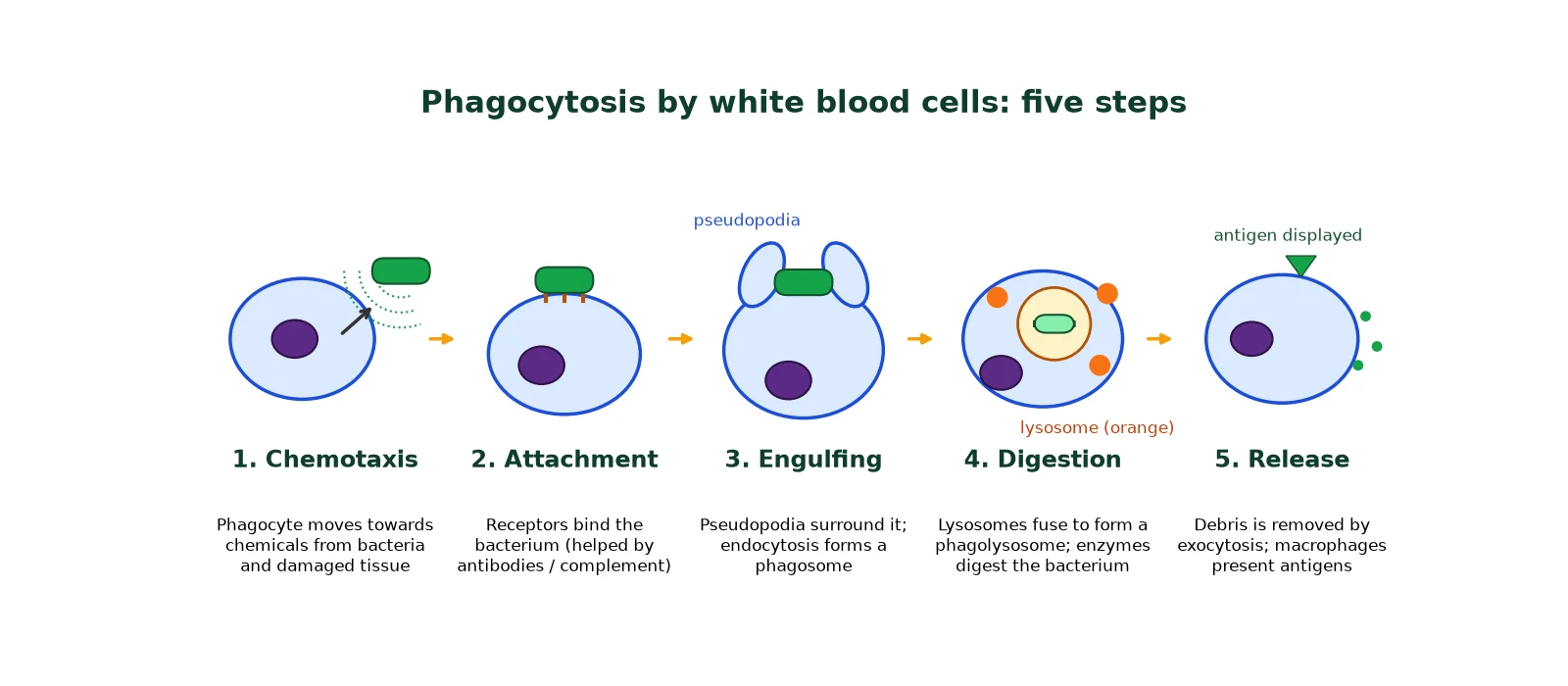
Phagocytosis is a form of endocytosis in which a phagocyte engulfs a large particle such as a bacterium. It relies on the fluidity of the plasma membrane.
- Chemotaxis: the phagocyte moves towards chemicals released by microbes and damaged cells.
- Attachment: receptors on the phagocyte bind the microbe; antibodies and complement proteins coating the microbe (opsonisation) make this faster.
- Engulfing: pseudopodia flow around the microbe and fuse, enclosing it in a vesicle called a phagosome.
- Digestion: lysosomes fuse with the phagosome to form a phagolysosome; hydrolytic enzymes and reactive oxygen chemicals kill and digest the microbe.
- Release: harmless debris is removed by exocytosis. Macrophages display antigen fragments on their surface to helper T cells.
Inflammation
When tissue is damaged or infected, mast cells and basophils release histamine. Histamine dilates arterioles and makes capillaries leaky, causing the four classic signs: redness, heat, swelling and pain. The extra blood flow brings more phagocytes, which leave the capillaries by diapedesis, and plasma proteins such as clotting factors and complement. Fever is a whole-body response that can slow microbial growth. Antihistamines reduce these effects in allergies.
Antibodies
Antibodies (immunoglobulins) are Y-shaped proteins made by plasma cells. Each has two identical antigen-binding sites at the tips of its variable regions, so it binds only one specific antigen. Antibodies act by:
- neutralisation: blocking toxins or the binding sites viruses use to enter cells;
- agglutination: clumping pathogens together so phagocytes can engulf them more easily;
- opsonisation: tagging pathogens so phagocytes recognise them;
- activating complement: proteins that punch holes in bacterial membranes.
NCERT notes that the main antibody classes are IgA, IgM, IgE and IgG (and IgD). IgG crosses the placenta; IgA is found in colostrum and gives passive immunity to the newborn.
8 IB link: innate vs adaptive immunity and clonal selection
Syllabus link: IB C3.2 Defence against disease
IB In IB Biology C3.2, leucocytes appear in both branches of the immune system.
| Feature | Innate immunity | Adaptive immunity |
|---|---|---|
| Specificity | Non-specific; same response to all pathogens | Specific to one antigen |
| Speed | Fast (minutes to hours) | Slower on first exposure (days) |
| Memory | No memory; the response does not improve | Memory cells give a faster, stronger secondary response |
| Cells involved | Neutrophils, macrophages, eosinophils, basophils, NK cells | B cells, plasma cells, helper and cytotoxic T cells |
| Present from | Birth, inherited | Develops during life (acquired) |
Clonal selection and clonal expansion
The body contains millions of different lymphocytes, and each B cell carries antibody receptors for just one antigen. Clonal selection explains how the right cell is chosen:
- A macrophage engulfs a pathogen and presents its antigen to helper T cells with a matching receptor, activating them.
- A B cell with a matching antibody receptor binds the same antigen. It is selected and is activated by the helper T cell (cell contact plus cytokines).
- The activated B cell divides by mitosis many times, making a clone of identical cells (clonal expansion).
- Most of the clone differentiate into plasma cells, with lots of rough ER, that secrete large amounts of the antibody.
- Some become long-lived memory B cells. On a second infection they divide quickly, giving a faster and larger antibody response: this is immunity, and it is the basis of vaccination.
IB Other C3.2 links
HIV infects and destroys helper T cells, so B cells are no longer activated and antibody production falls (AIDS). Antibiotics kill bacteria but not viruses. Vaccines contain antigens that trigger primary responses and memory cells without causing the disease, and high vaccination rates give herd immunity.
9 Disorders of white blood cells
Syllabus link: NCERT XI Body Fluids and Circulation (blood); clinical extension
A raised or lowered WBC count is a sign, not a disease in itself, so doctors look at which types of WBCs have changed (the differential count).
- Leukocytosis: a WBC count above about 11,000 per mm3. Common causes are bacterial infection (neutrophilia), allergy and worm infections (eosinophilia), viral infections such as glandular fever (lymphocytosis), stress, steroids and pregnancy. It is usually a normal response to infection.
- Leukopenia: a WBC count below about 4000 per mm3. Causes include some viral infections (including HIV, which lowers lymphocytes), bone marrow damage by radiation or chemotherapy, some drugs, and autoimmune disease. A very low neutrophil count (neutropenia) makes serious infection likely.
- Leukaemia (blood cancer): uncontrolled division of abnormal leucocytes in the bone marrow. The count is often very high, but the cells are immature and do not work, and they crowd out RBC and platelet production, causing anaemia, bleeding and infections. It may be acute or chronic, and myeloid or lymphoid. Treatment includes chemotherapy and bone marrow (stem cell) transplant.
Do not confuse
- Leukocytosis = high count, leukopenia = low count, leukaemia = cancer of WBCs.
- Anaemia is a fall in RBCs or haemoglobin, not in WBCs.
10 FAQs on white blood cells
What are the 5 types of white blood cells?
Neutrophils, eosinophils, basophils (granulocytes), and lymphocytes and monocytes (agranulocytes).
What is the normal WBC count?
NCERT value: 6000-8000 per mm3. The current clinical reference range is about 4000-11,000 per mm3.
Which white blood cells are most numerous and which are least?
Neutrophils (60-65%) are the most numerous; basophils (0.5-1%) are the least.
Which WBCs make antibodies?
Plasma cells, which develop from activated B lymphocytes.
Why are leucocytes called polymorphonuclear?
Granulocytes, especially neutrophils, have a nucleus with a variable number of lobes, so its shape differs from cell to cell.
Are monocytes and macrophages the same?
No. Monocytes circulate in blood; after entering tissues they change into larger macrophages.
What are the main functions of white blood cells?
Phagocytosis of pathogens and debris, inflammation, antibody production, killing of infected cells and immunological memory.
11 Quick check
Test yourself on white blood cells
1. Which WBC has a kidney-shaped nucleus?
Monocyte.
2. Which WBC secretes heparin, histamine and serotonin according to NCERT?
Basophil.
3. Name the process by which WBCs squeeze through capillary walls.
Diapedesis.
4. What percentage of WBCs are lymphocytes (NCERT)?
20-25%.
5. Which cells give rise to plasma cells?
B lymphocytes, after activation by antigen and helper T cells (clonal selection).
6. A patient has 2500 WBCs per mm3. What is this condition called?
Leukopenia (below about 4000 per mm3).
7. Why can eosinophils not engulf a blood fluke?
The worm is far too large to phagocytose; eosinophils attack it from outside by releasing toxic granule proteins.
8. Which immunity, innate or adaptive, has memory?
Adaptive immunity, through memory B and T cells.
© competitorspoint.com · Biology notes. New diagrams are original to competitorspoint.com.
Ready to practise? Download the White Blood Cells IB and NEET question set with markscheme (50 marks, free for signed-up members).
⬇ Download practice questions (PDF)