Rishi Prakash

Rishi Prakash is a biology teacher with 15 years of experience teaching in schools, review centres and medical coaching institutes across India, and he now teaches IB Biology and NEET Biology. He holds a B.Sc Agriculture from Dr. Panjabrao Deshmukh Krishi Vidyapeeth, Akola, and an M.Sc Bioinformatics from the University of Rajasthan. He writes and reviews every chapter on Competitors Point, building each one from NCERT and the IB Biology guide.

The living world

The Living World

Q1. Why are living organisms classified? Answer: Earth is home to a diverse array of flora, fauna, and microorganisms, which exhibit distinct differences in their physical attributes, habitats, and other features. Given the sheer number of living beings on the planet, it is impractical to study each one individually. As a result, scientists have developed […]

The Living World Read More »

reproduction

What is Reproduction in Organisms? Types of Reproduction and Essential Roles of Reproduction in Nature

What is reproduction? Reproduction is a biological process in which an organism gives rise to new ones (offspring) similar to itself. In other words, we can simply say that reproduction is the ability to procreate. The offspring formed will further grow, mature and in turn produce new offspring.

What is Reproduction in Organisms? Types of Reproduction and Essential Roles of Reproduction in Nature Read More »

difference between genes and alleles

Difference Between Genes and Alleles Explained

Difference between Genes and Alleles In this interactive lecture, we’ll explore the key difference between genes and alleles. So, let’s begin by asking: “Is an allele a gene?” It’s a common question and can be confusing for students due to the similarity of these terms. However, understanding the distinction is crucial for grasping Mendelian Genetics.

Difference Between Genes and Alleles Explained Read More »

Oviparous vs viviparous vs ovoviviparous animals comparison

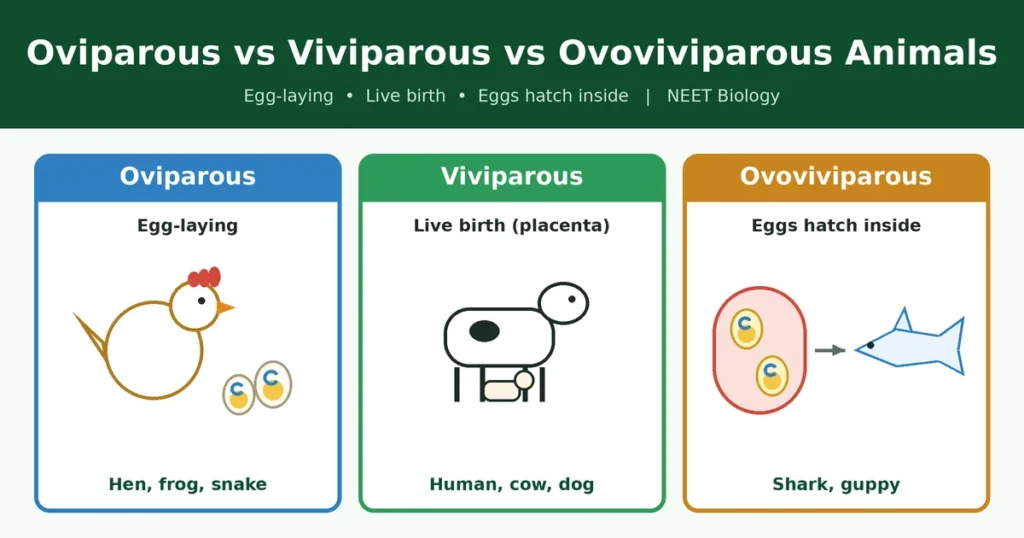
Oviparous, Viviparous and Ovoviviparous Animals Compared

Contents Introduction Difference at a glance Oviparous animals Viviparous animals Ovoviviparous animals Comparison table Examples of each type In Hindi Across animal phyla Common doubts 20 NEET MCQs The difference between oviparous viviparous and ovoviviparous animals lies in where the embryo develops and how it is fed: in an egg outside the mother, inside the

Oviparous, Viviparous and Ovoviviparous Animals Compared Read More »

Digestion and Absorption IB Biology notes

Digestion and Absorption

Contents What digestion and absorption mean 2025 syllabus map (SL/HL) Nutrients and balanced diet Alimentary canal Digestive glands Enzymes and digestion Hormones and peristalsis Absorption and villi Dialysis tubing practical Disorders and malnutrition Common doubts IB practice questions Glossary IB Biology → Digestion and absorption Digestion and Absorption These digestion and absorption IB Biology notes

Digestion and Absorption Read More »

dna marker

What is DNA Marker? Types of DNA Markers – Dominant and Co-dominant Markers

Introduction to DNA Marker DNA marker as the name suggests is a sequence of DNA which is present at a specific site on DNA. In other words, DNA marker is that DNA sequence which has marked DNA and present in repetitive manner. For example, suppose there is a 15-20 nucleotide long sequence present on DNA

What is DNA Marker? Types of DNA Markers – Dominant and Co-dominant Markers Read More »

aneuploidy

What is Aneuploidy and What is the Mechanism of Aneuploidy?

Mechanism of Aneuploidy Nondisjunction (the inability of homologous chromosomes at meiosis or sister chromatids at mitosis to separate equally to opposite poles) in mitosis or meiosis is the main cause of most aneuploids. Disjunction is the term used for the normal separation of chromatids to opposite poles during nuclear division or karyokinesis. Nondisjunction is simply

What is Aneuploidy and What is the Mechanism of Aneuploidy? Read More »

ELIZA

What is ELISA? Types of ELISA and Applications

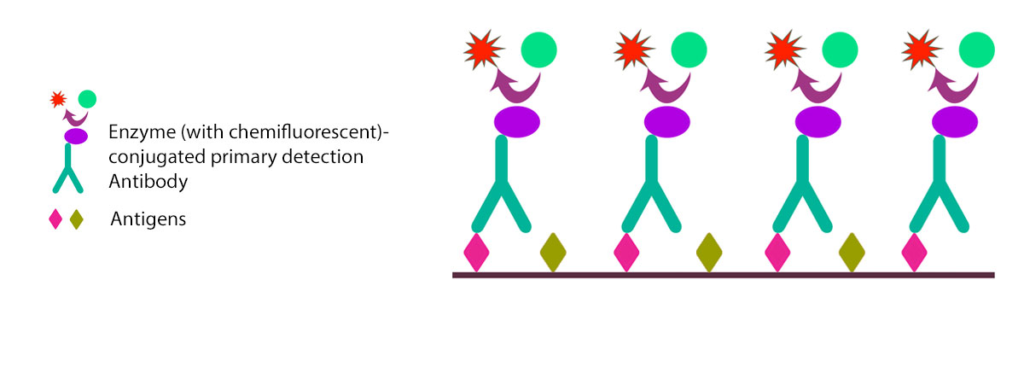
What is ELISA? ELISA stands for Enzyme Linked Immunosorbent Assay. It is a type of immunoassay used to identify either the antigen or antibody. This study antigens and antibodies — quantitative or qualitative analysis is done. Samples routinely used in ELISA include plasma, serum, cell lysates, tissue lysates, and cell culture, etc. What does quantitative

What is ELISA? Types of ELISA and Applications Read More »

Scroll to Top