
NEET Biology • NCERT Class XII • Chapter 9
Biotechnology Principles and Processes NEET Notes: rDNA Tools, Steps, PCR & MCQs
NTA NEET (UG) syllabusThese biotechnology principles and processes NEET notes follow the NCERT Class 12 chapter in its own order. You start with what biotechnology means and the two principles behind it, learn each tool of recombinant DNA technology (restriction enzymes, gel electrophoresis, cloning vectors and competent hosts), and then walk through every step of the process, from isolating DNA to the finished, packaged product. Each idea comes with a clear diagram. The page ends with summary tables, common NEET traps, 20 practice MCQs and FAQs.
- 17 diagrams
- Restriction enzymes & pBR322
- PCR & bioreactors
- Summary tables
- 20 MCQs
Biotechnology principles and processes at a glance
This chapter answers one practical question: how do we take a single useful gene, such as the gene for a human protein, put it into another organism, and make that organism produce the protein in large amounts? The answer has two halves. First you need the right tools: enzymes that cut and join DNA, a carrier molecule (the vector) that can copy itself inside a cell, and a host cell that will accept the new DNA. Then you follow a fixed process: isolate the DNA, cut it, pick out the piece you want, join it into a vector, put it into the host, grow the host in bulk and recover the product.
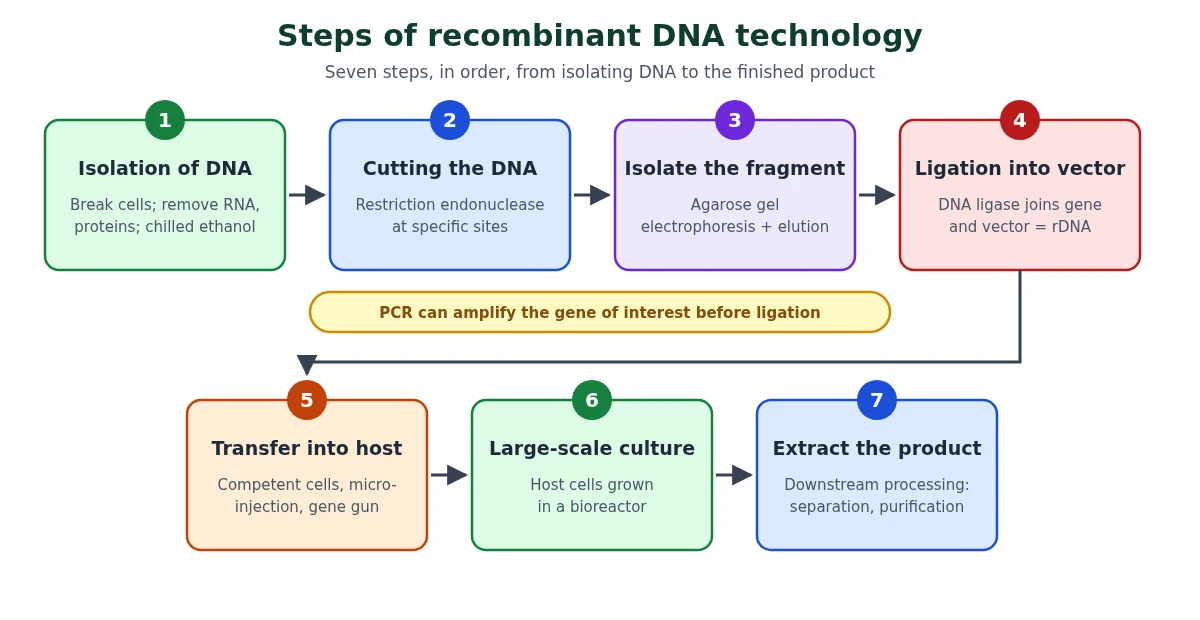
The flowchart below is the backbone of the whole chapter. Keep it in mind as you read each section, because every tool you learn is used at one of these seven steps.
NEET asks from this chapter every year. Independent previous-year analyses usually count about four to six questions per paper, and the topics that come up most are restriction enzymes and palindromes, gel electrophoresis, pBR322 and selectable markers, PCR, and bioreactors. All of them are covered below in the same depth as the textbook, and in more detail where students usually get confused.
What is biotechnology?
In the widest sense, biotechnology means using live organisms, or enzymes from organisms, to make products and processes useful to humans. By that definition, making curd, bread or wine is biotechnology, because microbes do the work in each case. Today, however, the word is used in a narrower sense. It usually refers to processes that use genetically modified organisms to do the same job on a much larger scale.
Many other techniques are also counted as biotechnology. Examples given in the textbook are in vitro fertilisation leading to a test-tube baby, synthesising a gene and using it, developing a DNA vaccine, and correcting a defective gene.
The European Federation of Biotechnology (EFB) gave a definition that covers both the traditional and the modern molecular view. It defines biotechnology as “the integration of natural science and organisms, cells, parts thereof, and molecular analogues for products and services.” Learn this definition word for word, since it can be asked directly.
Teacher tip
If a question says “traditional biotechnology”, think of curd, bread, wine and other microbe-mediated processes. If it says “modern biotechnology”, think of genetically modified organisms and recombinant DNA.
Principles of biotechnology
Of the many techniques involved, two core techniques made modern biotechnology possible. These two are what people mean by the principles of biotechnology.
1. Genetic engineering
Techniques to alter the chemistry of genetic material (DNA and RNA), introduce it into host organisms, and so change the phenotype of the host.
2. Bioprocess engineering
Maintaining a sterile (microbial contamination-free) environment in chemical engineering processes, so that only the desired microbe or eukaryotic cell grows, in large quantities, to make products such as antibiotics, vaccines and enzymes.
Why genetic engineering is better than traditional hybridisation
Sexual reproduction creates variation, because it produces new combinations of genes. Some of these combinations help the organism or the population. Asexual reproduction does the opposite: it preserves the genetic information unchanged. Plant and animal breeders use sexual crosses (traditional hybridisation) to combine good traits, but these crosses carry over many undesirable genes along with the desirable ones.
Genetic engineering overcomes this limitation. Using recombinant DNA, gene cloning and gene transfer, it lets us isolate and introduce only one gene, or a chosen set of genes, into the target organism, without bringing in unwanted genes.
Why alien DNA needs an origin of replication
Imagine a piece of DNA is somehow transferred into another organism. On its own, this alien piece usually cannot multiply in the organism’s progeny cells. It can multiply only if it becomes part of a chromosome, because a chromosome has a special DNA sequence called the origin of replication, where replication begins. So, to make an alien piece of DNA multiply in a host, we link it to an origin of replication. Making many identical copies of a template DNA in this way is called cloning.
The first recombinant DNA (1972)
The first artificial recombinant DNA was made in 1972 by Stanley Cohen and Herbert Boyer. Here is what they did, step by step:
- They used a restriction enzyme, the “molecular scissors”, to cut out an antibiotic resistance gene from a plasmid that carried it.
- They linked this gene to a native plasmid of Salmonella typhimurium. A plasmid is an autonomously replicating, circular, extra-chromosomal DNA. The joining was done by the enzyme DNA ligase, which joins the ends of cut DNA molecules.
- This new circular, self-replicating DNA made in vitro is called recombinant DNA.
- They transferred it into Escherichia coli, a bacterium closely related to Salmonella. There it replicated using the host’s DNA polymerase and made many copies. This was called cloning of the antibiotic resistance gene in E. coli.
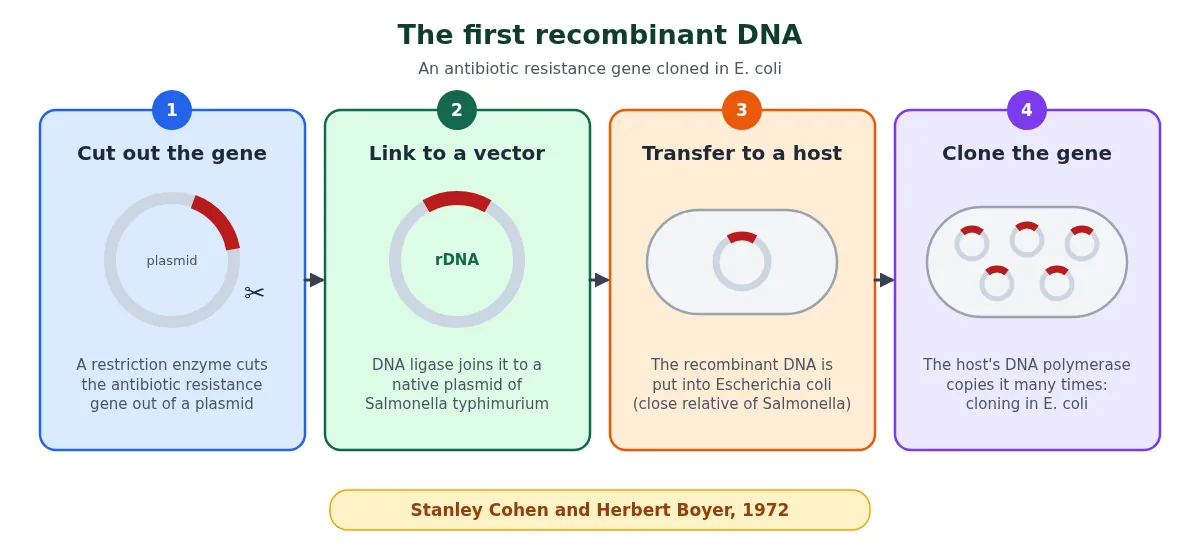
Just as a mosquito acts as a vector that carries the malarial parasite into the human body, a plasmid acts as a vector that carries a piece of alien DNA into a host organism.
From this experiment we can see the three basic steps in genetically modifying an organism:
- identification of DNA with the desirable genes;
- introduction of the identified DNA into the host;
- maintenance of the introduced DNA in the host and transfer of the DNA to its progeny.
Tools of recombinant DNA technology
Genetic engineering, also called recombinant DNA technology, can only be done if we have the key tools. The textbook lists five: restriction enzymes, polymerase enzymes, ligases, vectors and the host organism. The table tells you what each tool does before we look at the important ones in detail.
| Tool | What it does | Example |
|---|---|---|
| Restriction endonuclease | Cuts DNA at a specific recognition sequence | EcoRI, Hind II, BamH I |
| DNA polymerase | Makes new DNA strands; a heat-stable one is used in PCR | Taq polymerase from Thermus aquaticus |
| DNA ligase | Joins the cut ends of DNA molecules | Joins gene of interest to vector |
| Vector | Carries the alien DNA into the host and lets it replicate there | Plasmid pBR322, bacteriophage, disarmed Ti plasmid, disarmed retrovirus |
| Competent host | Takes up the recombinant DNA and multiplies it | E. coli treated with calcium ions |
Restriction enzymes: the molecular scissors
Discovery
In 1963, two enzymes were isolated from Escherichia coli that were responsible for restricting the growth of bacteriophage (viruses that infect bacteria) in the bacterium. One of them added methyl groups to DNA. The other cut DNA, and this one was named restriction endonuclease. The name tells you its job in nature: it restricts phage growth by cutting the phage DNA.
Five years later, the first restriction endonuclease whose action depended on a specific DNA nucleotide sequence, Hind II, was isolated and characterised. Hind II always cut DNA at a particular point by recognising a specific sequence of six base pairs. A base sequence like this is called the recognition sequence of the enzyme. Today, more than 900 restriction enzymes are known, isolated from over 230 strains of bacteria, and each recognises a different sequence.
How restriction enzymes are named
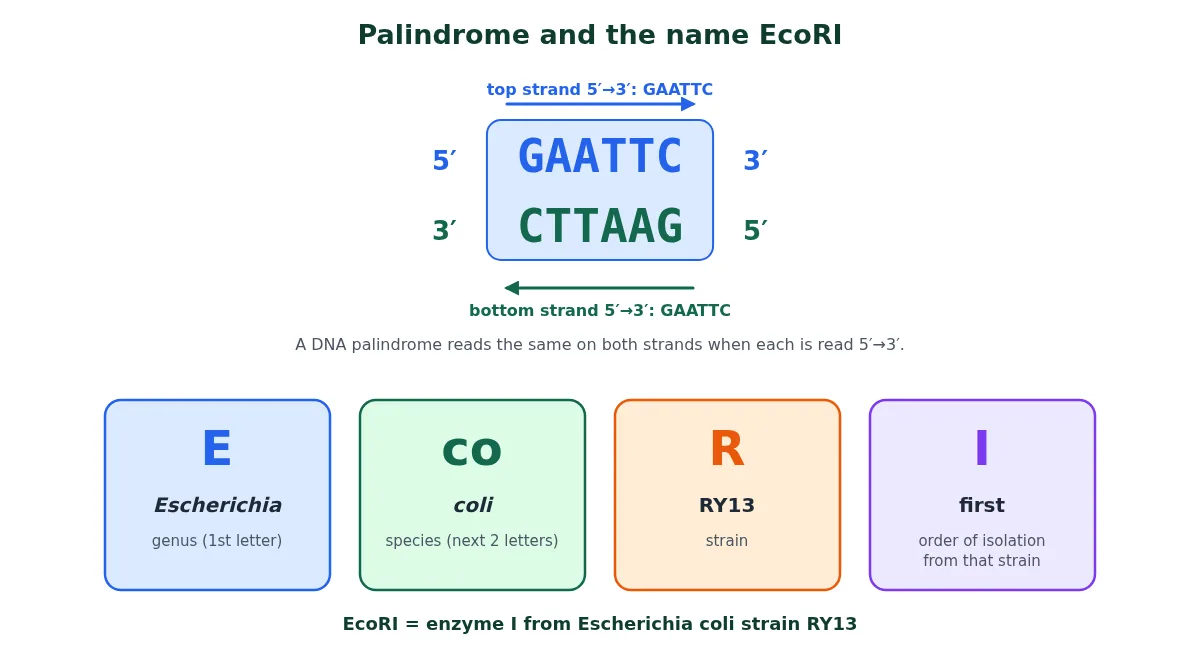
The name is built from the bacterium the enzyme came from:
- The first letter comes from the genus (written in capital).
- The next two letters come from the species.
- The next letter, if any, comes from the strain.
- The Roman number shows the order in which enzymes were isolated from that strain.
So EcoRI comes from Escherichia coli RY 13: E from Escherichia, co from coli, R from the strain RY 13, and I because it was the first enzyme isolated from that strain.
Exonucleases and endonucleases
Restriction enzymes belong to a larger class of enzymes called nucleases, which break the bonds in nucleic acids. Nucleases are of two kinds:
- Exonucleases remove nucleotides from the ends of the DNA.
- Endonucleases make cuts at specific positions within the DNA.
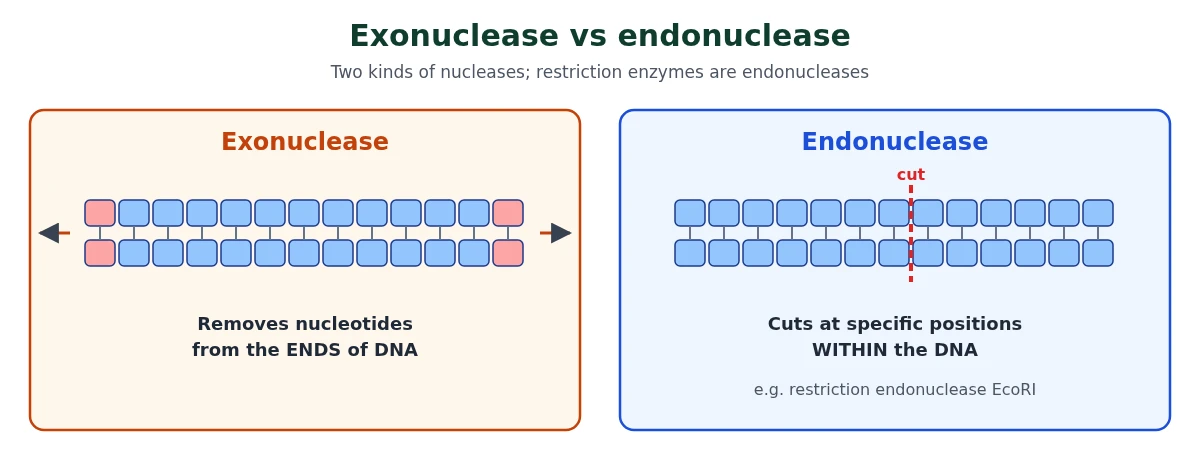
A restriction endonuclease works by “inspecting” the length of a DNA molecule. Once it finds its specific recognition sequence, it binds to the DNA and cuts each of the two strands of the double helix at specific points in their sugar-phosphate backbones.
Palindromic sequences
Each restriction endonuclease recognises a specific palindromic nucleotide sequence. In language, a palindrome is a word or phrase that reads the same forwards and backwards, such as “MALAYALAM”. In DNA, a palindrome is a sequence of base pairs that reads the same on the two strands when the direction of reading is kept the same. For example:
5′ — GAATTC — 3′
3′ — CTTAAG — 5′
Read the top strand 5′→3′ and you get GAATTC. Read the bottom strand 5′→3′ (right to left) and you also get GAATTC. The same is true if you read both strands 3′→5′.
How to check a palindrome in 10 seconds
Write the complementary strand under the given strand, then read the complementary strand backwards. If you get the original sequence again, it is a palindrome. GGATCC: complement CCTAGG, read backwards GGATCC. Yes, it is a palindrome (the BamH I site).
Sticky ends
Restriction enzymes cut the DNA strand a little away from the centre of the palindrome site, but between the same two bases on the opposite strands. EcoRI, for example, cuts between G and A on both strands. Because the two cuts are staggered, each end is left with a short single-stranded overhang. These overhanging stretches are called sticky ends. They are called sticky because they form hydrogen bonds with their complementary cut counterparts. This stickiness makes it easier for DNA ligase to seal the ends together.
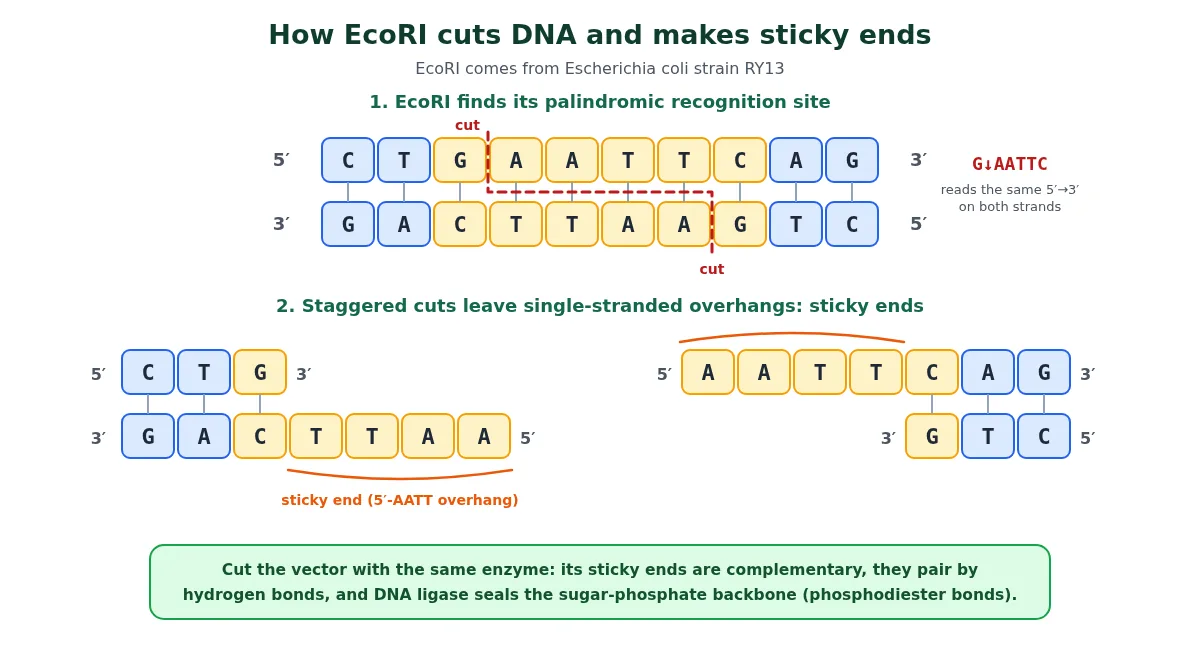
Restriction endonucleases are used in genetic engineering to make recombinant DNA molecules, that is, DNA composed of pieces from different sources or genomes. When two DNA molecules are cut with the same restriction enzyme, the fragments get the same kind of sticky ends, so they can be joined end to end by DNA ligase. This is why the vector and the source DNA must normally be cut with the same enzyme: otherwise the recombinant vector molecule cannot be made.
Separation and isolation of DNA fragments: gel electrophoresis
Cutting DNA with a restriction enzyme gives a mixture of fragments of different lengths. To use the one fragment we need, we first have to separate them. This is done by gel electrophoresis.
- Why DNA moves: DNA fragments are negatively charged (because of their phosphate groups), so in an electric field they move towards the anode (the positive electrode).
- The matrix: the fragments are forced through a medium or matrix. The most commonly used matrix today is agarose, a natural polymer extracted from seaweeds.
- How they separate: the agarose gel acts like a sieve. The fragments separate (resolve) according to their size, because of this sieving effect. The smaller the fragment, the farther it moves.
- Seeing the bands: pure DNA cannot be seen in visible light without staining. The gel is stained with ethidium bromide and exposed to UV radiation, and the DNA shows up as bright orange bands.
- Elution: the band of the right size is cut out of the gel and the DNA is extracted from the gel piece. This step is called elution. The purified fragments are then joined with cloning vectors to make recombinant DNA.
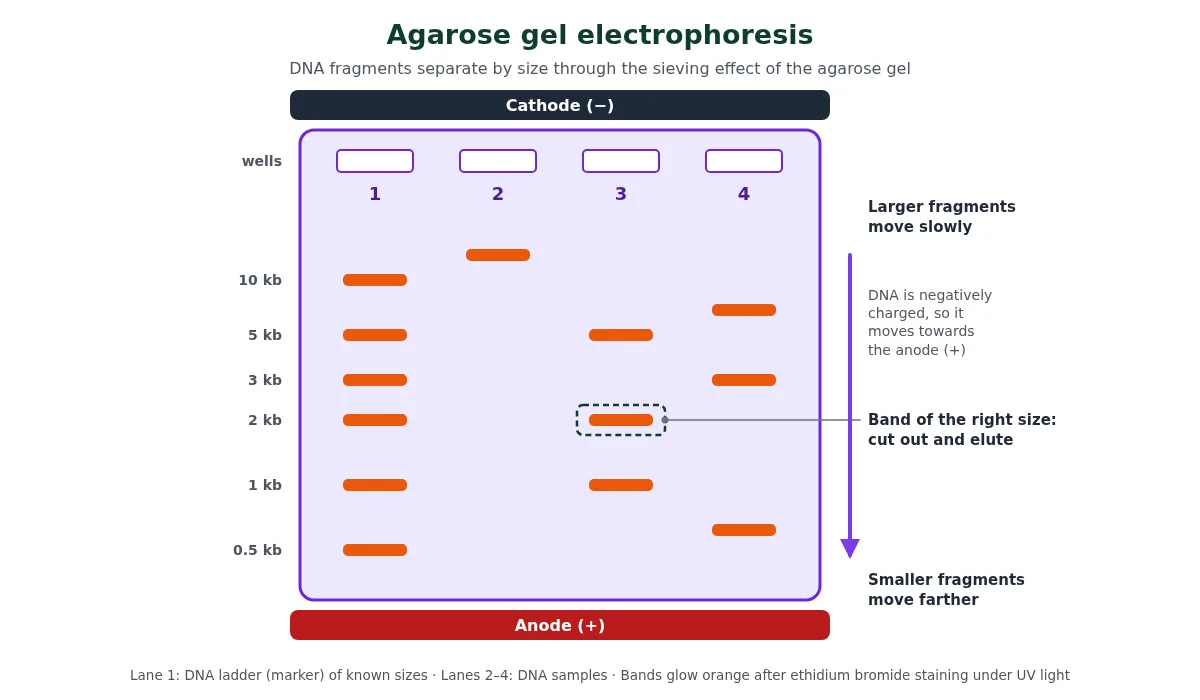
A classic textbook question asks you to look at a gel and say at which end the sample was loaded. The answer is the end with the wells, which is the cathode (negative) end. DNA starts there and runs towards the anode.
Gel electrophoresis is used again in blotting techniques, where separated DNA or RNA is transferred to a membrane and detected with a probe. See Southern blotting for DNA and Northern blotting for RNA.
Cloning vectors
Plasmids and bacteriophages can replicate inside bacterial cells independently of the control of chromosomal DNA. Bacteriophages, because they are present in high numbers per cell, have very high copy numbers of their genome inside a bacterial cell. Some plasmids have only one or two copies per cell, while others have 15 to 100 copies per cell, and the number can go even higher. If we link an alien piece of DNA to a bacteriophage or plasmid DNA, we can multiply it to the same copy number as the plasmid or phage.
The vectors used today are engineered so that it is easy to link foreign DNA to them and to tell recombinants apart from non-recombinants. A good cloning vector needs the following features.
(i) Origin of replication (ori)
The ori is the sequence where replication starts. Any piece of DNA linked to it can be made to replicate inside the host cell. The ori also controls the copy number of the linked DNA. So if you want many copies of the target DNA, you should clone it in a vector whose ori supports a high copy number.
(ii) Selectable marker
Besides the ori, a vector needs a selectable marker. This is a gene that helps us identify and eliminate non-transformants and lets only the transformants grow. Transformation is the procedure by which a piece of DNA is introduced into a host bacterium. Genes for resistance to antibiotics such as ampicillin, chloramphenicol, tetracycline or kanamycin are useful selectable markers for E. coli, because normal E. coli cells are not resistant to any of these antibiotics.
(iii) Cloning sites
To link the alien DNA, the vector should have very few, preferably single, recognition sites for the commonly used restriction enzymes. If an enzyme cuts the vector at more than one place, it produces several fragments, and gene cloning becomes complicated.
The best-known example of a cloning vector is the E. coli plasmid pBR322. In the name, “p” stands for plasmid, “BR” for Bolivar and Rodriguez who constructed it, and 322 is its identifying number.
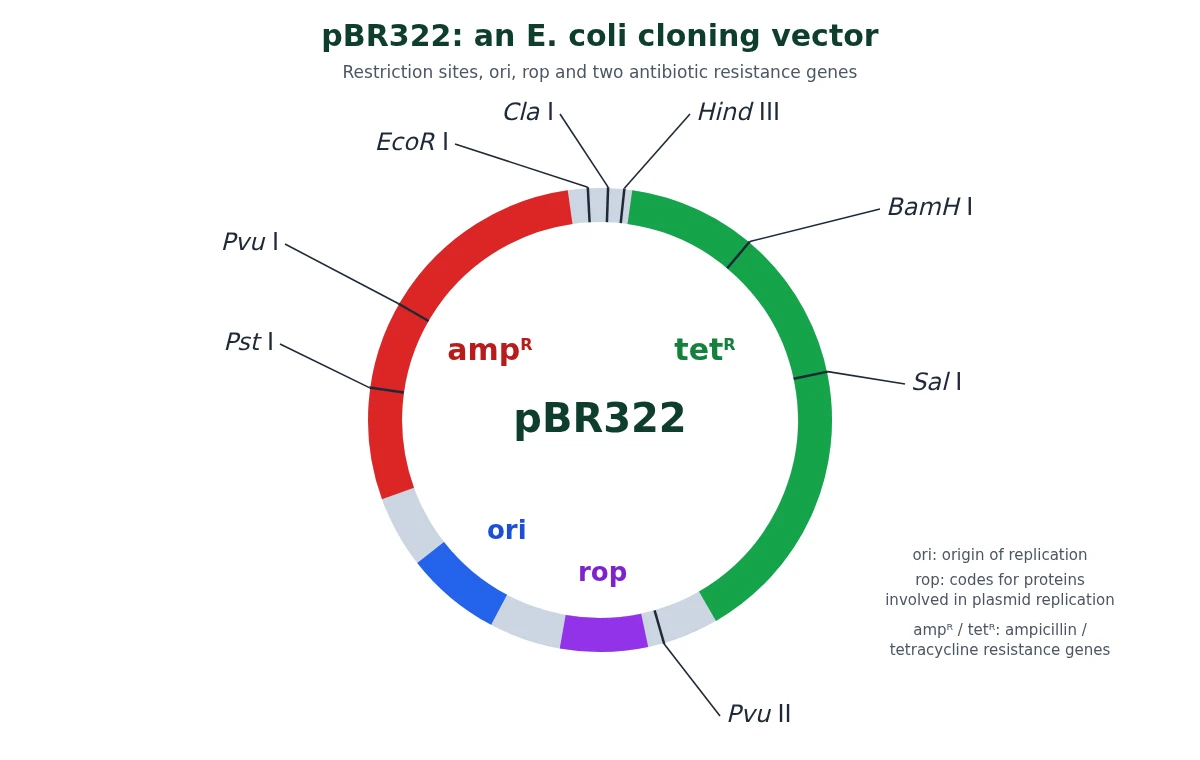
| Part of pBR322 | What it is |
|---|---|
| ori | Origin of replication; starts replication and controls copy number |
| rop | Codes for the proteins involved in the replication of the plasmid |
| ampR | Ampicillin resistance gene; has the Pst I and Pvu I sites |
| tetR | Tetracycline resistance gene; has the BamH I and Sal I sites |
| Other sites | EcoR I, Cla I and Hind III near the start of tetR; Pvu II near rop |
Insertional inactivation with two antibiotics
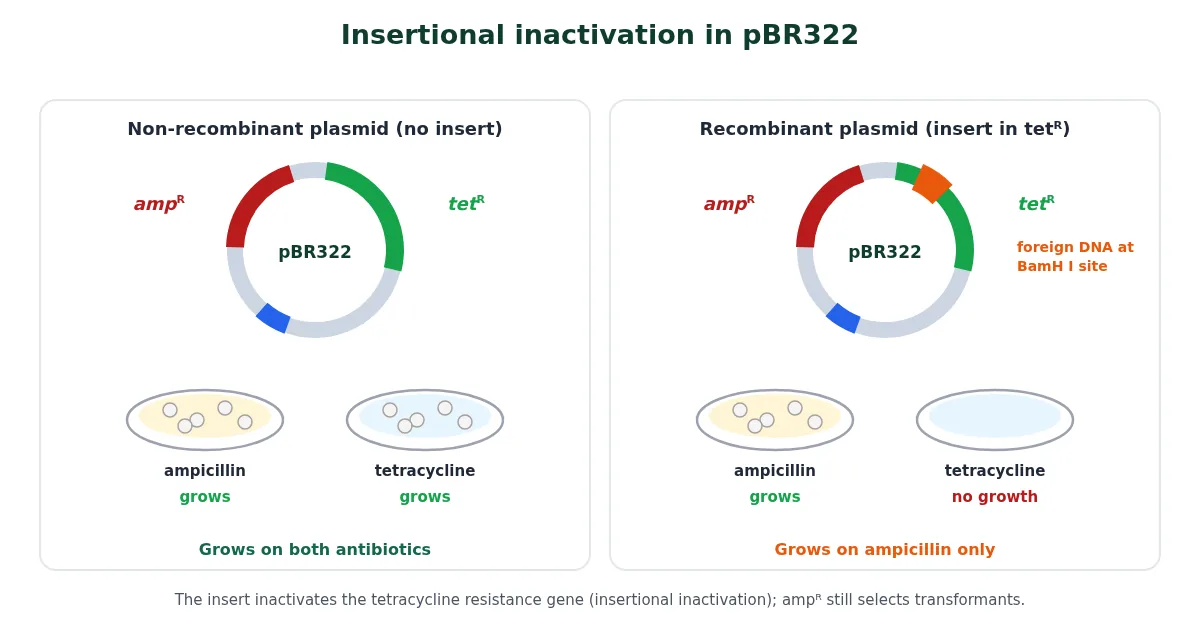
The alien DNA is ligated at a restriction site that lies inside one of the two antibiotic resistance genes. Suppose you ligate a foreign DNA at the BamH I site of the tetracycline resistance gene of pBR322:
- The recombinant plasmids lose tetracycline resistance, because the inserted DNA breaks up the tetR gene.
- They still have the intact ampR gene, so all transformants are first selected by plating them on ampicillin-containing medium.
- The colonies that grow on ampicillin are then transferred to a medium containing tetracycline.
- Recombinants grow on ampicillin but not on tetracycline. Non-recombinants grow on both antibiotics.
Here one antibiotic resistance gene helps select the transformants, while the other gene gets inactivated due to insertion of alien DNA and helps select the recombinants. This is called insertional inactivation.
Blue-white screening: an alternative selectable marker
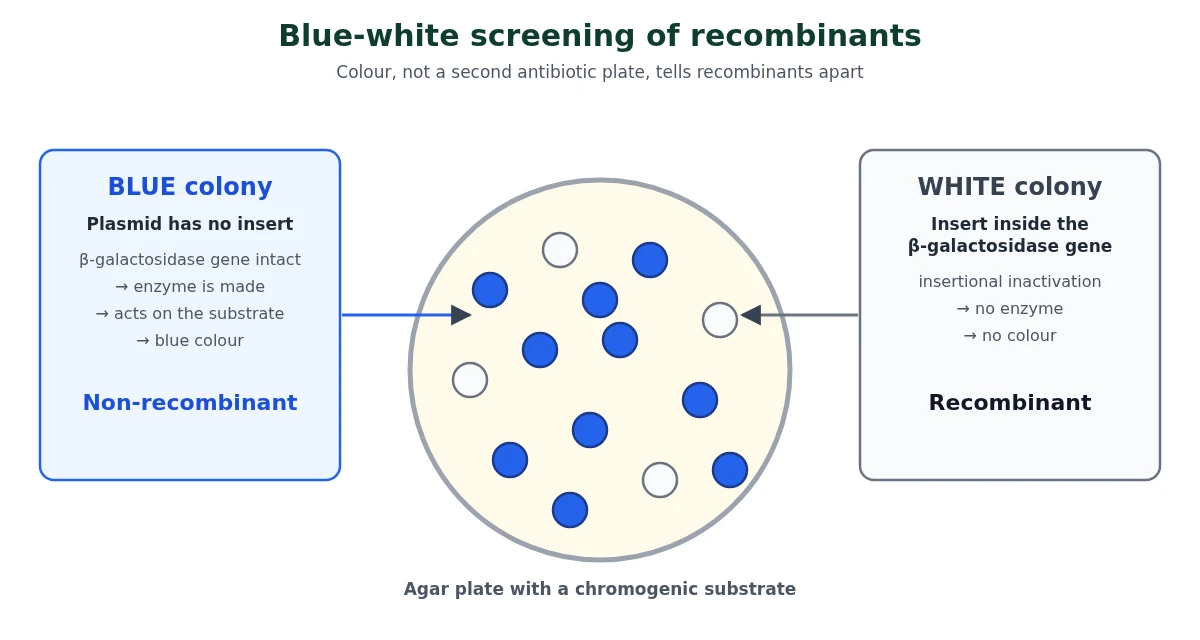
Selecting recombinants by inactivating an antibiotic resistance gene is cumbersome, because you need to plate the cells on two plates with different antibiotics. So alternative selectable markers were developed that tell recombinants from non-recombinants by their ability to produce colour in the presence of a chromogenic substrate.
- The recombinant DNA is inserted within the coding sequence of the enzyme β-galactosidase. This inactivates the gene, which again is insertional inactivation.
- If the plasmid has no insert, the β-galactosidase gene works and the colonies turn blue with the chromogenic substrate.
- If the plasmid has an insert, the enzyme is not made, the colonies produce no colour (they look white), and these are identified as the recombinant colonies.
Remember
Blue = no insert = non-recombinant. White (colourless) = insert = recombinant. One plate is enough, which is the whole advantage over the two-antibiotic method.
(iv) Vectors for cloning genes in plants and animals
We learnt how to transfer genes into plants and animals from bacteria and viruses, which have been doing it for ages to force eukaryotic cells to do what the pathogen wants.
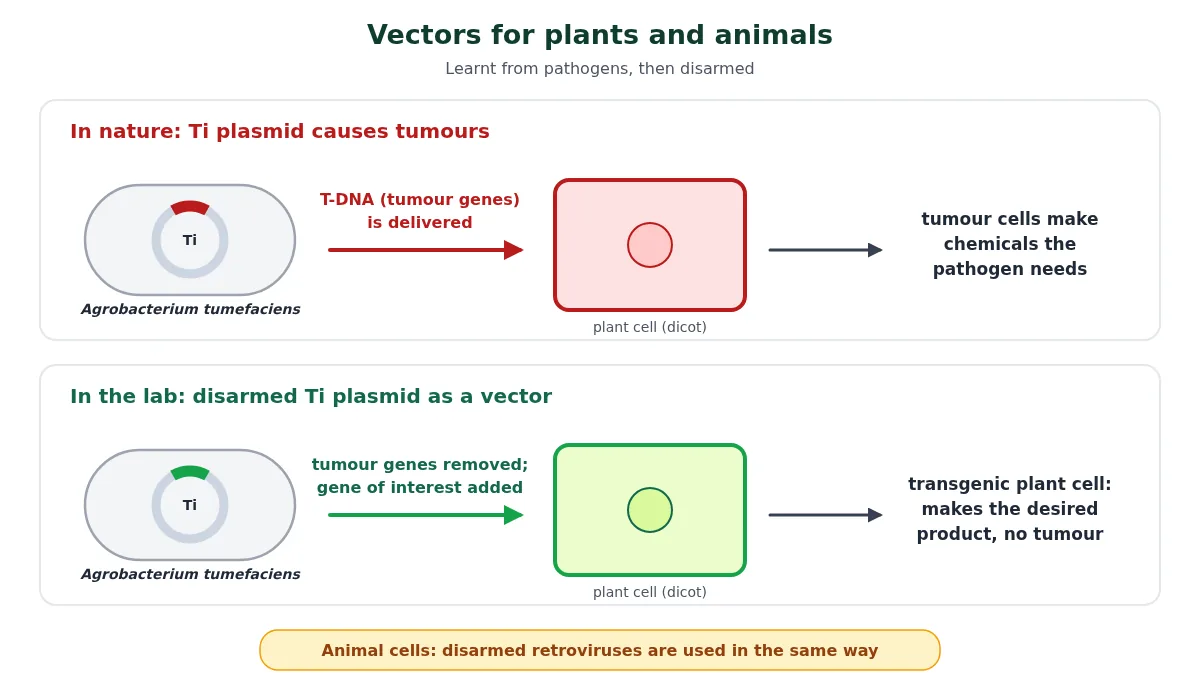
- Agrobacterium tumefaciens, a pathogen of several dicot plants, delivers a piece of DNA called T-DNA that turns normal plant cells into a tumour and directs these tumour cells to make chemicals the pathogen needs.
- Retroviruses in animals can turn normal cells into cancerous cells.
Scientists turned these pathogen tools into useful vectors. The tumour-inducing (Ti) plasmid of Agrobacterium tumefaciens has been modified into a cloning vector that is no longer pathogenic to plants, but can still deliver genes of our interest into many plants. In the same way, retroviruses have been disarmed and are now used to deliver desirable genes into animal cells.
Once a gene or DNA fragment has been ligated into a suitable vector, it is transferred into a bacterial, plant or animal host, where it multiplies.
Competent host for transformation with recombinant DNA
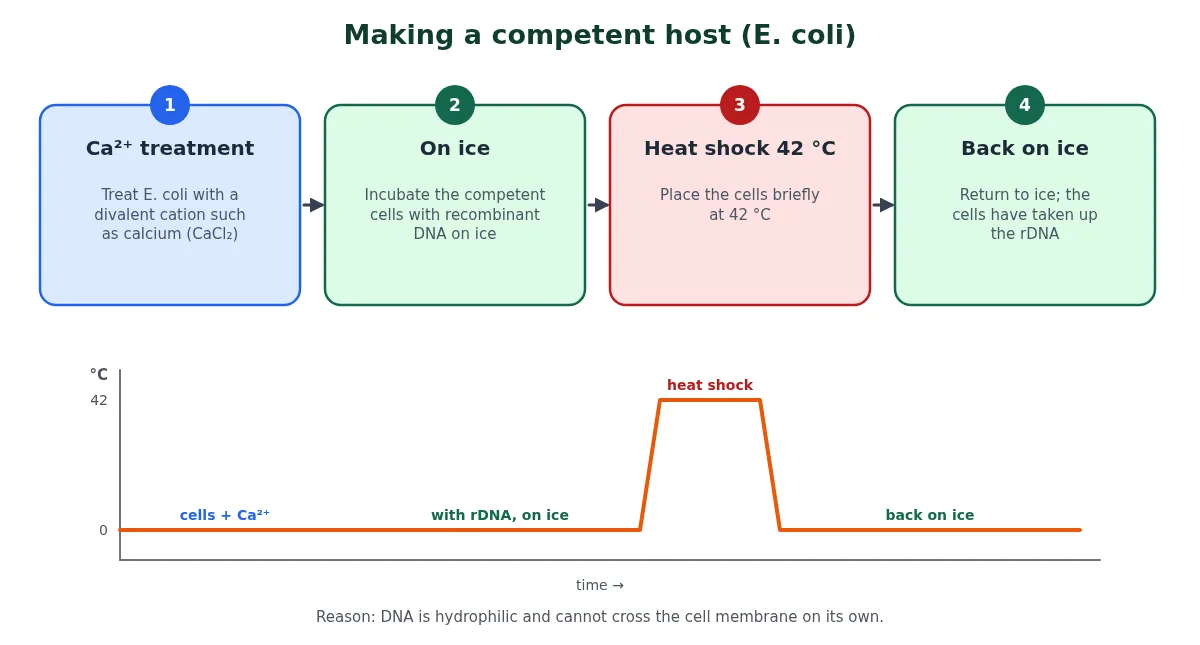
DNA is a hydrophilic molecule, so it cannot pass through cell membranes on its own. To force bacteria to take up a plasmid, the bacterial cells must first be made competent to take up DNA.
- The cells are treated with a specific concentration of a divalent cation, such as calcium. This increases the efficiency with which DNA enters the bacterium through pores in its cell wall.
- The cells are incubated with the recombinant DNA on ice.
- They are then placed briefly at 42 °C. This is called heat shock.
- They are put back on ice. This enables the bacteria to take up the recombinant DNA.
This is not the only way to introduce alien DNA into host cells:
| Method | How it works | Used for |
|---|---|---|
| Calcium treatment + heat shock | Divalent cations make cells competent; ice, 42 °C, ice | Bacteria such as E. coli |
| Micro-injection | Recombinant DNA is injected directly into the nucleus | Animal cells |
| Biolistics (gene gun) | Cells are bombarded with high-velocity micro-particles of gold or tungsten coated with DNA | Plants |
| Disarmed pathogen vectors | The vector infects the cell and transfers the recombinant DNA into it | Plants (Ti plasmid) and animals (retroviruses) |
Processes of recombinant DNA technology
Recombinant DNA technology involves several steps in a specific sequence: isolation of DNA, fragmentation of DNA by restriction endonucleases, isolation of the desired DNA fragment, ligation of the DNA fragment into a vector, transferring the recombinant DNA into the host, culturing the host cells in a medium at large scale, and extraction of the desired product. These are the seven steps in the flowchart at the top of this page. For a shorter walk-through using the insulin gene as an example, see the steps of gene cloning.
1. Isolation of the genetic material (DNA)
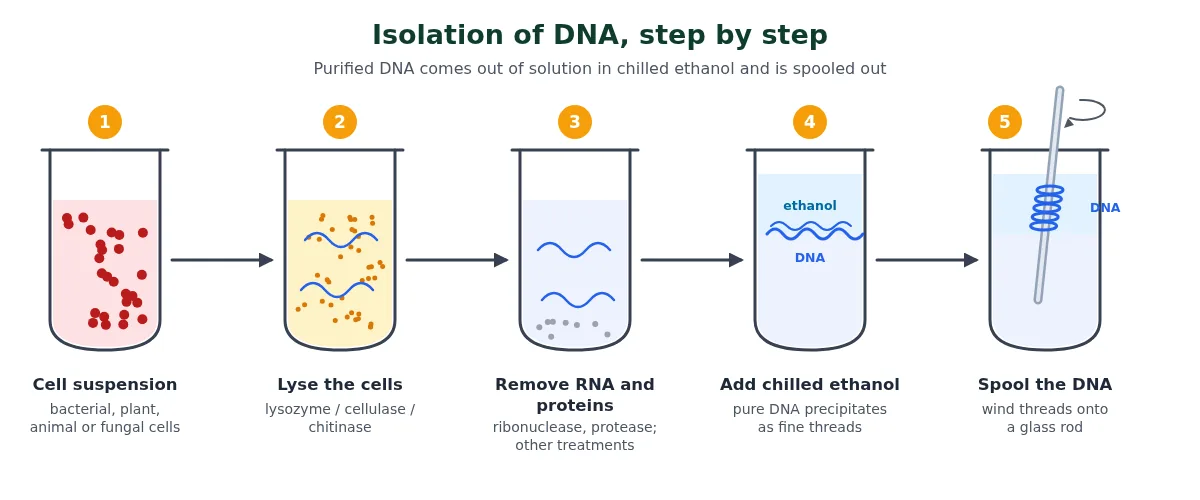
Nucleic acid is the genetic material of all organisms without exception, and in most organisms it is DNA. To cut DNA with restriction enzymes, it must be in pure form, free from other macromolecules. Because DNA is enclosed within membranes, the cell has to be broken open. This releases DNA along with RNA, proteins, polysaccharides and lipids.
| Enzyme | Breaks open / removes |
|---|---|
| Lysozyme | Bacterial cells |
| Cellulase | Plant cells |
| Chitinase | Fungal cells |
| Ribonuclease (RNase) | Removes RNA |
| Protease | Removes proteins, such as the histones wound around DNA |
Genes lie on long DNA molecules intertwined with proteins such as histones, which is why protease treatment is needed. Other molecules are removed by suitable treatments. Finally, chilled ethanol is added and the purified DNA precipitates out as a collection of fine threads in the suspension. These threads are wound out on a glass rod, a step called spooling.
2. Cutting of DNA at specific locations
Purified DNA is incubated with the restriction enzyme at the optimal conditions for that specific enzyme. Agarose gel electrophoresis is used to check how far the digestion has progressed. Since DNA is negatively charged, it moves towards the positive electrode (anode). The same process is repeated with the vector DNA.
Joining the DNA then takes several steps. After the source DNA and the vector DNA have both been cut with the same restriction enzyme, the cut-out gene of interest and the cut vector (with its open space) are mixed, and ligase is added. This makes the recombinant DNA.
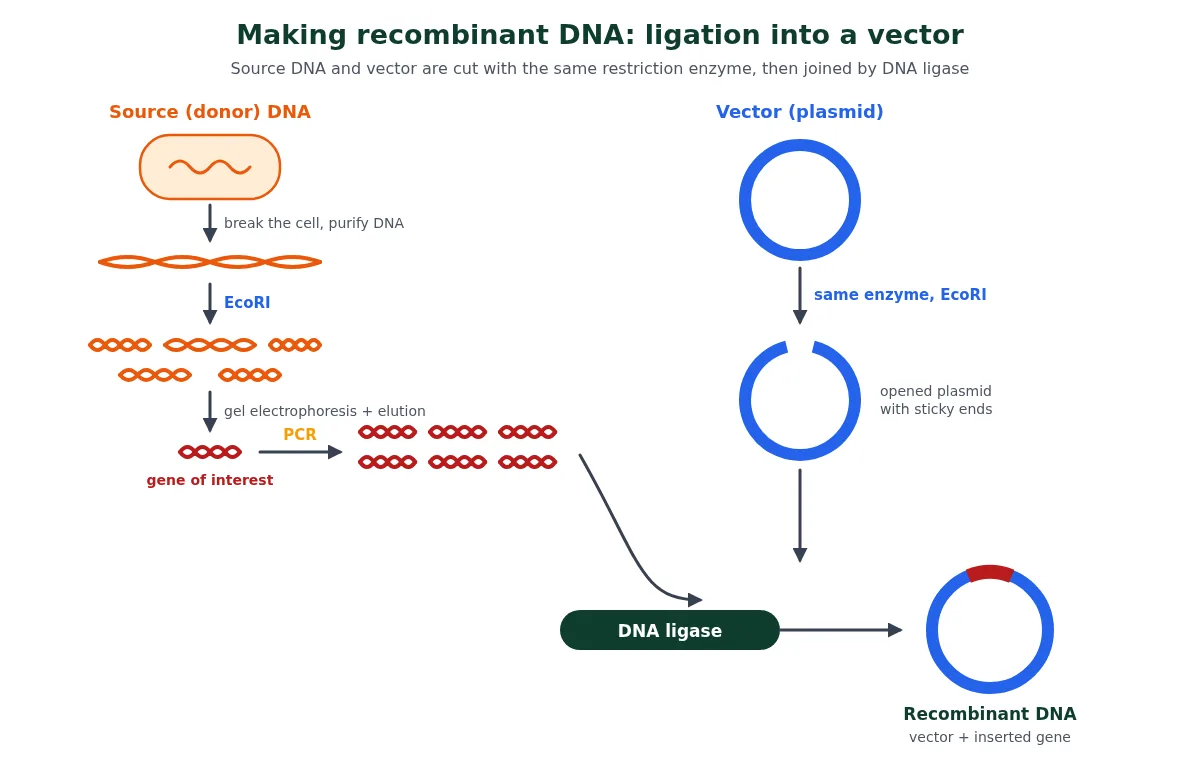
Amplification of the gene of interest using PCR
PCR stands for polymerase chain reaction. In PCR, many copies of the gene (or DNA) of interest are made in vitro, in a tube, using:
- two sets of primers: small, chemically synthesised oligonucleotides that are complementary to the regions of DNA on either side of the target;
- the enzyme DNA polymerase, which extends the primers;
- nucleotides, the building blocks provided in the reaction;
- the genomic DNA, which acts as the template.
Each PCR cycle has three steps:
- Denaturation: the reaction is heated (to about 94 °C) so the two strands of the DNA separate.
- Primer annealing: the mixture is cooled (commonly to about 50–60 °C, depending on the primers) so the primers bind to their complementary sites on the single strands.
- Extension of primers: at about 72 °C, DNA polymerase adds nucleotides to the primers, using each strand as a template, to make new complementary strands.
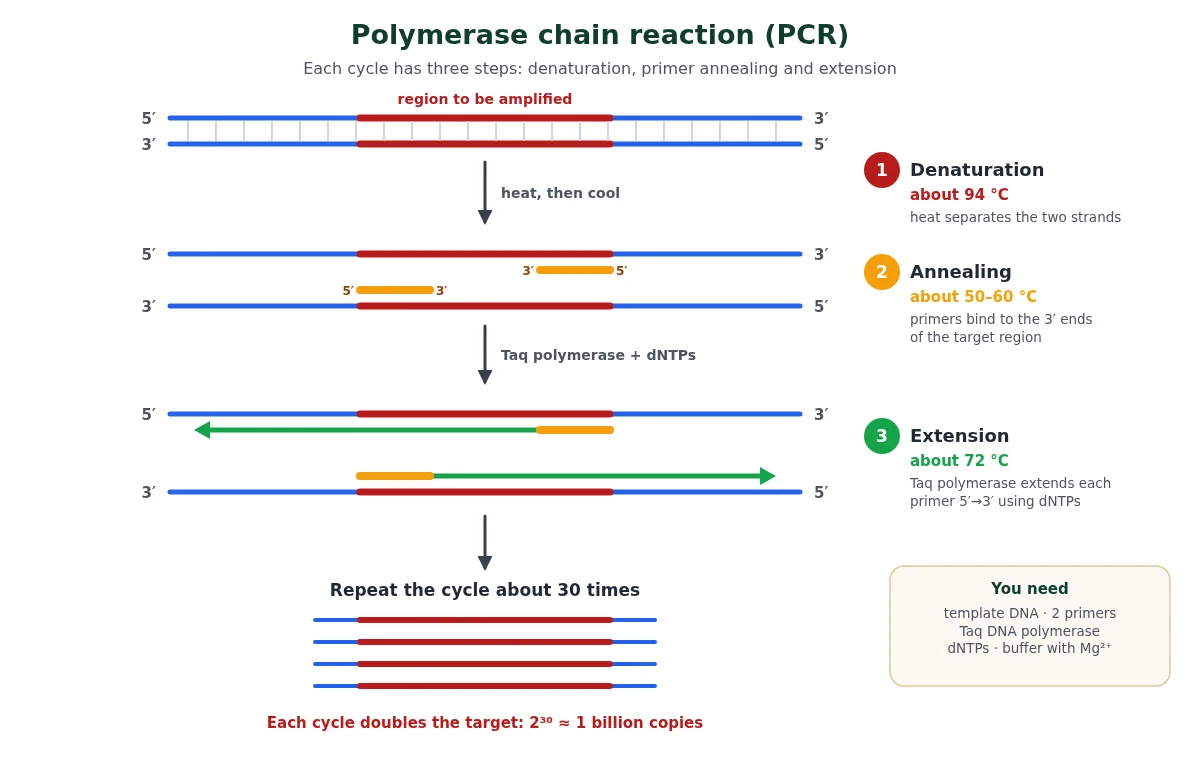
If this replication is repeated many times, the DNA segment can be amplified about a billion times, so roughly 1 billion copies are made. Each cycle doubles the number of target copies, so after 30 cycles one template can give 230, which is about 109 copies.
Repeated cycles are possible only because the DNA polymerase used is thermostable. It is isolated from the bacterium Thermus aquaticus (hence Taq polymerase) and stays active during the high temperature used to denature double-stranded DNA. An ordinary polymerase would be destroyed in the first heating step. The amplified fragment can then be ligated with a vector for further cloning.
PCR has its own detailed page with more on primers, cycle numbers and uses: What is polymerase chain reaction (PCR)?
Insertion of recombinant DNA into the host cell or organism
There are several ways of introducing the ligated DNA into recipient cells (see the methods table in the competent host section). Competent recipient cells take up DNA present in their surroundings. Suppose a recombinant DNA carrying a gene for ampicillin resistance is transferred into E. coli cells. The host cells become transformed into ampicillin-resistant cells.
If the transformed cells are spread on agar plates containing ampicillin, only the transformants grow, and untransformed recipient cells die. Because the ampicillin resistance gene lets us select the transformed cells, it is called a selectable marker.
Obtaining the foreign gene product
When alien DNA is inserted into a cloning vector and transferred into a bacterial, plant or animal cell, the alien DNA multiplies. But in almost all recombinant technologies the real aim is to make a desirable protein, so the recombinant DNA must be expressed. The foreign gene is expressed under suitable conditions, which involves many technical details.
When a protein-encoding gene is expressed in a heterologous host (a host that is not its own source organism), the protein is called a recombinant protein. Cells carrying the cloned gene can be grown on a small scale in the laboratory, and the protein extracted and purified using different separation techniques.
Cells can also be grown in a continuous culture system. Used medium is drained out from one side while fresh medium is added from the other, so the cells stay in their most physiologically active log (exponential) phase. This produces a larger biomass and so a higher yield of the desired protein.
Bioreactors
Small-volume cultures cannot give appreciable quantities of product. To produce in large quantities, bioreactors were developed, in which large volumes (100–1000 litres) of culture can be processed. A bioreactor can be thought of as a vessel in which raw materials are biologically converted into specific products, individual enzymes and so on, using microbial, plant, animal or human cells.
A bioreactor gives the optimum growth conditions for getting the desired product: the right temperature, pH, substrate, salts, vitamins and oxygen.
The most commonly used bioreactors are of the stirring type. A stirred-tank reactor is usually cylindrical or has a curved base, which helps mix the contents. The stirrer mixes the culture evenly and makes oxygen available throughout the bioreactor.
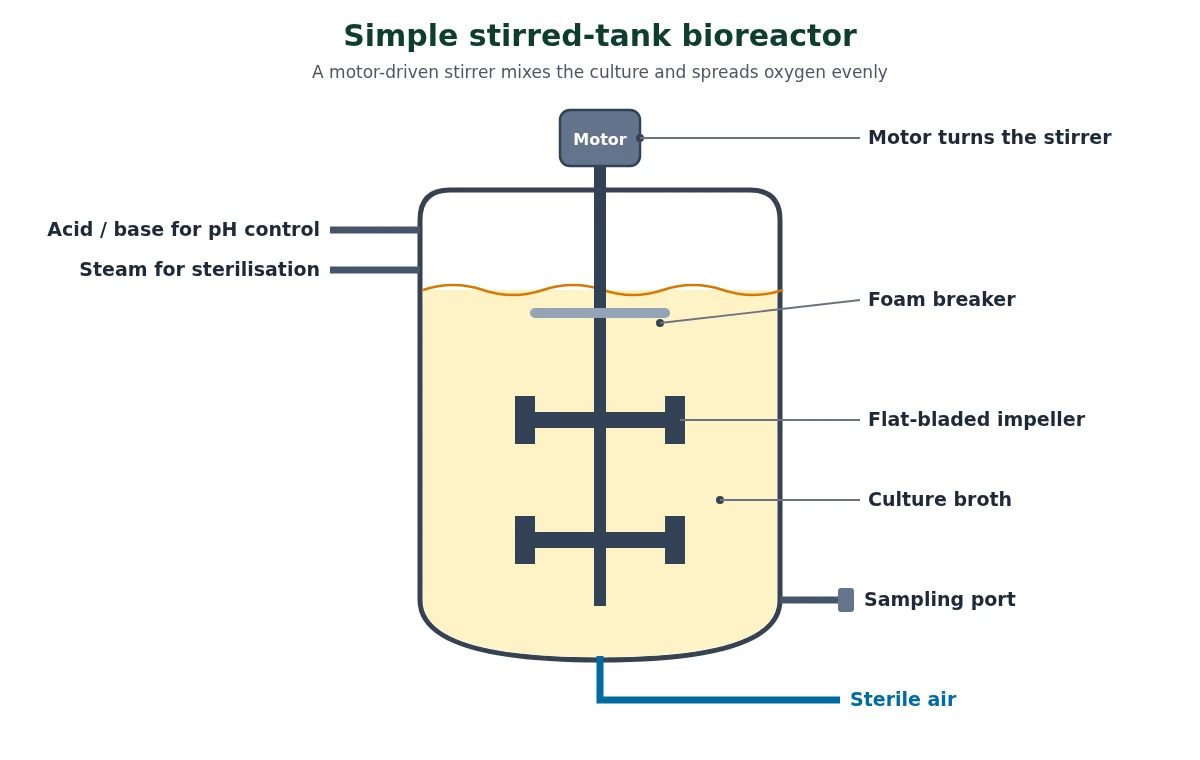
Alternatively, air can be bubbled through the reactor. In a sparged stirred-tank bioreactor, sterile air bubbles are sparged (blown) into the culture. The bubbles greatly increase the area available for oxygen transfer.
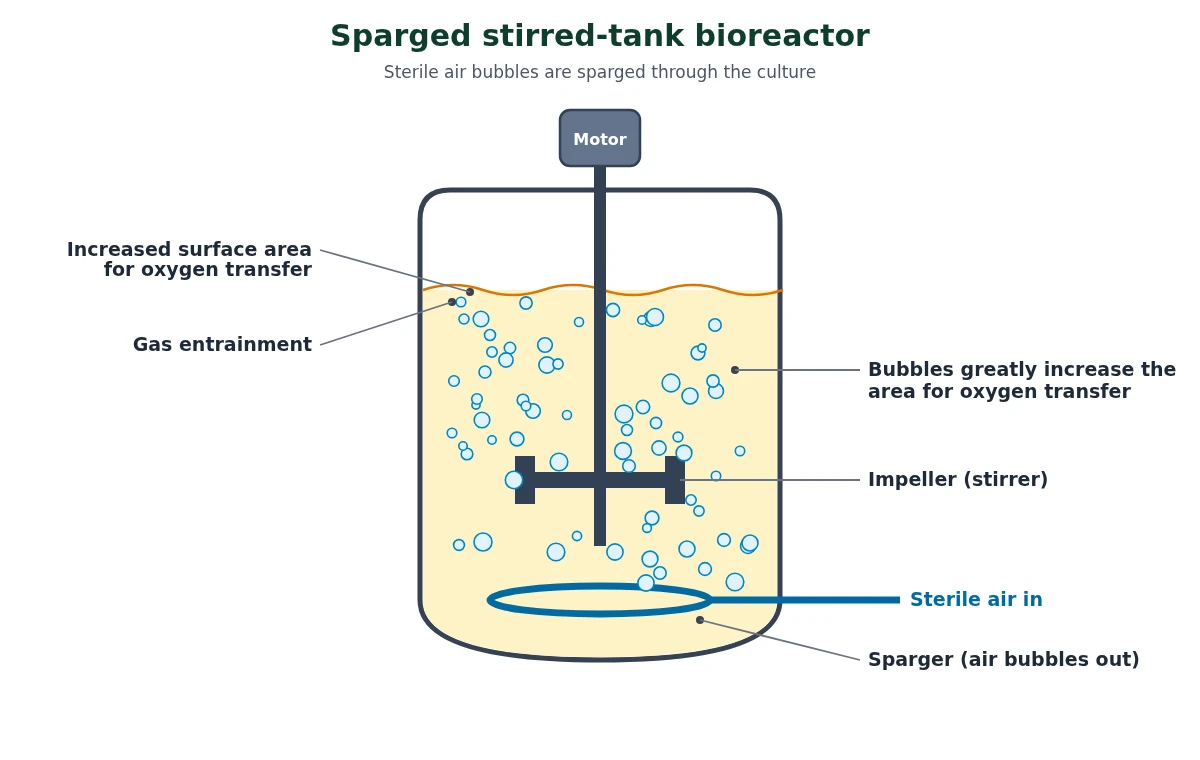
If you look closely at a bioreactor, you will find these systems:
| System | Job |
|---|---|
| Agitator system | Stirrer and impellers mix the culture evenly |
| Oxygen delivery system | Supplies sterile air (sparged as bubbles in the sparged type) |
| Foam control system | Foam breaker controls foaming |
| Temperature control system | Keeps the temperature optimal |
| pH control system | Acid or base is added to hold the pH |
| Sampling ports | Small volumes of culture can be withdrawn from time to time |
| Feature | Simple stirred-tank | Sparged stirred-tank |
|---|---|---|
| How oxygen is supplied | Mainly by stirring, which spreads oxygen through the culture | Sterile air is bubbled through the culture, as well as stirring |
| Oxygen transfer area | Smaller | Much larger, because of the many bubbles |
| Key part to remember | Flat-bladed impeller, foam breaker | Sparger that releases air bubbles |
Why not just use shake flasks? Besides better aeration and mixing, a stirred-tank bioreactor lets you control temperature and pH, control foam, take samples without opening the vessel, keep everything sterile, and run hundreds of litres at once.
Downstream processing
After the biosynthetic stage is complete, the product has to go through a series of processes before it can be sold as a finished product.
- Separation and purification: these two processes together are called downstream processing.
- Formulation: the product is formulated with suitable preservatives.
- Clinical trials: in the case of drugs, the formulation has to go through thorough clinical trials.
- Quality control: strict quality control testing is needed for every product.
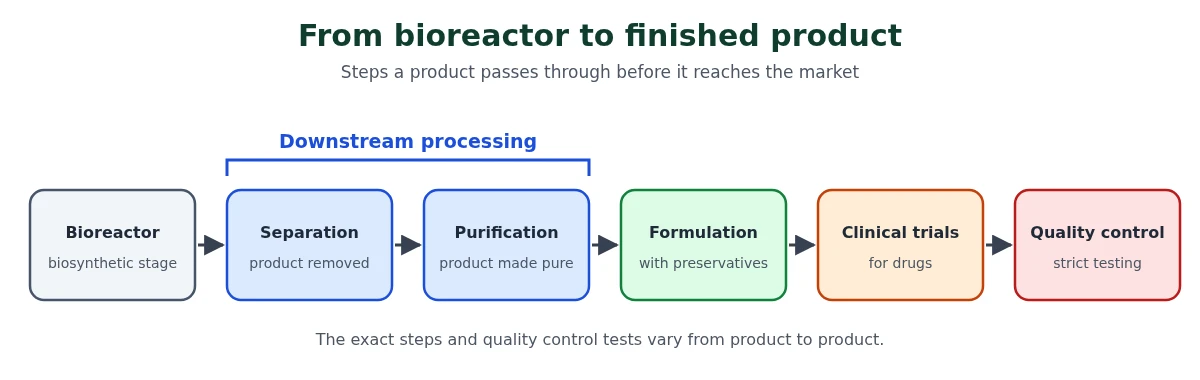
The downstream processing and quality control tests vary from product to product.
Summary tables for quick revision
Enzymes in this chapter
| Enzyme | Job |
|---|---|
| Restriction endonuclease | Cuts DNA at a specific palindromic recognition sequence |
| Exonuclease | Removes nucleotides from the ends of DNA |
| DNA ligase | Joins cut DNA ends to make recombinant DNA |
| DNA polymerase (Taq) | Extends primers in PCR; heat-stable |
| Lysozyme | Breaks bacterial cells |
| Cellulase | Breaks plant cells |
| Chitinase | Breaks fungal cells |
| Ribonuclease | Removes RNA during DNA isolation |
| Protease | Removes proteins during DNA isolation |
| β-galactosidase | Gives blue colour with a chromogenic substrate; used to screen recombinants |
Key facts and numbers
| Fact | Value |
|---|---|
| Restriction enzymes first isolated | 1963, from E. coli (one methylating, one cutting) |
| First sequence-specific restriction endonuclease | Hind II, five years later; recognises 6 bp |
| Restriction enzymes known | More than 900, from over 230 bacterial strains |
| First recombinant DNA | 1972, Stanley Cohen and Herbert Boyer, plasmid of Salmonella typhimurium |
| Plasmid copy number | 1–2 per cell in some; 15–100 per cell in others |
| Agarose comes from | Seaweeds |
| Heat shock temperature | 42 °C |
| PCR yield | About 1 billion copies |
| Bioreactor volume | 100–1000 litres |
Selection at a glance
| Colony | On ampicillin | On tetracycline | Colour with chromogenic substrate |
|---|---|---|---|
| Non-transformant | Dies | Dies | – |
| Non-recombinant transformant | Grows | Grows | Blue |
| Recombinant (insert in tetR or β-galactosidase gene) | Grows | Does not grow (insert in tetR) | Colourless / white |
Go deeper: related topics
Gene cloning
Five easy steps of gene cloning with the insulin example, agar plates and the summary table.
Steps of gene cloningSouthern blotting
How restriction digestion and gel electrophoresis are used to detect a DNA sequence.
Southern blottingNorthern blotting
The same idea applied to RNA, to see whether a gene is expressed.
Northern blotting90 chapter MCQs
Full practice set for this chapter with an answer key, topic by topic.
Practise 90 MCQsBiotechnology principles and processes NEET notes: common traps
These are the points where students lose marks most often. Read them once more the night before the exam.
- DNA is negatively charged, so it runs towards the anode (+). Samples are loaded at the cathode end.
- On a gel, smaller fragments move farther. The band nearest the wells is the largest.
- EcoRI recognises GAATTC and cuts between G and A, leaving AATT sticky ends. It does not cut in the middle.
- In EcoRI, R stands for the strain RY 13, not “restriction”. The Roman numeral is the order of isolation.
- The first sequence-specific restriction enzyme was Hind II, not Hind III and not EcoRI.
- Restriction enzymes are endonucleases. Exonucleases remove nucleotides only from the ends.
- With an insert at the BamH I site, recombinants grow on ampicillin but not tetracycline. With an insert at the Pst I or Pvu I site, it is the other way round.
- In blue-white screening, white (colourless) colonies are the recombinants. Blue colonies have no insert.
- rop codes for proteins involved in plasmid replication. It is not a resistance gene and not the ori.
- Taq polymerase comes from the bacterium Thermus aquaticus, and it is used because it is thermostable.
- Competence uses a divalent cation (calcium), and the heat shock is at 42 °C, between two ice steps.
- Bioreactor volume in the textbook is 100–1000 litres. Downstream processing means separation and purification; formulation, trials and quality control come after it.
- Chitinase is for fungi, cellulase for plants, lysozyme for bacteria. Chilled ethanol precipitates DNA; it does not break cells.
20 biotechnology principles and processes MCQs with answers
These are original practice questions based on NCERT: 12 single-answer, 4 assertion-reason, 2 match-the-column and 2 diagram-based. Try each one before you show the answer. For 90 more, go to the full chapter MCQ set.
Q1. The two core techniques that enabled the birth of modern biotechnology are
- (a) Tissue culture and hybridisation
- (b) Genetic engineering and bioprocess engineering
- (c) Fermentation and distillation
- (d) PCR and gel electrophoresis
Answer: (b) Genetic engineering and bioprocess engineering. Genetic engineering alters the chemistry of genetic material; bioprocess engineering keeps a sterile environment so only the desired cells grow in large quantities.
Q2. The first recombinant DNA was made by linking an antibiotic resistance gene with a native plasmid of
- (a) Escherichia coli
- (b) Salmonella typhimurium
- (c) Agrobacterium tumefaciens
- (d) Thermus aquaticus
Answer: (b) Salmonella typhimurium. Cohen and Boyer (1972) used a native plasmid of Salmonella typhimurium and then transferred the recombinant DNA into E. coli.
Q3. In the name EcoRI, the letter R stands for
- (a) Restriction
- (b) Recombinant
- (c) The strain RY 13
- (d) Resistance
Answer: (c) The strain RY 13. E is the genus Escherichia, co the species coli, R the strain RY 13 and I the order of isolation.
Q4. The first restriction endonuclease whose action depended on a specific DNA sequence was
- (a) EcoRI
- (b) BamH I
- (c) Hind II
- (d) Hind III
Answer: (c) Hind II. Hind II was isolated five years after 1963 and cuts DNA at a specific six base pair recognition sequence.
Q5. Which of these sequences is palindromic?
- (a) 5′-GAATTC-3′
- (b) 5′-GAATTG-3′
- (c) 5′-GATCCA-3′
- (d) 5′-GGATCA-3′
Answer: (a) 5′-GAATTC-3′. Its complementary strand, read 5′→3′, is also GAATTC. The other sequences give CAATTC, TGGATC and TGATCC.
Q6. In agarose gel electrophoresis, DNA fragments move towards the
- (a) Cathode, because they are positively charged
- (b) Anode, because they are negatively charged
- (c) Anode, because they are positively charged
- (d) Cathode, because they are negatively charged
Answer: (b) Anode, because they are negatively charged. The phosphate groups give DNA a negative charge, so it moves to the positive electrode.
Q7. Separated DNA bands on an agarose gel are seen by
- (a) Staining with iodine and viewing in visible light
- (b) Staining with ethidium bromide and exposing to UV light
- (c) Staining with safranin
- (d) Viewing the gel directly in sunlight
Answer: (b) Staining with ethidium bromide and exposing to UV light. Pure DNA cannot be seen in visible light; ethidium bromide-stained DNA appears as bright orange bands under UV.
Q8. In the plasmid pBR322, rop codes for
- (a) A restriction enzyme
- (b) Proteins involved in replication of the plasmid
- (c) Ampicillin resistance
- (d) β-galactosidase
Answer: (b) Proteins involved in replication of the plasmid. rop is separate from ori and from the two antibiotic resistance genes.
Q9. Bacterial cells are made competent to take up DNA by treating them with
- (a) A specific concentration of a divalent cation such as calcium
- (b) Chilled ethanol
- (c) Lysozyme
- (d) A monovalent cation such as sodium
Answer: (a) A specific concentration of a divalent cation such as calcium. Calcium increases the efficiency with which DNA enters through pores in the cell wall; this is followed by ice, heat shock at 42 °C and ice.
Q10. Which enzyme is used to break open fungal cells during DNA isolation?
- (a) Lysozyme
- (b) Cellulase
- (c) Chitinase
- (d) Ribonuclease
Answer: (c) Chitinase. Lysozyme is used for bacteria and cellulase for plant cells; ribonuclease removes RNA.
Q11. The thermostable DNA polymerase used in PCR is isolated from
- (a) Escherichia coli
- (b) Thermus aquaticus
- (c) Agrobacterium tumefaciens
- (d) Salmonella typhimurium
Answer: (b) Thermus aquaticus. Taq polymerase stays active at the high temperature used to denature DNA, so it survives repeated cycles.
Q12. According to NCERT, bioreactors allow culture volumes of about
- (a) 1–10 litres
- (b) 10–50 litres
- (c) 100–1000 litres
- (d) 10,000–100,000 litres
Answer: (c) 100–1000 litres. Small-volume cultures cannot give appreciable yields, so bioreactors processing 100–1000 litres were developed.
Q13. Assertion (A): When foreign DNA is inserted at the BamH I site of pBR322, recombinants grow on ampicillin but not on tetracycline.
Reason (R): The insertion inactivates the tetracycline resistance gene.
- (a) Both A and R are true, and R is the correct explanation of A
- (b) Both A and R are true, but R is not the correct explanation of A
- (c) A is true, but R is false
- (d) A is false, but R is true
Answer: (a) The BamH I site lies inside tetR. The insert breaks this gene (insertional inactivation), while ampR stays intact.
Q14. Assertion (A): DNA cannot pass through the cell membrane on its own.
Reason (R): DNA is a hydrophilic molecule.
- (a) Both A and R are true, and R is the correct explanation of A
- (b) Both A and R are true, but R is not the correct explanation of A
- (c) A is true, but R is false
- (d) A is false, but R is true
Answer: (a) Being hydrophilic, DNA cannot cross the lipid membrane, so cells must be made competent first.
Q15. Assertion (A): In blue-white screening, recombinant colonies are blue.
Reason (R): The insert inactivates the β-galactosidase gene.
- (a) Both A and R are true, and R is the correct explanation of A
- (b) Both A and R are true, but R is not the correct explanation of A
- (c) A is true, but R is false
- (d) A is false, but R is true
Answer: (d) R is true, but because the enzyme is not made, recombinant colonies produce no colour. Blue colonies are non-recombinants.
Q16. Assertion (A): Restriction endonucleases are used to make recombinant DNA.
Reason (R): Exonucleases remove nucleotides from the ends of DNA.
- (a) Both A and R are true, and R is the correct explanation of A
- (b) Both A and R are true, but R is not the correct explanation of A
- (c) A is true, but R is false
- (d) A is false, but R is true
Answer: (b) Both statements are true, but the reason restriction enzymes are used is that they cut at specific sequences, leaving sticky ends. R describes a different enzyme.
Q17. Match Column I with Column II.
Column I: (A) Lysozyme (B) Cellulase (C) Chitinase (D) Ribonuclease
Column II: (i) Fungal cell (ii) Removes RNA (iii) Bacterial cell (iv) Plant cell
- (a) A-iii, B-iv, C-i, D-ii
- (b) A-iv, B-iii, C-i, D-ii
- (c) A-iii, B-i, C-iv, D-ii
- (d) A-ii, B-iv, C-i, D-iii
Answer: (a) A-iii, B-iv, C-i, D-ii. Lysozyme breaks bacterial cells, cellulase plant cells, chitinase fungal cells, and ribonuclease removes RNA.
Q18. Match Column I with Column II.
Column I: (A) Micro-injection (B) Biolistics (C) Disarmed pathogen vector (D) Heat shock
Column II: (i) DNA-coated gold or tungsten particles fired into plant cells (ii) rDNA injected into the nucleus of an animal cell (iii) Calcium-treated E. coli placed briefly at 42 °C (iv) Infects the cell and transfers rDNA
- (a) A-i, B-ii, C-iv, D-iii
- (b) A-ii, B-i, C-iv, D-iii
- (c) A-ii, B-iv, C-i, D-iii
- (d) A-iii, B-i, C-iv, D-ii
Answer: (b) A-ii, B-i, C-iv, D-iii. Micro-injection is for animal cells, biolistics for plants, disarmed pathogens such as the Ti plasmid infect and transfer DNA, and heat shock is used for bacteria.
Q19. Look at the pBR322 map in this article. If a foreign gene is inserted at the Pst I site, the recombinant bacteria will
- (a) Grow on ampicillin but not on tetracycline
- (b) Grow on tetracycline but not on ampicillin
- (c) Grow on both antibiotics
- (d) Grow on neither antibiotic
Answer: (b) Grow on tetracycline but not on ampicillin. Pst I lies inside ampR, so the insert inactivates ampicillin resistance while tetR stays intact.
Q20. Look at the agarose gel diagram in this article. The DNA samples were loaded in the wells at the
- (a) Anode (+) end
- (b) Cathode (−) end
- (c) Middle of the gel
- (d) Either end, it makes no difference
Answer: (b) Cathode (−) end. Negatively charged DNA is loaded near the cathode and runs towards the anode; this is why the wells are at the cathode end.
Biotechnology principles and processes FAQs
What are the principles of biotechnology?
The two core principles are genetic engineering and bioprocess engineering. Genetic engineering alters the chemistry of genetic material (DNA and RNA) and introduces it into a host to change its phenotype. Bioprocess engineering keeps a sterile, contamination-free environment so that only the desired microbe or eukaryotic cell grows in large quantities to make products such as antibiotics, vaccines and enzymes.
What are the tools of recombinant DNA technology?
The key tools are restriction enzymes, which cut DNA at specific sequences; polymerase enzymes, which make new DNA; ligases, which join DNA ends; vectors such as the plasmid pBR322, which carry the alien DNA and replicate it; and a competent host organism, usually E. coli, which takes up the recombinant DNA.
Why does DNA move towards the anode in gel electrophoresis?
DNA is negatively charged because of its phosphate groups, so in an electric field it moves towards the positive electrode, the anode. The agarose gel acts as a sieve, so smaller fragments move farther than larger ones.
Why is Taq polymerase used in PCR?
Each PCR cycle starts by heating the DNA to separate its strands. Taq polymerase, isolated from the bacterium Thermus aquaticus, is thermostable and stays active at this high temperature, so it keeps working through repeated cycles. An ordinary DNA polymerase would be denatured after the first cycle.
What is insertional inactivation?
Insertional inactivation is the loss of a gene’s function when foreign DNA is inserted inside it. In pBR322, an insert at the BamH I site inactivates the tetracycline resistance gene, so recombinants grow on ampicillin but not on tetracycline. In blue-white screening, an insert inside the beta-galactosidase gene stops colour formation, so recombinant colonies are white.
What is the difference between a simple and a sparged stirred-tank bioreactor?
Both are cylindrical or curved-base vessels with a motor-driven stirrer. In a simple stirred-tank bioreactor, the stirrer mixes the culture and spreads oxygen evenly. In a sparged stirred-tank bioreactor, sterile air is also bubbled (sparged) through the culture, and the bubbles greatly increase the area available for oxygen transfer.
Are these biotechnology principles and processes NEET notes based on the latest NCERT?
Yes. These notes follow Chapter 9, Biotechnology: Principles and Processes, of the current NCERT Class XII Biology textbook (2026-27 reprint), section by section, from the principles of biotechnology to downstream processing. The chapter is part of the Biotechnology and its Applications unit of the NEET (UG) syllabus.